



Designing a Layered Backyard Lighting Strategy
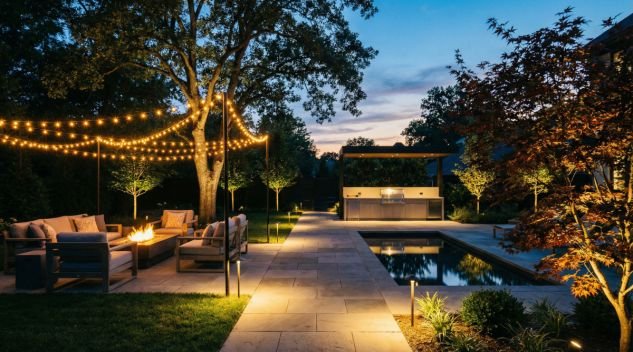
To create a balanced and inviting outdoor environment, homeowners should implement a three-layered lighting strategy consisting of ambient, task, and accent illumination. This professional approach ensures that every zone of the backyard serves its purpose, from general visibility for large gatherings to focused light for cooking and safety, while highlighting unique architectural or landscape features for aesthetic depth.
Ambient, Task, and Accent Lighting
The foundation of any successful backyard lighting plan is the layered approach. Ambient lighting provides the overall illumination necessary for general movement and social interaction, often achieved through string lights or wall-mounted lanterns. Task lighting, on the other hand, is highly functional and should be strategically placed in areas like outdoor kitchens, grilling stations, or staircases to ensure safety and precision during activities. Finally, accent lighting adds the “wow” factor by drawing attention to specific elements such as a majestic oak tree, a water feature, or a stone wall, using spotlights or well lights to create dramatic shadows and highlights.
Smart Controls and 2026 Automation Trends
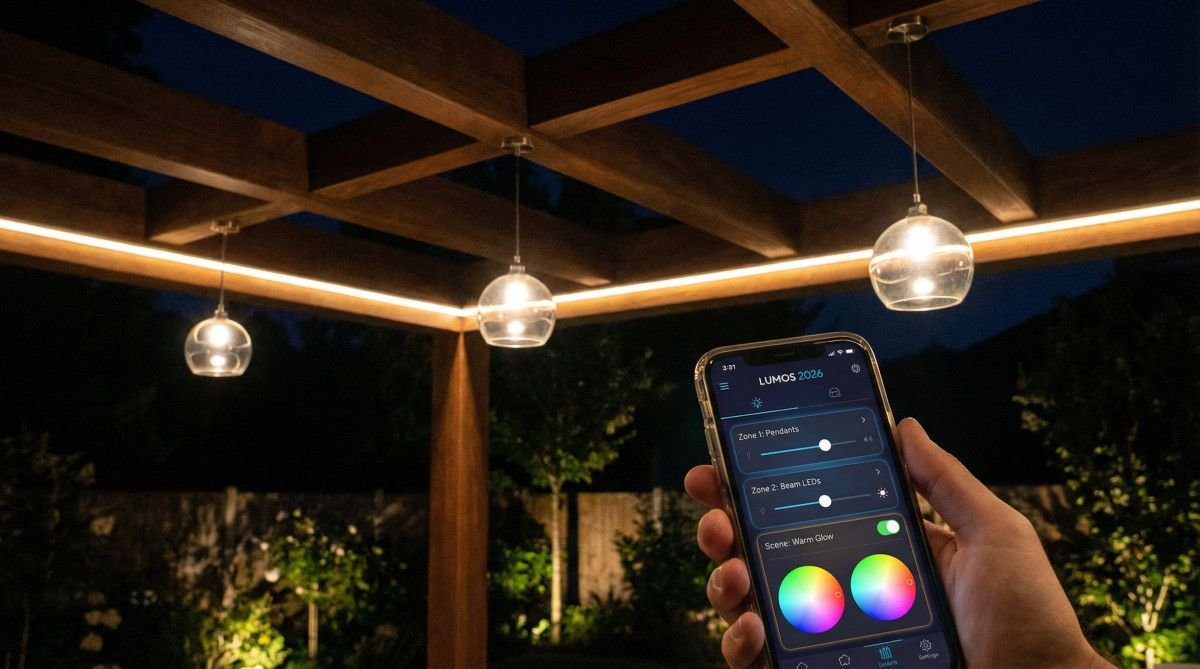
As we move into 2026, the integration of artificial intelligence and whole-property automation systems has become a standard in high-end landscape design. According to the International Dark-Sky Association (2025), smart lighting systems that automatically adjust brightness based on ambient light levels can reduce energy waste by up to 40%. Modern systems now allow for “zoning,” where different parts of the backyard can be controlled independently through a single smartphone app or voice command. This allows homeowners to transition from a bright, active setting for a dinner party to a soft, romantic glow for a quiet evening by the fire pit with a single tap.
| Feature | 2026 Trend | Benefit |
|---|---|---|
| Control Type | AI-Adaptive Automation | Adjusts intensity based on weather and time |
| Connectivity | Matter-Compatible Hubs | Seamless integration across all smart devices |
| Zoning | Multi-Zone Dimming | Independent control of patio, pool, and paths |
| Sensors | Biometric Motion Detection | Distinguishes between pets and human movement |
Innovative Fixtures and DIY Lighting Concepts
Innovative lighting solutions for 2026 focus on blending aesthetic appeal with sustainable technology, offering homeowners versatile options that range from simple DIY string light patterns to sophisticated biophilic designs. By choosing fixtures that complement the natural environment, you can transform a standard backyard into a multi-dimensional retreat that remains functional and beautiful throughout every season of the year.
String Lights and Pergola Pendants
String lights remain a perennial favorite due to their versatility and ease of installation. For a professional look, avoid the “zigzag” pattern and instead use a guide wire to create clean, parallel lines across a patio or deck. Pergola pendants are another excellent way to add a touch of indoor elegance to the outdoors. Large, oversized lanterns or woven pendant shades can serve as a focal point over a dining table, providing soft, downward light that encourages long conversations. According to Landscape Architecture Magazine (2024), the use of “warm-dim” technology in outdoor pendants allows for a shift from 3000K to a cozy 2200K as the evening progresses, mimicking the natural transition of sunlight.
Sustainable Solar and Biophilic Designs
Sustainable solar technology has advanced significantly in 2026, offering reliable, high-lumen output even in shaded or overcast conditions. Biophilic lighting designs, which seek to mimic the patterns of nature, have also become a prominent trend. For example, using “moonlighting” techniques where spotlights are placed high in a tree’s canopy and pointed downward through branches creates a dappled, natural light effect on the ground below. This approach not only provides functional visibility but also enhances the organic beauty of your garden, making it feel like a cohesive extension of the surrounding landscape.
Safety, Security, and Technical Specifications
Effective backyard lighting must prioritize safety and security by ensuring all pathways, entrances, and potential hazards are clearly illuminated with the correct lumen intensity. By balancing visibility with “dark sky” principles, homeowners can create a secure environment that deters intruders without causing unnecessary light pollution or disrupting the local ecosystem.
Pathway Illumination and Motion Sensors
Pathway lighting should be installed at consistent intervals to guide guests safely through the backyard without creating a “runway” effect. Alternating the placement of bollard or stake lights on either side of a path creates a more natural, inviting flow. Motion sensors are another critical component for security, but modern 2026 systems have moved beyond the blinding floodlights of the past. Today’s “soft-on” motion sensors gradually increase light intensity when movement is detected, providing a safer and more pleasant experience for residents while still alerting them to any activity.
Understanding Lumens and Color Temperature
Choosing the right lumen count and color temperature is essential for achieving a professional look. For general path lighting, 100 to 200 lumens is typically sufficient, while security spotlights may require 700 to 1300 lumens. Color temperature, measured in Kelvin (K), also plays a significant role in the ambiance of your space. A warm 2700K to 3000K is ideal for social areas and patios, as it creates a cozy, fire-like glow. In contrast, cooler 4000K to 5000K lights should be reserved for security and task-heavy areas where high visibility is the primary goal.
Frequently Asked Questions
How can I light my backyard without electricity?
The most effective way to light a backyard without a hardwired electrical connection is to use high-efficiency solar-powered LED fixtures or battery-operated lanterns. Modern solar lights in 2026 feature larger lithium-ion batteries that can store enough energy to last through multiple cloudy days, providing a reliable and eco-friendly alternative to traditional wiring.
What is the best lighting for a small backyard?
For small backyards, vertical lighting and multi-functional fixtures are the best choices. String lights hung overhead draw the eye upward, making the space feel larger, while recessed deck lights or wall sconces provide necessary illumination without taking up valuable floor space. Using a few well-placed uplights on perimeter plants can also create a sense of depth and boundary.
How many lumens do I need for backyard lighting?
The required lumen count depends on the specific zone and purpose of the light. For accent and path lighting, 100 to 200 lumens per fixture is usually adequate. Task areas like grilling stations need 300 to 500 lumens, while security floodlights should range from 700 to 1300 lumens to ensure clear visibility and deterrence.
Is solar lighting good for backyards?
Yes, solar lighting is an excellent choice for backyards, especially for paths and decorative accents. While early solar models were often dim, the latest 2026 solar technology offers brightness levels comparable to low-voltage wired systems. They are particularly advantageous for DIY projects as they require no trenching or professional electrical work.
How do I plan a backyard lighting layout?
To plan a backyard lighting layout, start by identifying the primary use areas, such as patios, paths, and entrances. Sketch a map of your space and mark where ambient, task, and accent lights will go. It is helpful to use a flashlight at night to test different lighting angles and positions before committing to a permanent installation.
What are the trends for outdoor lighting in 2026?
The primary trends for 2026 include AI-integrated smart controls, biophilic design that mimics natural light patterns, and a strong focus on sustainability. We are also seeing a shift toward “dark sky” compliant fixtures that minimize light pollution and the use of warm-dim technology that allows for a more natural transition from dusk to deep night.
Conclusion
Transforming your outdoor space with innovative lighting backyard ideas is a rewarding investment that enhances both the beauty and functionality of your home. By following a layered strategy, embracing 2026’s smart technology, and prioritizing safety through technical precision, you can create a magical oasis that reflects your personal style and respects the natural environment. Whether you choose a simple DIY string light setup or a sophisticated automated system, the right lighting will ensure your backyard remains the heart of your home long after the sun goes down.
References
1. International Dark-Sky Association (2025). “Smart Lighting and Energy Efficiency in Residential Landscapes.”