



Ever stumbled across the term galoble and thought, “Okay… but what does this even mean?” Same here I first saw it in a blog and raised an eyebrow. But after digging around and piecing together how people use this word online, I realized something interesting: galoble isn’t just a typo or buzzword it’s a concept that reflects how we think about connection, identity, and global digital culture today.
Whether you’re a creator, tech pro, business owner, or just curious about emerging digital language, this article will explain galoble in a clear, human way from basic meaning to real-world relevance. Let’s get into it!
What Galoble Actually Means
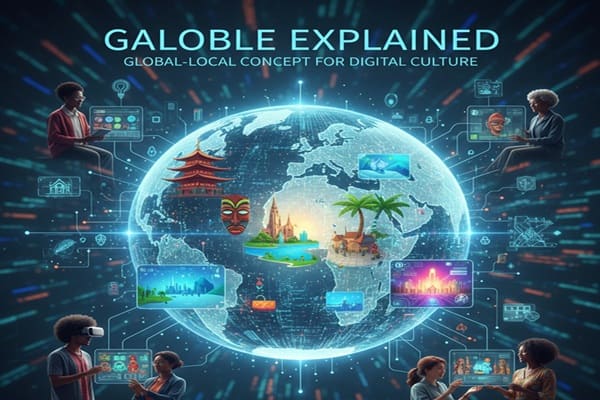
First thing’s first: galoble isn’t an official dictionary word like “apple” or “technology.” Instead, it’s a modern term people use online to describe ideas around global‑local connection, digital identity, and hybrid frameworks.
Put simply, *galoble usually refers to:
Global reach thinking and operating beyond borders
Local relevance respecting cultural or regional specifics
Connection and collaboration building meaningful community or shared experience
It’s kind of like combining “global” and “local” into one idea suggesting that the world is connected, but local contexts still matter.
Where Galoble Comes From
Unlike words rooted in centuries of language evolution, galoble seems to have emerged from digital culture especially in discussions about how we communicate, collaborate, and build systems in a connected world.
There’s no “official” origin or language root, and that’s kind of the point: galoble isn’t a rigid term with one fixed definition. It’s flexible and adaptive, which makes it useful for describing new phenomena in a world where things change fast.
Think of it like a blank canvas: the meaning evolves depending on who uses it, where, and why.
The Core Idea Behind Galoble
1. A Blend of Global and Local Thinking
Galoble reflects the idea that global reach and local nuance should coexist. It’s not about ignoring borders it’s about weaving them into a bigger, more inclusive picture.
For example:
A company may sell products worldwide but customize messaging and experience by region
Teams can collaborate across continents but adjust workflows for local culture
A social platform might connect users globally while letting them express local identity
This global + local blend is what people are getting at when they talk about galoble.
2. Flexibility and Interpretation
One of the most interesting things about galoble is that its meaning isn’t fixed. You might see it used as:
A conceptual term in essays or thought pieces
A brandable identity for startups or platforms
A framework for decision‑making in business or tech
Some writers describe it as a symbol of modern digital expression a word that captures the moment, not a rigid definition.
3. Human-Centered Hybrid Model
Another interpretation sees galoble as a human‑centered framework for decision-making that merges global perspective with local relevance. This can apply in business, tech design, and even policy.
Here’s how that looks in practice:
| Aspect | Traditional Global Model | Galoble Model |
|---|---|---|
| Decision control | Centralized | Shared with local insight |
| Product rollout | Uniform | Localized customization |
| Communication | Global only | Culturally tailored |
This table shows why galoble isn’t against globalization it just refuses one‑size‑fits‑all thinking.
Galoble vs Globalization: What’s the Difference?
You might wonder: Isn’t galoble just globalization by another name?
Not exactly.
Globalization focuses on expansion and scale the “big picture.”
Galoble focuses on balance global vision plus local understanding.
In that sense:
Globalization = reach + scale
Galoble = reach + cultural resonance + local adaptation
That’s a subtle but important difference especially if you’re working with global products or communities.
Why Galoble Is Gaining Attention
So why are people talking about this term now?
Unique, Search‑Friendly Terms
Because galoble is new and unique, it’s easy to stand out online. Creators and brands use it to get noticed, which in turn drives curiosity.
Digital Identity and Branding
Startups and digital platforms use galoble as a brandable identity because it suggests innovation and international reach without being generic.
Reflects Modern Digital Culture
As global connectivity grows think remote teams, hybrid work, cross-border communities people look for new language that captures how we actually operate. Galoble fits that niche.
Real-World Examples of Galoble
Here are a few ways that galoble ideas surface in real life:
1. Collaboration Platforms
Platforms built to make remote work feel less siloed often emphasize global presence + local context a practical expression of galoble principles.
2. International Education Tools
Some learning hubs create content that connects learners globally while adapting formats for local languages and expectations. That’s a galoble-style approach.
3. Digital Communities
Online groups that connect people around shared interests but respect cultural differences show how galoble can shape community identity.
These aren’t direct definitions they’re how the idea plays out in actual digital ecosystems.
Galoble in Business and Innovation
When companies think galoble instead of purely global, they:
Adjust marketing to fit cultural trends
Tailor products to different markets
Create communication strategies that feel familiar locally
Build teams that reflect both global vision and regional strengths
This mindset contributes to better audience engagement and stronger market performance.
Challenges and Misunderstandings
Of course, a flexible term like galoble also leads to confusion:
It’s sometimes treated as one fixed thing when it really isn’t.
Some people assume it’s a specific product or tool it’s more like a concept or framework.
Others use it just as a catchy brand name which can dilute the conceptual meaning.
The key is to use it thoughtfully understanding that its meaning comes from context.
Also Read : Översägt: Meaning, Usage, and Why It’s Gaining Attention Online
Also Read : Davyomwez: Meaning, Origin, and the Rise of a New Digital Identity
Galoble as a Digital Identity Signal
One fascinating thing about galoble is that it works almost like a digital identity marker. Because it’s new, distinctive, and easy to brand, organizations use it to signal:
Innovation
Global mindset
Modernity
Inclusivity
Cross-cultural thinking
This makes galoble not just a concept, but a brand personality cue in a crowded online world.
FAQs About Galoble
1. Is galoble a real dictionary word?
No it isn’t in formal dictionaries yet, but it’s used conceptually in online discussions and branding contexts.
2. What does galoble represent?
It represents a blend of global reach and local relevance, particularly in digital, cultural, and business frameworks.
3. Is galoble a digital platform?
It isn’t a single official platform. Some creators use it as a brand or name for platforms, but its meaning depends on context.
4. Why do creators use galoble?
Because it’s unique, brandable, and reflects modern digital mindsets.
5. Can businesses apply galoble thinking?
Yes especially brands with global audiences that need local adaptation.
6. Does galoble replace globalization?
No it complements it by adding nuance and cultural adaptation.
7. Is galoble SEO-friendly?
Absolutely its uniqueness makes it easy to rank for, especially for emerging digital concepts.
Conclusion: Why Galoble Matters
If you take one thing away from this, let it be this: galoble isn’t just a word it’s a reflection of how we navigate a digitally connected world. It captures the balance between thinking globally and acting locally, while also embracing creativity, identity, and human expression.
Whether you see it as a conceptual framework, a branding opportunity, or a lens for understanding global-local interaction, galoble represents a shift in how we communicate about digital connection.
Curious to explore it further in your projects, writing, or branding? You’re not alone and that’s half the fun.