




If you’ve ever heard Robert F. Kennedy Jr. speak, his voice stops you. Strained, strangled, breaking mid-sentence — it’s the kind of sound that makes listeners uncomfortable and curious in equal measure. The question people keep searching for an answer to is straightforward: what is wrong with RFK Jr.’s voice problem, and what’s actually causing it?
Here’s the direct answer: RFK Jr.’s voice is the result of spasmodic dysphonia, a neurological condition that triggers involuntary spasms in the laryngeal muscles during speech. This is not hoarseness, anxiety, or vocal strain. It is a focal dystonia rooted in the nervous system — chronic, disruptive, and widely misunderstood.
Then came the 2024 “brain worm” disclosure, which sent public confusion into overdrive. Suddenly two separate medical conditions — spasmodic dysphonia and a parasitic brain lesion caused by Taenia solium — were being conflated into one alarming narrative. They are not the same thing. This piece untangles both conditions, traces Kennedy’s personal timeline with spasmodic dysphonia, and explains what the science actually says.
What Is Spasmodic Dysphonia?
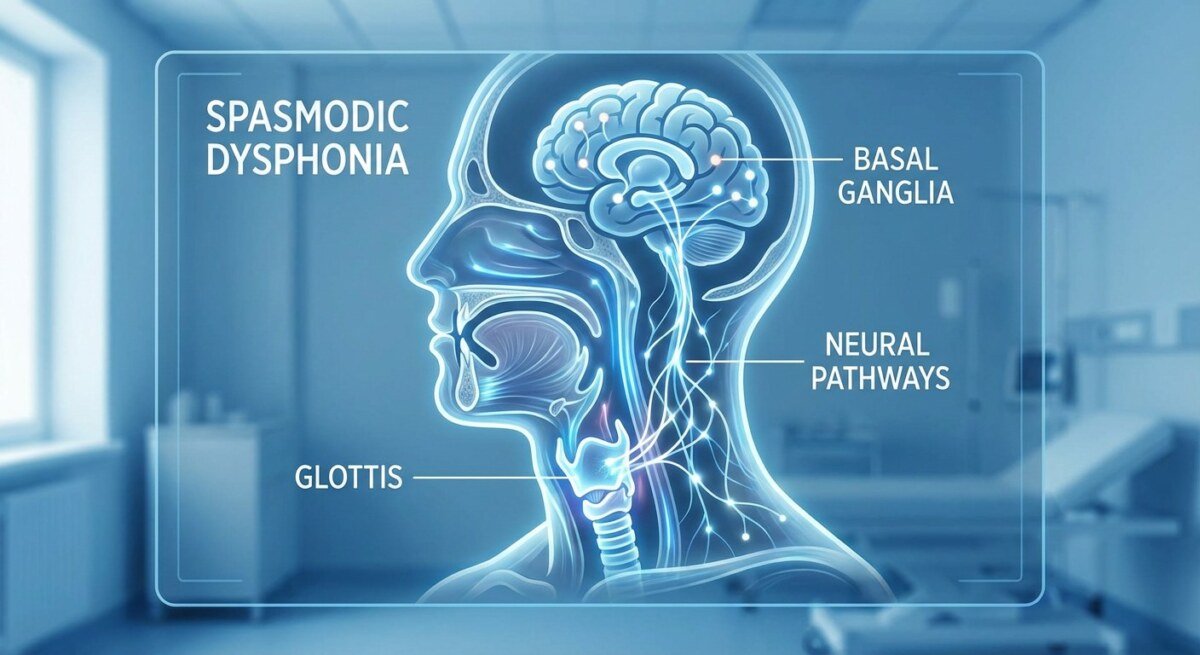
Spasmodic dysphonia is a neurological voice disorder in which involuntary muscle spasms interrupt the normal movement of the vocal cords during speech, producing a strained, broken, or effortful voice. It is classified as a focal dystonia — a movement disorder targeting one specific muscle group — and originates in the brain, not the throat. Understanding this distinction is the key to understanding RFK Jr.’s voice problem.
The Neurological Cause
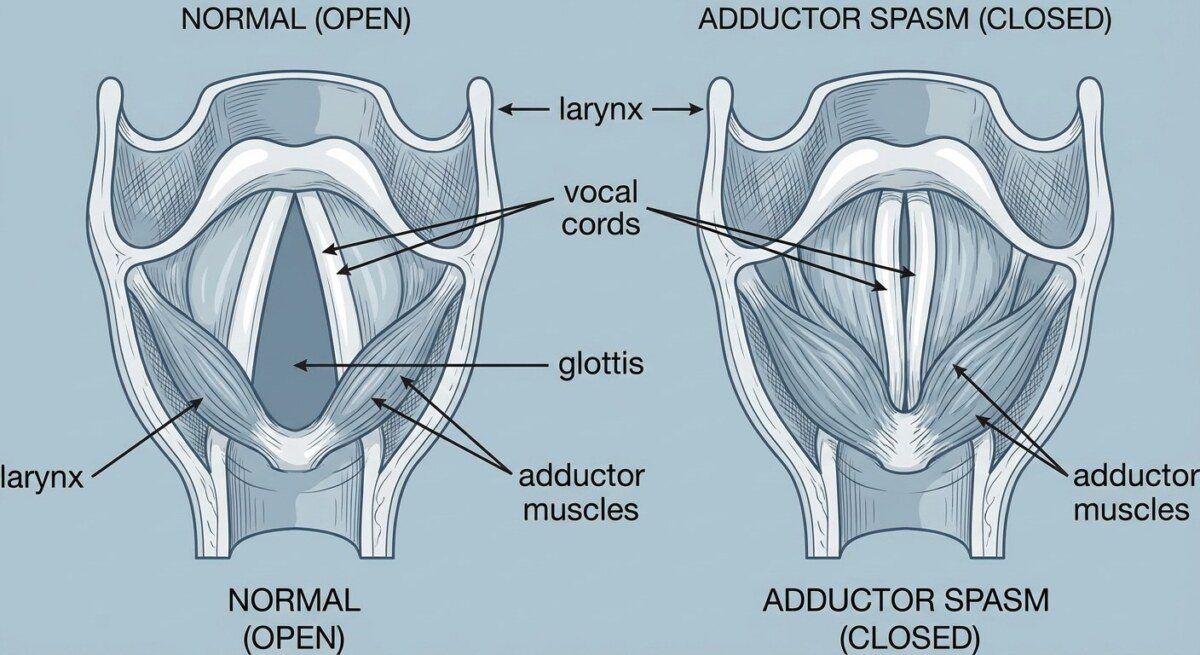
Spasmodic dysphonia originates in the basal ganglia — the deep brain structures responsible for regulating smooth, coordinated movement. When this circuitry misfires, it sends erratic signals down to the laryngeal muscles, triggering spasms specifically during the act of speaking. Singing, laughing, and whispering are often unaffected, which is one of the condition’s most clinically distinctive features.
Here’s what matters: this is not hoarseness from overuse, acid reflux, or vocal strain. Spasmodic dysphonia is not a psychological condition, and it is not caused by anxiety — though stress can worsen symptoms. According to the National Institute on Deafness and Other Communication Disorders, spasmodic dysphonia affects an estimated 50,000 people in North America, and the majority go years without a correct diagnosis.
Adductor vs. Abductor Types
There are two primary forms, and the difference between them is audible the moment someone speaks.
| Type | Mechanism | Sound Quality | Prevalence | RFK Jr.’s Type? |
|---|---|---|---|---|
| Adductor | Vocal cords clench shut involuntarily during voicing | Strained, strangled, tight — voice “cuts out” mid-word | ~80–90% of cases | Yes |
| Abductor | Vocal cords fly open during voiceless consonants | Breathy, whispery breaks — voice “fades out” | ~10–20% of cases | No |
Adductor spasmodic dysphonia is by far the more common form. The vocal cords squeeze together involuntarily, choking off airflow mid-syllable and producing that characteristic strained, effortful quality most people notice immediately in RFK Jr.’s speech. Abductor spasmodic dysphonia works in the opposite direction — the cords pull apart at the wrong moment, creating sudden breathy gaps. A small number of patients present with a mixed type involving both mechanisms.
The real story is that neither type reflects how hard someone is trying to speak clearly. The spasms are neurological and involuntary — entirely outside the speaker’s conscious control.
RFK Jr.’s Voice: His Condition, His Own Words, and His Timeline
RFK Jr. has lived with spasmodic dysphonia for roughly three decades. His voice began changing in the 1990s, and what started as intermittent strain gradually became the distinctive strained, strangled quality that defined his public persona through environmental advocacy, legal battles, and ultimately a 2024 presidential campaign. No competitor has mapped this timeline clearly — here’s what the documented record actually shows.
When His Voice Changed
According to Robert F. Kennedy Jr.’s own public statements, his voice began deteriorating in the early-to-mid 1990s. At that point, Kennedy was already an established environmental attorney and activist, working extensively with the Waterkeeper Alliance — a career that depended heavily on public speaking and courtroom advocacy.
The progression was gradual, not sudden. Spasmodic dysphonia characteristically worsens over months or years before stabilizing, and Kennedy’s trajectory appears consistent with that pattern. By the time he became a prominent vaccine-skeptic advocate in the 2000s and 2010s, the voice most Americans recognize — strained, effortful, occasionally breaking mid-phrase — was fully established.
| Period | Career Context | Voice/Condition Status |
|---|---|---|
| Early 1990s | Environmental attorney, Waterkeeper Alliance | Voice changes reportedly begin |
| Late 1990s–2000s | High-profile environmental litigation and advocacy | Spasmodic dysphonia diagnosis established |
| 2010s | Vaccine safety advocacy, public speaking tours | Condition stable; voice widely recognized |
| 2023–2024 | Independent presidential campaign | Condition unchanged; national media scrutiny intensifies |
In His Own Words
Kennedy has addressed his voice directly and without apparent embarrassment. In multiple interviews, he has identified his condition as spasmodic dysphonia and framed it matter-of-factly — a neurological reality he manages, not a vulnerability he hides. That candor is itself notable for a politician navigating relentless public scrutiny.
He has also acknowledged that the condition shapes how audiences receive him. In one widely circulated exchange, Kennedy noted that his voice forces listeners to work harder to hear him — and suggested, with characteristic defiance, that those who listen anyway tend to be paying real attention. Whether or not that reframe is strategic, it reflects someone who has spent thirty years adapting to a condition that has no cure.
Impact on His Public Career
The professional consequences of spasmodic dysphonia are easy to underestimate. For a trial attorney and public advocate, vocal credibility is a core tool. Kennedy has compensated through deliberate pacing, leaning into a slower, more measured delivery that, paradoxically, can project authority even as it signals effort.
Media reaction has ranged from sympathetic to openly mocking — a pattern consistent with the stigma that the National Spasmodic Dysphonia Association has documented among patients with visible speech disorders
Spasmodic Dysphonia vs. the Brain Worm: Two Separate Conditions Explained
RFK Jr. has two distinct neurological health disclosures — spasmodic dysphonia and a parasitic brain infection — and they are medically unrelated. Spasmodic dysphonia is a focal dystonia rooted in basal ganglia dysfunction. The parasitic infection, neurocysticercosis, is caused by a tapeworm larva lodging in brain tissue. No published medical evidence connects the two conditions in RFK Jr.’s case.
The Brain Worm Disclosure
In 2024, court documents from a child support dispute revealed that RFK Jr. had previously reported a parasitic tapeworm larva — specifically a larva of Taenia solium, the pork tapeworm — had entered his brain and died there. The resulting condition is called neurocysticercosis, which occurs when Taenia solium larvae form cysts in brain tissue. According to RFK Jr.’s own deposition, he experienced memory loss and mental fogginess around the time of the infection before reportedly recovering.
Are the Two Conditions Connected?
Here’s what matters: these are mechanistically separate conditions. Spasmodic dysphonia is a movement disorder originating in the basal ganglia, producing involuntary laryngeal muscle spasms during speech. Neurocysticercosis is a parasitic lesion — a physical, localized intrusion into brain tissue — that can cause seizures, headaches, and cognitive symptoms depending on where the cyst forms. While both technically involve the central nervous system, they operate through entirely different pathological pathways, and no peer-reviewed literature has documented neurocysticercosis as a cause or trigger of spasmodic dysphonia.
| Feature | Spasmodic Dysphonia | Neurocysticercosis (Brain Worm) |
|---|---|---|
| Cause | Basal ganglia dysfunction (focal dystonia) | Taenia solium larval cyst in brain tissue |
| Primary symptoms | Strained, strangled or broken voice during speech | Seizures, headaches, memory loss, cognitive fog |
| Affects speech directly? | Yes — laryngeal muscle spasms | Not typically |
| Established link between the two? | No published medical evidence of a connection | |
Why the Public Conflated Them
The “brain worm” story broke in a concentrated burst of media coverage in mid-2024, landing directly alongside ongoing public curiosity about RFK Jr.’s distinctive voice. The real story is that timing did the conflating — readers encountered both health stories simultaneously and the brain naturally linked them. Spasmodic dysphonia is also poorly understood by the general public, making it easy for a more viscerally dramatic diagnosis like a parasitic brain infection to fill the explanatory gap. The two conditions are medically unrelated, but the narrative momentum was already unstoppable.
Separating these two conditions matters — not just for understanding RFK Jr.’s health accurately, but for the millions of people worldwide who live with spasmodic dysphonia and have never been infected by a parasite. The condition deserves to be understood on its own neurological terms, not sensationalized through unrelated headlines.
Frequently Asked Questions
Can spasmodic dysphonia be cured?
There is currently no cure for spasmodic dysphonia. However, the condition can be managed effectively with Botox injections directly into the affected laryngeal muscles. These injections temporarily weaken the muscles that are spasming, reducing the severity of symptoms for 3 to 4 months at a time. Voice therapy can also help patients develop compensatory speaking strategies, though it does not eliminate the underlying neurological cause.
Is spasmodic dysphonia progressive or does it get worse over time?
Spasmodic dysphonia typically worsens gradually during the first few years after onset, then stabilizes. Most patients report that their symptoms plateau after 2 to 5 years. The condition does not continue to deteriorate indefinitely in most cases, and it does not affect life expectancy. RFK Jr.’s voice, for example, has remained relatively consistent over the past two decades.
Did the brain worm cause RFK Jr.’s voice problem?
No. Medical experts have stated that there is no established connection between neurocysticercosis (the parasitic brain infection RFK Jr. disclosed) and spasmodic dysphonia. Kennedy’s voice condition began in the 1990s and is consistent with idiopathic spasmodic dysphonia — meaning it arose without an identifiable external cause. The two are separate conditions affecting different parts of the nervous system.
Is spasmodic dysphonia hereditary?
Most cases of spasmodic dysphonia are idiopathic, meaning they occur spontaneously without a clear genetic cause. However, research suggests that up to 12% of patients have a family history of dystonia or voice disorders, indicating a possible genetic component in some cases. There is no evidence that RFK Jr.’s children have inherited the condition.
Why doesn’t spasmodic dysphonia affect singing or laughing?
Spasmodic dysphonia is a task-specific focal dystonia, meaning the brain circuits that misfire during speech do not necessarily misfire during other vocal activities. Singing, laughing, crying, and even shouting often use different neural pathways than conversational speech. Many people with spasmodic dysphonia report that their voice sounds near-normal when they sing — a phenomenon that puzzles patients but is well-documented in clinical literature.
Understanding the Full Picture
RFK Jr.’s voice problem is not a mystery. It is the result of spasmodic dysphonia — a chronic neurological condition that causes involuntary laryngeal muscle spasms during speech. The condition has been with him for three decades, has shaped his public persona, and has no connection to the parasitic brain infection he disclosed in 2024. They are two separate medical realities that the public conflated for understandable but medically inaccurate reasons.
For the millions of people worldwide who live with spasmodic dysphonia, visibility matters. Kennedy’s openness about his condition has brought rare public attention to a disorder that is often misdiagnosed or dismissed. Whether you agree with his politics or not, his willingness to speak publicly despite the vocal toll is a testament to both the condition’s manageability and the resilience of those who live with it.
If you or someone you know is experiencing unexplained voice strain, vocal breaks, or effortful speech that worsens during stress, consult an otolaryngologist or neurologist. Early diagnosis and treatment with Botox or voice therapy can significantly improve quality of life for people with spasmodic dysphonia.