



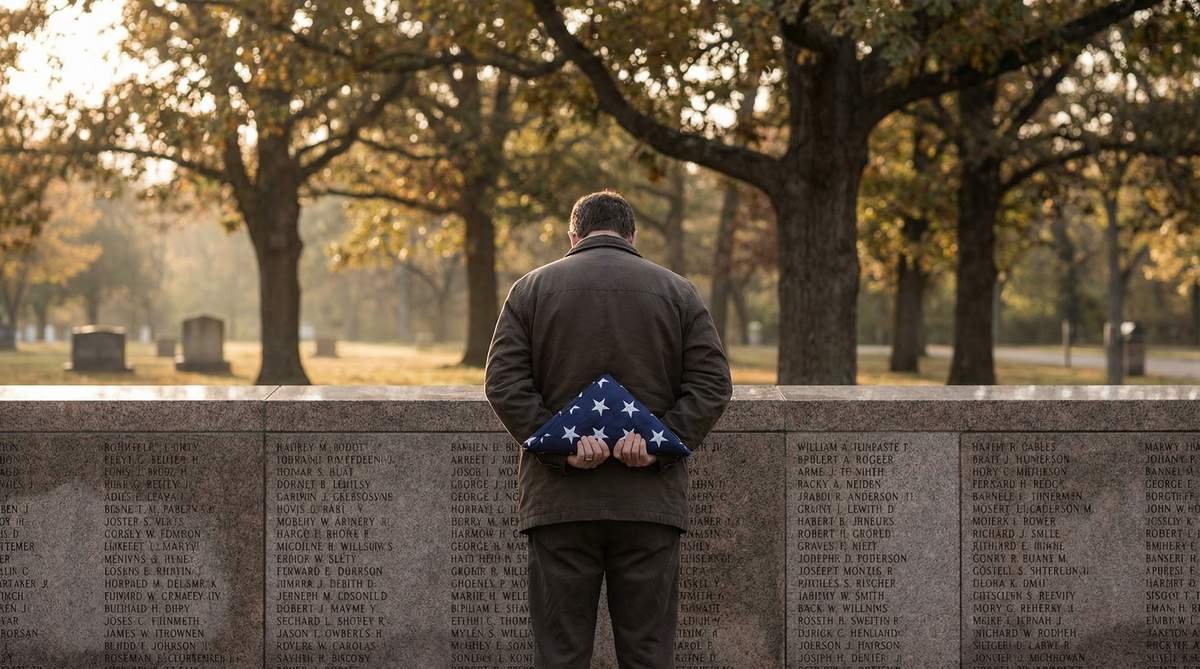
How does society recognize a man whose wife gave her life for her country? The traditional image of military sacrifice often features a grieving widow clutching a folded flag. But the modern reality of the armed forces is far more diverse—and the title of Gold Star Husband is a testament to that truth.
A Gold Star Husband is a man whose spouse—a female service member—died in the line of duty while serving in the United States Armed Forces. He carries a title forged in profound loss, navigating a unique grief journey that is rarely discussed in mainstream conversations about military sacrifice.
This article explores the specific meaning of the term, the distinct emotional challenges faced by male military widowers, and the comprehensive financial and educational benefits available to them.
The Definition and Origin of the Gold Star Title
A Gold Star Husband is the surviving male spouse of a United States military service member who was killed in action or died in the line of duty. The “Gold Star” designation originates from World War I, when families replaced the blue star on their service flags with a gold one to signify a fallen loved one.
The terminology surrounding military loss has evolved significantly over the past century. During World War I, the term “Gold Star Mothers” emerged as a way to honor women who had lost sons in combat. Following World War II, the designation expanded to “Gold Star Wives,” recognizing the widows of fallen service members. As the demographics of the military shifted, the Department of Defense and support organizations adopted the more inclusive term “Gold Star Spouses.”
Despite this inclusive shift, the specific experience of the Gold Star Husband remains distinct. While they share the exact same legal status and benefits as Gold Star Wives, male survivors often find themselves navigating a legacy and a support system that were originally designed with female survivors in mind. The U.S. Army’s official Gold Star Survivors page explicitly recognizes “Gold Star Mothers, Fathers, Siblings, Wives, Husbands and other Survivors,” a formal acknowledgment that the community is far broader than its historical name suggests.

The Changing Demographics: Women in Combat
As women’s roles in the military have expanded, including full integration into direct ground combat roles since 2015, the number of female casualties has risen. More than 150 women have been killed in the post-9/11 wars, resulting in a growing and often overlooked community of Gold Star Husbands.
The landscape of the United States military has transformed dramatically since the events of September 11, 2001. Women now serve in unprecedented numbers and in roles previously restricted to men. In 2015, the Department of Defense officially opened all combat jobs to women, acknowledging the reality that female service members had already been serving—and dying—in combat zones for years.
Statistics highlight this grim reality. Since the beginning of the Global War on Terror, more than 150 female service members have lost their lives in Iraq, Afghanistan, Kuwait, and Syria. Each of these fallen heroes left behind grieving families, and many left behind husbands who suddenly found themselves thrust into the role of military widower.
The story of Joe Kent, a retired Green Beret whose wife, Navy Senior Chief Petty Officer Shannon Kent, was killed in Syria in January 2019, brought national attention to the specific plight of the Gold Star Husband. Shannon was on her fifth combat deployment when she was killed by a suicide bomber. Her husband’s public advocacy underscored a powerful truth: the ultimate sacrifice knows no gender.
Unique Challenges Faced by the Military Widower
Gold Star Husbands face distinct psychological and social hurdles. They often encounter societal expectations regarding male grief and frequently experience isolation when participating in survivor support networks that are predominantly female.
Grief is a universal human experience, but the context in which it occurs can deeply influence the healing process. For a Gold Star Husband, the journey is often complicated by ingrained societal norms that expect men to be stoic, to “stay strong” for their children, and to process their trauma privately. This cultural pressure can delay or suppress the healthy grieving process.
Furthermore, when male survivors seek out community support, they often find that the existing infrastructure is overwhelmingly female. Support groups, retreats, and online forums are naturally populated mostly by widows, given the historical demographics of military casualties. This disparity can make a Gold Star Husband feel like an outsider within his own community of survivors.
Organizations like the Tragedy Assistance Program for Survivors (TAPS) have recognized this gap. TAPS explicitly offers resources categorized under “Men’s Grief,” ensuring that military widowers have access to peer support from other men who truly understand the unique pain of losing a servicewoman wife. Their helpline is available at 800-959-TAPS (8277).
Financial and Educational Benefits for Gold Star Husbands
Gold Star Husbands are entitled to the exact same federal benefits as Gold Star Wives. These include tax-free Dependency and Indemnity Compensation (DIC) from the VA, the Survivor Benefit Plan (SBP) annuity from DoD, and extensive educational assistance through programs like the Fry Scholarship.
The Department of Veterans Affairs (VA) and the Department of Defense (DoD) provide a comprehensive safety net for the surviving spouses of fallen service members. These benefits are entirely gender-neutral and are designed to provide financial stability and educational opportunities for those who have lost a military partner.
The cornerstone of financial support is the Dependency and Indemnity Compensation (DIC). This is a tax-free monthly monetary benefit paid to eligible survivors. For 2025, the base monthly rate for a surviving spouse is $1,699.36, with additional amounts available for those with dependent children, those requiring aid and attendance, or those whose service member had a long-standing disability rating.
Another critical component is the Survivor Benefit Plan (SBP), a voluntary annuity program that pays up to 55% of the deceased service member’s retired pay to the surviving spouse. As of January 1, 2023, the long-criticized “SBP-DIC Offset” was fully eliminated, allowing surviving spouses to receive both benefits in full simultaneously.
| Benefit Type | Administered By | Key Feature | 2025 Base Amount |
|---|---|---|---|
| DIC | VA | Tax-free monthly compensation | $1,699.36/month |
| SBP | DoD (DFAS) | Monthly annuity based on retired pay | Up to 55% of base amount |
| Fry Scholarship | VA | Post-9/11 GI Bill for spouse & children | Full in-state tuition (varies) |
| VA Home Loan Guaranty | VA | Home purchase assistance | No down payment required |
Educational benefits are also robust. The Marine Gunnery Sergeant John David Fry Scholarship provides Post-9/11 GI Bill benefits—including tuition, housing, and a book stipend—to the spouses and children of service members who died in the line of duty after September 10, 2001.
The Impact of Remarriage on Survivor Benefits
Remarrying before age 55 generally suspends a Gold Star Husband’s DIC and SBP benefits. Remarrying at age 55 or older allows him to retain full benefits. Legislative efforts continue to push for the elimination of this remarriage penalty entirely.
Navigating life after loss eventually brings up the possibility of finding love again. For Gold Star Husbands, this deeply personal decision carries substantial financial implications. Under current federal law, survivor benefits are closely tied to marital status and age.
If a Gold Star Husband remarries before reaching his 55th birthday, his eligibility for both DIC and SBP is suspended. This policy has long been a point of contention among survivor advocacy groups, who argue that it forces young widowers to choose between financial security and moving forward with their personal lives.
However, if the surviving spouse waits until after age 55 to remarry, they are allowed to retain their DIC and SBP benefits in full. Legislative efforts, such as the proposed Love Lives On Act, continually aim to reform these rules and eliminate the remarriage penalty entirely. If a subsequent marriage ends in divorce or the death of the new spouse, the Gold Star Husband can typically apply to have his original survivor benefits reinstated.
How to Support a Gold Star Husband
Supporting a Gold Star Husband requires long-term commitment, acknowledging his specific role as a military widower, and avoiding clichés. Practical help, consistent presence, and honoring the memory of his fallen wife are often more valuable than any words.
When a female service member is killed, the immediate outpouring of support for her husband and family is usually immense. However, as the months and years pass, that support often fades, leaving the Gold Star Husband to navigate the long road of single parenthood and enduring grief largely alone.
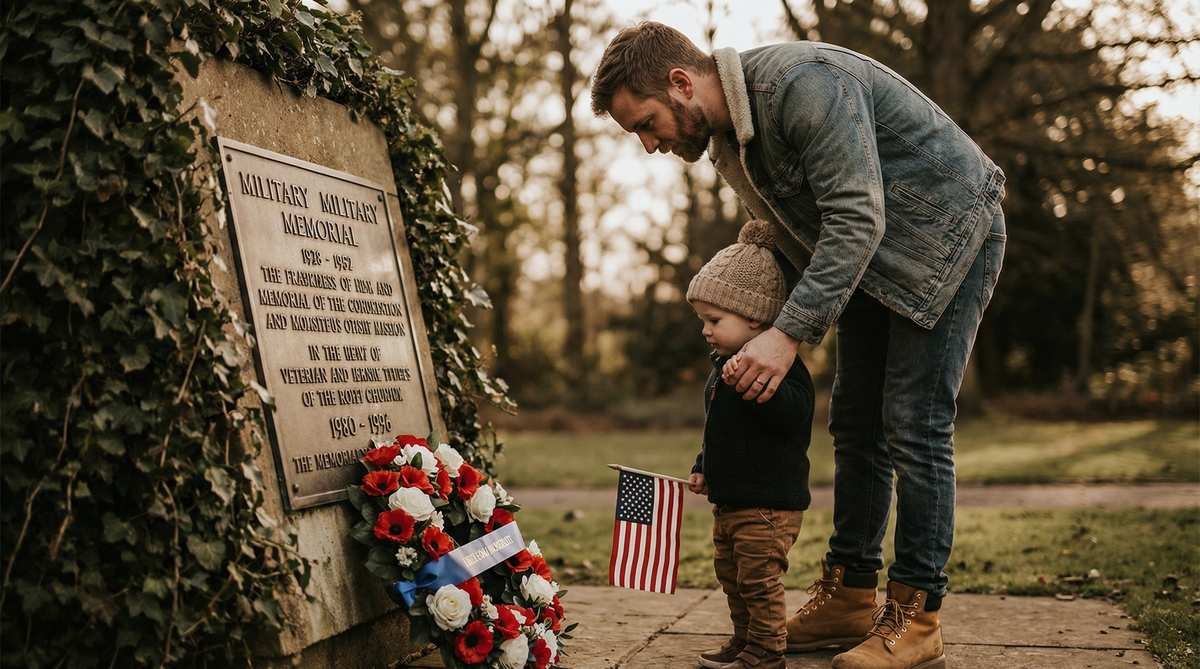
To truly support a military widower, friends and community members should focus on consistency. Remembering the anniversary of his wife’s death, or reaching out on Gold Star Spouses Day (April 5), shows that her sacrifice—and his ongoing pain—are not forgotten. These small acts of remembrance carry enormous weight.
Avoid relying on clichés like “she knew what she signed up for” or “you need to be strong for the kids.” Instead, offer practical assistance without waiting to be asked. Mow the lawn, drop off a meal, or offer to watch the children so he can have a moment to breathe. Acknowledging his unique position as a male survivor validates his experience and helps dismantle the isolation he may feel.
Frequently Asked Questions
What is a Gold Star Husband?
A Gold Star Husband is a man whose wife, a female U.S. military service member, was killed in action or died in the line of duty. He holds the same official “Gold Star Spouse” designation as a Gold Star Wife and is entitled to the same federal benefits and honors.
Is a Gold Star Husband the same as a Gold Star Spouse?
“Gold Star Spouse” is the official, gender-neutral term used by the Department of Defense and the VA. A Gold Star Husband is simply a male Gold Star Spouse. They receive the exact same recognition, honors, and benefits as a Gold Star Wife.
What benefits does a Gold Star Husband receive?
Gold Star Husbands are entitled to Dependency and Indemnity Compensation (DIC) from the VA—a tax-free monthly benefit of approximately $1,699.36 (2025 base rate)—as well as the Survivor Benefit Plan (SBP), the Fry Scholarship for education, VA home loan guaranty, and other survivor benefits.
Do Gold Star Husbands lose their benefits if they remarry?
Generally, if a Gold Star Husband remarries before the age of 55, his DIC and SBP benefits are suspended. If he remarries at age 55 or older, he retains his benefits. Benefits may be reinstated if a subsequent marriage ends in divorce or death of the new spouse.
Who receives the Gold Star Lapel Button?
The Gold Star Lapel Button is awarded to the widow, widower, parents, and next of kin of service members who lost their lives in armed conflict. It features a gold star on a purple circular background, bordered in gold and surrounded by gold laurel leaves.
What day is Gold Star Spouses Day?
Gold Star Spouses Day is observed annually on April 5. It is a day dedicated to honoring the surviving husbands and wives of fallen U.S. military service members. The day was originally established as “Gold Star Wives Day” in 2010 and was later renamed to be more inclusive.
Conclusion: Honoring the Legacy
The title of Gold Star Husband is one that no man ever wishes to hold. It represents the shattering of a future and the ultimate sacrifice made by the woman he loved. As the demographics of the United States military continue to evolve, society must broaden its understanding of what a surviving military family looks like.
By acknowledging the unique emotional landscape of the male military widower, understanding the vital benefits they are owed, and offering unwavering community support, we can properly honor the legacy of the fallen servicewomen. Their sacrifice demands nothing less than our total commitment to the husbands and children they left behind.