




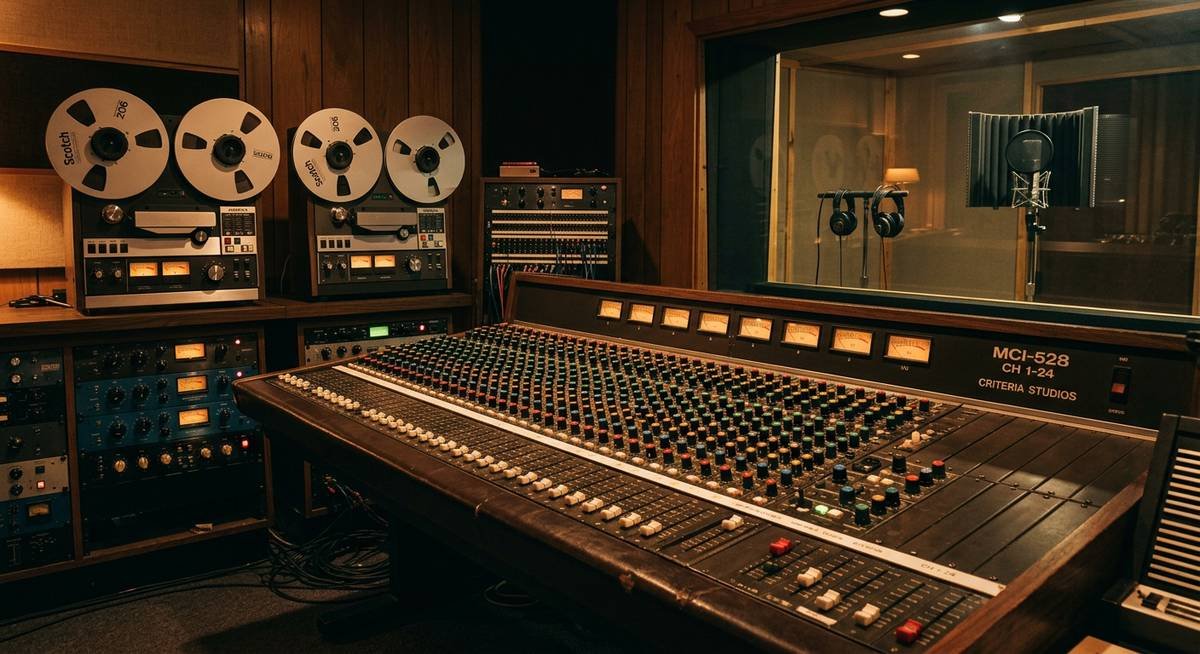
Barry Gibb, Karl Richardson, and Albhy Galuten spent nine months locked inside Criteria Studios in Miami during 1978, shaping what would become Spirits Having Flown — the Bee Gees’ commercial juggernaut that sent three consecutive singles to number one in the United States. Decades later, the demo recordings from those sessions finally surfaced as a standalone release.
Alternative Spirits: The 1978 Demo, released on September 5, 2025, by Yard Stick Records, is a 13-track CD collecting alternate versions, rough mixes, and early takes from the original recording dates. Not remixes. Not remasters. The raw session tapes — the songs before the polish, before the orchestral overdubs, before RSO Records pressed them into one of the best-selling albums of the late 1970s.
What did “Tragedy” sound like before the final vocal stack? How did “Too Much Heaven” evolve from its earliest structure? Three tracks on the Bee Gees Alternative Spirits compilation never made the official album at all. The answers sat in a vault for nearly five decades.
The Spirits Having Flown Sessions at Criteria Studios
The Bee Gees recorded Spirits Having Flown between March and November 1978 at Criteria Recording Studios in Miami, Florida — the same facility where they had tracked their contributions to the Saturday Night Fever soundtrack the year before. The Bee Gees spirits album was their fifteenth studio release, issued on February 5, 1979, through RSO Records, and it topped album charts in both the United States and the United Kingdom.
Inside Criteria Studios, March Through November 1978
Criteria Studios had become the Bee Gees’ creative headquarters by the late 1970s. Co-producer Albhy Galuten recalled that the Spirits Having Flown sessions were driven primarily by Barry Gibb, Galuten himself, and engineer-producer Karl Richardson, working long days and nights to build the album’s elaborate arrangements. The trio used 24-track recording technology to layer instrumentation and vocals with a density unusual for pop records of that era.
The sessions overlapped with another major project at Criteria. Chicago was simultaneously recording Hot Streets in a neighboring room, according to the official Bee Gees website (beegees.com, 2025). String arrangements were tracked separately at Sound Mixers Studio in New York. Guest musicians included members of the Chicago horn section and jazz flautist Herbie Mann, both credited on the album’s original liner notes.
Mastering took place at Sterling Sound in New York. The finished album contained ten tracks, and its first three singles — “Too Much Heaven,” “Tragedy,” and “Love You Inside Out” — all reached number one on the Billboard Hot 100.
Barry Gibb’s Creative Dominance and the Evolving Roles of Robin and Maurice
The Spirits Having Flown sessions marked a decisive internal shift. Galuten described the album as being created primarily by Barry, with Robin and Maurice Gibb stepping back into supporting roles as harmony and backing vocalists. Even in that capacity, Barry frequently re-recorded their parts himself, layering vocal dubs over and over until the blend met his standards.
By 1978, Barry’s falsetto had become the group’s commercial identity — a transformation confirmed by the massive success of Saturday Night Fever. As uDiscover Music noted in a retrospective, the brothers “teamed with trusted co-producers Karl Richardson and Albhy Galuten” at Criteria, but the creative center of gravity had unmistakably shifted toward one brother. In a 1978 interview, Barry acknowledged the tension directly: “People think we’re just about disco now.”
What Makes Alternative Spirits Different from the Final Album
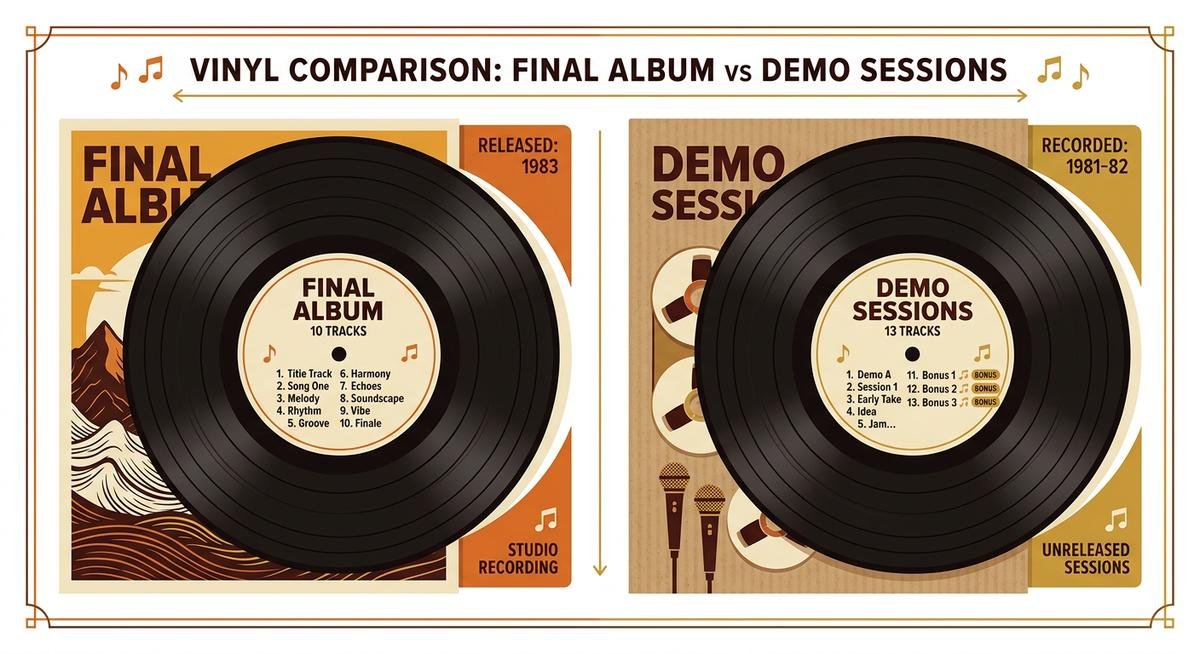
The Bee Gees Alternative Spirits compilation contains 13 demo recordings from the Spirits Having Flown sessions — three more tracks than the final album’s ten. Several are alternate versions of songs that made the official release, while others represent material cut entirely during the final selection process.
The 13-Track Demo Sequence
Yard Stick Records released Alternative Spirits: The 1978 Demo on September 5, 2025, as a single CD with the catalogue designation YS057 and EAN 0823564039589. The full tracklist, verified across retail catalogue databases including Discogs, musicMagpie, and Fishpond:
| # | Track Title | Duration | On Final Album? |
|---|---|---|---|
| 1 | Instrumental | 3:23 | No |
| 2 | Too Much Heaven | 4:52 | Yes — Lead single, #1 US |
| 3 | Reaching Out | 3:53 | Yes |
| 4 | Stop (Think Again) | 6:19 | Yes |
| 5 | Search, Find | 4:17 | Yes |
| 6 | Love You Inside Out | 4:08 | Yes — Third single, #1 US |
| 7 | I’m Satisfied | 3:23 | Yes |
| 8 | Tragedy | 4:51 | Yes — Second single, #1 US |
| 9 | Living Together | 3:51 | Yes |
| 10 | Spirits (Having Flown) | 4:36 | Yes — Title track, UK single |
| 11 | In The Heat Of The Night | 3:58 | No — Cut from final LP |
| 12 | How Deep Is Your Love | — | Released on SNF soundtrack (1977) |
| 13 | Save Your Heart For Me | — | No — Previously unreleased |
Tracks 11 through 13 are the real curiosities. “In The Heat Of The Night” and “Save Your Heart For Me” never appeared on Spirits Having Flown, while “How Deep Is Your Love” had already been released on the Saturday Night Fever soundtrack in 1977 — but evidently had a separate demo version recorded during these later sessions at Criteria.
Tracks That Never Made the Official Cut
The opening “Instrumental” — a 3:23 piece with no known title beyond its functional label — may represent an arrangement sketch or studio warm-up that preceded the vocal sessions. “In The Heat Of The Night” was recorded during the same March-November 1978 window but was ultimately left off the ten-track final cut, possibly because it overlapped tonally with other midtempo tracks. “Save Your Heart For Me” appears to be entirely unreleased in any official Bee Gees context prior to this 2025 compilation.
For Bee Gees collectors, these three tracks represent the strongest reason to seek out the disc. The Bee Gees alternate versions of known hits reward comparative listening, but previously unheard material from the peak commercial period is where Bee Gees Alternative Spirits earns its real value.
Alternate Lyrics and Vocal Arrangements Across the Demos
Demo recordings from the Spirits Having Flown sessions feature lyrical variations and vocal arrangements that differ noticeably from the polished final versions — a standard characteristic of any working tape captured at the rough-mix stage, and precisely what makes these Bee Gees alternate lyrics worth studying.
From Demo to Master — How Songs Changed Shape
The gap between a Bee Gees demo and a finished master was enormous during this period. Barry Gibb was known for obsessive re-recording, laying down vocal takes repeatedly and stacking harmonies until the blend satisfied his standards. Galuten’s account of Barry doing “many of the vocal dubs himself as he went over and over the recorded work” (as quoted by punk to funk heaven and Plastichead in their catalogue descriptions) suggests that the demos on Alternative Spirits capture a much earlier production stage — before the orchestral sweetening, before the final harmony stacks, before the lyrics were locked.
“Tragedy” — which became a global smash partly because of its dramatic production and layered vocal arrangement — would have sounded fundamentally different at the demo stage. According to Albumism (2025), a 1979 NBC documentary captured Barry blowing through his cupped hands in front of a studio microphone to create the wind effect heard in the song’s climax. That kind of textural detail came late in the process. The demo version on Alternative Spirits predates those additions.
“Too Much Heaven” offers another case study. The song was released as the lead single in November 1978, meaning its demo was recorded months earlier during the session window. Bee Gees alternate lyrics at the demo stage are a natural byproduct of a song still being refined — phrasing gets tightened, verses get reordered, bridges get rewritten. The working tape reveals the editorial choices that shaped one of the Bee Gees’ most celebrated ballads before Barry, Richardson, and Galuten finalized it for release.
Spirits Having Flown on Stage — The 1979 Tour
The Bee Gees launched their Spirits Having Flown Tour on June 28, 1979, at the Tarrant County Convention Center in Fort Worth, Texas — their first live performances in three years and the most ambitious touring production the group had ever mounted. The tour visited 38 cities, delivered over 50 shows, and grossed millions.
The 38-City North American Tour
The Spirits Having Flown Tour spanned the United States and Canada over roughly ten weeks (with a three-week break in August), closing on October 6, 1979, at Miami Stadium. Sold-out crowds regularly exceeded 15,000 per show. The Bee Gees played five consecutive nights at Madison Square Garden in New York City, with additional dates added in St. Louis, Tulsa, and Montreal after initial shows sold out immediately.
The production required a 90-person entourage and a customized Boeing 720 jet leased for over $1 million. The Sweet Inspirations served as the opening act. In Houston, actor John Travolta joined the group onstage for “You Should Be Dancing,” recreating his Saturday Night Fever moves in front of a stadium audience.
The setlist mixed the Bee Gees spirits live material from the new album with earlier hits — “Stayin’ Alive,” “Night Fever,” “How Deep Is Your Love.” Concert recordings show the group fusing “Holiday,” “I Can’t See Nobody,” and “To Love Somebody” into a nostalgic medley, closing the main set with “Words” before the encore of “You Should Be Dancing.”
The NBC Television Special
The Bee Gees Special, filmed at the Oakland Arena stop on the tour and aired on NBC on November 15, 1979, remains the most complete filmed document of the group performing Spirits Having Flown material live. The broadcast includes concert performances, behind-the-scenes footage, and interviews with all three brothers.
For anyone searching for Bee Gees spirits live footage, the NBC special — clips of which circulate on YouTube — is the primary source. A complete officially released concert recording from the tour has never materialized, making the available footage an irreplaceable historical record of the Bee Gees at their commercial peak.
Pot, Pills, and Piss — The Gibb Brothers and the Disco-Era Lifestyle
The Bee Gees’ relationship with alcohol and drugs was openly acknowledged by the brothers themselves — they coined the nickname “Pot, Pills and Piss” to describe their respective substances of choice during the recording period that produced both Saturday Night Fever and Spirits Having Flown.
Barry, Robin, and Maurice’s Self-Named Vices
Maurice Gibb supplied the breakdown in a frequently cited interview: “Barry would be smoking pot, Robin was on pills and I would be drinking.” As reported by Rolling Stone and later summarized by Grunge (2023), these habits ran parallel to the group’s creative output rather than interrupting it — at least during the Spirits Having Flown period. Robin’s amphetamine use was partly functional: he took pills to stay awake during expensive late-night sessions at Criteria, where studio time was not cheap.
Maurice’s Bee Gees alcohol struggles escalated through the 1970s. According to Our Mental Health (2025), the partying lifestyle common in the music industry fueled his drinking to a degree that eventually required intervention. He died on January 12, 2003, at age 53, from complications of a twisted intestine — a condition unrelated to his drinking, but one that arrived after decades of physical strain. Barry has credited his wife Linda with helping him stop using cannabis and has described himself as largely sober since, aside from occasional sake.
Andy Gibb’s Shadow Over the Era
Andy Gibb — the youngest Gibb brother, not officially a member of the Bee Gees but permanently tied to the family’s public story — was recording his own material during the same period as the Spirits Having Flown sessions. He had scored three consecutive number-one singles and sold an estimated 20 million records in three years. By the early 1980s, his cocaine addiction had escalated to what SPIN magazine (2023) described as “a thousand dollars’ worth of cocaine daily.”
Andy died on March 10, 1988, at age 30, from myocarditis — inflammation of the heart muscle — linked to years of cocaine use. Robin Gibb later revealed he had warned Andy three days before the youngest brother collapsed. “That conversation still haunts me,” Robin told reporters.
The Bee Gees had been close to announcing Andy as a permanent fourth member before his death. The parallel timelines — the Spirits Having Flown recordings capturing the group at their zenith, while Andy’s solo career peaked and began its fatal decline simultaneously — give the Bee Gees Alternative Spirits session tapes a biographical weight that extends well beyond musical curiosity.
Frequently Asked Questions
What is the Bee Gees Alternative Spirits album?
Alternative Spirits: The 1978 Demo is a 13-track CD released on September 5, 2025, by Yard Stick Records (catalogue YS057), containing demo recordings from the Bee Gees’ 1978 sessions for Spirits Having Flown at Criteria Studios in Miami. The tracks are alternate versions, rough mixes, and previously unreleased material — not remasters or remixes of the final album.
How many tracks are on Alternative Spirits: The 1978 Demo?
The album contains 13 tracks, including demo versions of all three number-one singles (“Too Much Heaven,” “Tragedy,” “Love You Inside Out”), the title track “Spirits (Having Flown),” and three tracks absent from the official album: an unnamed instrumental, “In The Heat Of The Night,” and “Save Your Heart For Me.”
Who produced the Spirits Having Flown sessions?
Barry Gibb, Albhy Galuten, and Karl Richardson co-produced the sessions at Criteria Recording Studios in Miami between March and November 1978. Galuten handled orchestral arrangements, Richardson served as both producer and engineer, and string overdubs were recorded separately at Sound Mixers Studio in New York.
Is Alternative Spirits a live album?
No. Alternative Spirits contains studio demo recordings from the 1978 Criteria Studios sessions, not live concert material. For Bee Gees spirits live performances of this material, the NBC television special filmed at Oakland Arena in 1979 remains the primary source.
What label released Alternative Spirits?
Yard Stick Records released the compilation with catalogue number YS057 and EAN 0823564039589. It is available as a single CD and was first listed for sale in 2025.
Did the Bee Gees perform Spirits Having Flown songs live?
Yes. The Spirits Having Flown Tour ran from June 28 to October 6, 1979, covering 38 cities across the United States and Canada with more than 50 performances. The group played five consecutive nights at Madison Square Garden. The NBC special The Bee Gees Special, aired November 15, 1979, captured concert footage from the Oakland Arena stop.
What are the differences between the demos and the final Spirits Having Flown album?
The demos capture songs before orchestral overdubs, final vocal stacking, and lyrical revisions were completed. Barry Gibb’s process of repeatedly layering harmonies and reworking arrangements means the finished versions on Spirits Having Flown can sound substantially different from these 1978 working tapes, particularly on production-heavy tracks like “Tragedy.”