




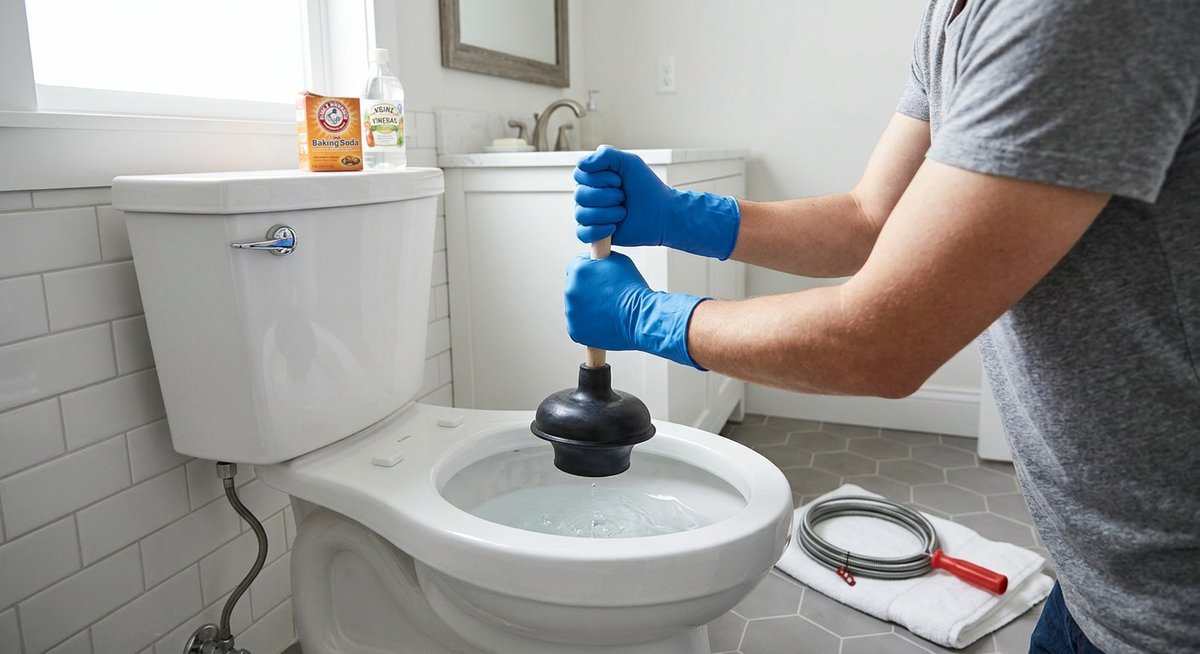
A flange plunger clears most clogged commodes in under two minutes flat, shares UTZ Property Management professionals. The toilet trap — that S-shaped porcelain channel just below the bowl — is where roughly nine out of ten household blockages form, and every method on this page targets that choke point with increasing force until the clog gives up.
If your bowl is spilling over the rim right now, jump to the emergency shutoff steps directly below. Stopping the flood takes about eight seconds and prevents the kind of water damage that, according to the Insurance Information Institute (2024), drives nearly one in four homeowner insurance claims filed each year.
Everything here follows an escalation path: plunger first, then no-plunger household fixes using supplies already in the kitchen, then a toilet auger for deep or stubborn drain blockages, then guidance on vent pipes, main sewer lines, and the specialty situations — septic systems, RV commodes, recurring clogs — that most resources skip entirely.
Stop the Flood First: Emergency Steps for an Overflowing Commode
Turn off the water supply valve before you touch the clog — every second of delay sends roughly half a gallon onto your bathroom floor. The Insurance Information Institute (2024) reports that water damage and freezing account for nearly 24% of all homeowner insurance claims, and most of that damage happens in the first 60 seconds before anyone finds the shutoff.
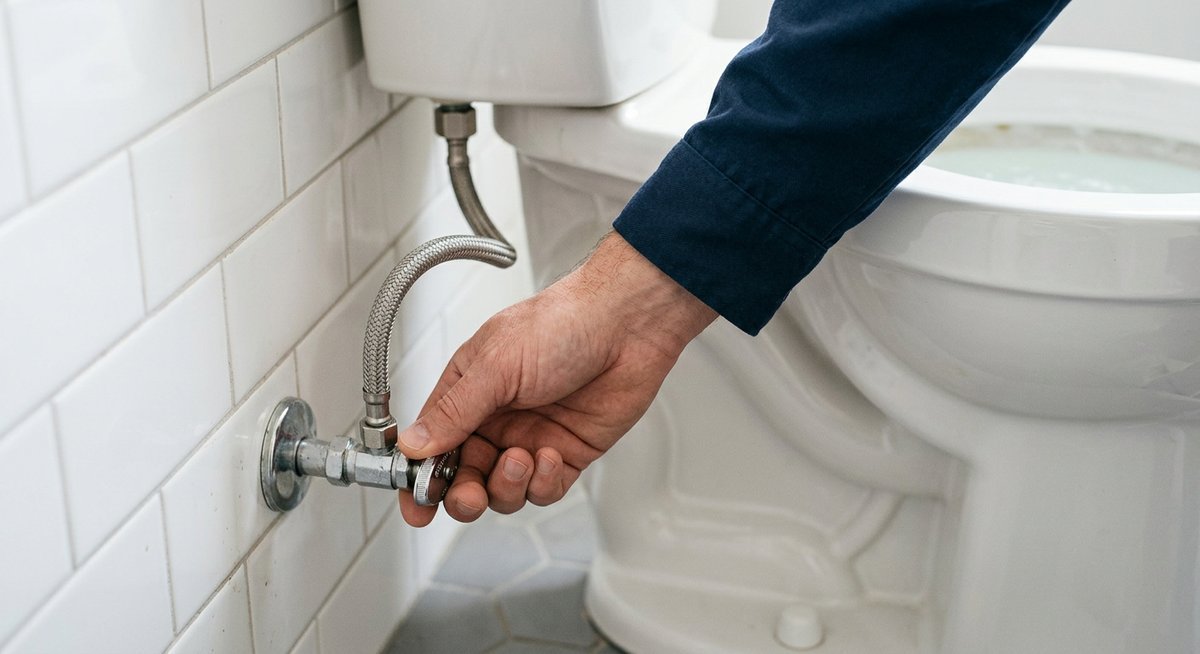
Shut Off the Water Supply Immediately
The shutoff valve is a small oval or football-shaped handle on the wall directly behind the toilet base. Turn it clockwise until it stops. If the valve is corroded and won’t budge, lift the tank lid and prop the float ball upward with your hand or a pencil laid across the tank walls. This physically prevents the flush mechanism from refilling the bowl while you work.
Reduce the Bowl Water Level Before You Start
A bowl filled to the rim makes every unclogging method messier and less effective. Use a small cup or disposable container to scoop out enough water so the level sits roughly halfway. Discard it into a bucket. Now any method — plunger, dish soap, or auger — can work without splashing contaminated water across the floor.
How to Unclog a Commode With a Plunger
A flange plunger with a proper seal clears the majority of toilet clogs in under two minutes — most failed attempts come down to the wrong tool or a broken seal, not a blockage that’s genuinely beyond reach. The Plumbing-Heating-Cooling Contractors Association (PHCC) notes that improper plunger technique is the leading reason homeowners escalate to professional service calls for routine toilet clogs.
Choose the Right Plunger
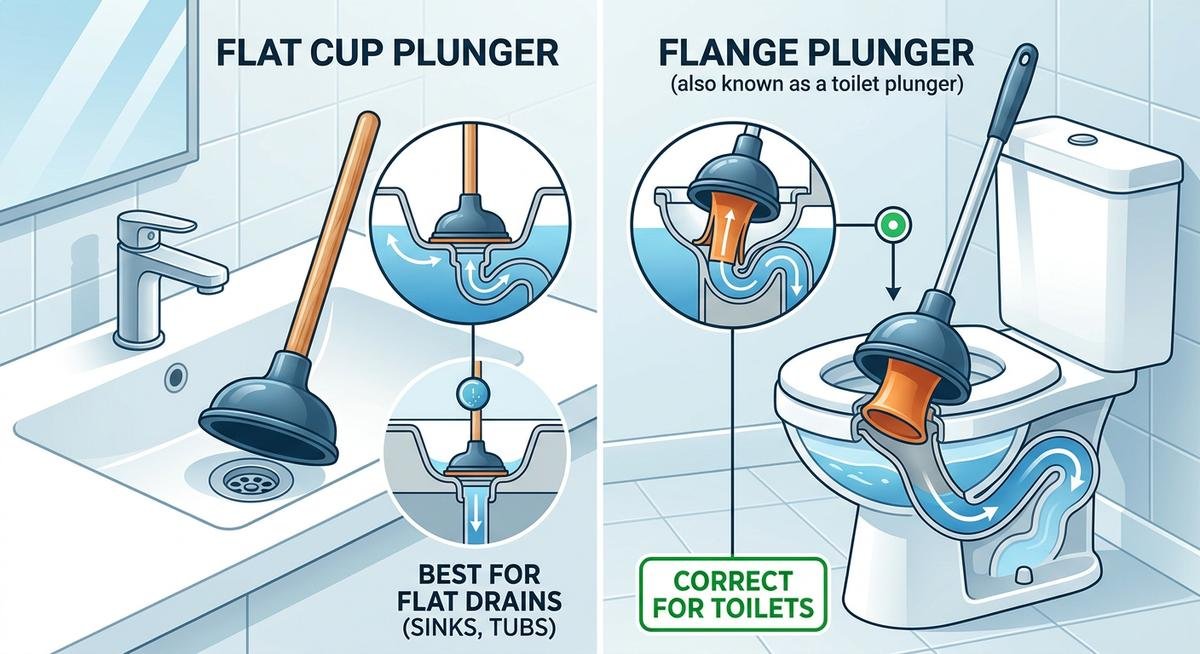
A flat cup plunger — the red dome most people picture — is designed for flat sink drains. It cannot form a reliable seal over a toilet’s curved drain opening. A flange plunger has an extended rubber sleeve that folds out to fit directly into the toilet trap, creating the airtight seal that makes pressure transfer possible.
| Plunger Type | Best For | Works on Toilets? |
|---|---|---|
| Flat Cup Plunger | Sinks, tubs, flat drains | No — poor seal on curved trap |
| Flange Plunger | Toilets | Yes — flange seals the drain opening |
| Accordion Plunger | Toilets (heavy-duty) | Yes — generates maximum pressure |
The Correct Plunging Technique, Step by Step
- Warm the rubber. Run hot tap water over the plunger cup for 30 seconds. Warm rubber is more pliable and forms a tighter seal against porcelain.
- Submerge the flange. Lower the plunger at an angle to let it fill with water — air in the cup breaks the seal. Position the flange directly over the drain opening.
- Establish the seal before you push. Press down slowly on the first stroke. A hard first push expels air and collapses the seal; a slow push locks it in.
- Use pull strokes, not just push strokes. Alternate firm downward pushes with sharp upward pulls. The pulling motion creates negative pressure that dislodges a clog as effectively as pushing it forward.
- Repeat 8 to 10 full strokes. Maintain the seal throughout. When the water level suddenly drops, the clog has cleared.
- Test with a single flush. Watch the bowl drain fully before assuming success. A slow drain may mean a partial blockage remains deeper in the trap.
When the Plunger Fails
Eight to ten solid strokes with a proper seal should move any organic clog sitting in or near the toilet trap. If the water level hasn’t budged, the blockage is likely deeper in the drain pipe — or it’s a solid object that pressure alone won’t shift. Stop plunging at that point. Continuing risks pushing the clog further down the line, making it harder to retrieve.
How to Unclog a Commode Without a Plunger
Dish soap and hot water clears most soft organic clogs in 10 to 15 minutes flat — no tools required. The American Society of Plumbing Engineers (ASPE) confirms that the majority of residential toilet clogs consist of organic waste and tissue paper, material that responds to lubrication and hydraulic pressure before any chemical or mechanical intervention is needed.
Dish Soap and Hot Water
Pour roughly half a cup of Dawn or any liquid dish soap directly into the bowl. Follow it with a full bucket — about one gallon — of hot tap water poured from waist height. The drop adds hydraulic pressure that pushes the soap deeper into the toilet trap.
Wait 10 to 15 minutes without flushing. The soap acts as a lubricant, coating the trap walls so the blockage loses its grip. Then flush once — a single controlled flush — to confirm the drain is clear.
Baking Soda and Vinegar
Pour one cup of baking soda into the bowl first, then slowly add two cups of white vinegar to control the fizz. Dumping vinegar too fast causes an overflow. The chemical reaction creates CO2 pressure that can break apart partial clogs, though this method works best on soft buildup rather than dense blockages.
Let the mixture sit for 30 minutes minimum before flushing with hot tap water. Overnight soaking works even better for stubborn partial clogs. Baking soda and vinegar is the most septic-safe option available — no chemicals, no bacteria-killing agents, nothing that harms a septic tank’s biological ecosystem.
Wire Coat Hanger
Unwind a wire coat hanger into a single straight length, then wrap the working end tightly with several layers of duct tape or an old rag. The wrapping is non-negotiable — bare wire scratches and permanently damages porcelain.
Feed the wrapped end into the drain opening using slow, rotating motions to break up or hook whatever is blocking the trap. This works especially well for clogs caused by baby wipes, paper towels, or a child’s toy — solid objects that soap and vinegar cannot dissolve.
Wet/Dry Vacuum
A shop vac rated for liquid can suction a clog directly out of the drain. Never use a standard household vacuum — water will destroy the motor instantly. Remove as much bowl water as possible first, insert the hose into the drain, wrap an old towel around the connection for a seal, and run suction for 20 to 30 seconds. This is one of the few techniques that physically retrieves a foreign object rather than pushing it deeper.
Hot Water Alone
Hot tap water around 120 to 140 degrees Fahrenheit can loosen a soft clog when poured from waist height. Boiling water at 212 degrees is a different story: boiling water can crack porcelain or damage the wax ring seal at the toilet’s base. Stick to the hot tap.
| No-Plunger Method | Best For | Wait Time | Septic Safe? |
|---|---|---|---|
| Dish Soap + Hot Water | Soft organic clogs | 10-15 min | Yes |
| Baking Soda + Vinegar | Partial or slow drains | 30 min to overnight | Yes |
| Wire Coat Hanger | Solid or foreign objects | Immediate | Yes |
| Wet/Dry Vacuum | Near-surface clogs, retrieval | Immediate | Yes |
| Hot Water Alone | Minor soft clogs | Immediate | Yes |
How to Unclog a Stubborn Commode: Auger, Snake, and Chemical Options
A toilet auger — also called a closet auger — reaches up to 3 feet past the toilet trap into the drain pipe, clearing blockages that no amount of plunging or soap can touch. This is the tool professional plumbers reach for first on standard residential calls, and a decent one costs under 30 dollars at any hardware store.
How to Use a Toilet Auger Step by Step
A closet auger has a flexible steel cable housed inside a protective sleeve that prevents the cable from scratching porcelain. The business end has a corkscrew-shaped hook designed to grab or break through obstructions.
- Insert the auger. Feed the cable end into the drain opening with the protective sleeve resting inside the bowl. Push gently until you feel resistance.
- Crank the handle clockwise. Rotate steadily while applying light forward pressure. The corkscrew tip will either bore through the clog or hook onto it.
- Pull back slowly. Once you feel the resistance break, retract the cable. If you hooked a foreign object, it will come out with the cable.
- Flush and verify. Run a full flush. If the water drains at normal speed, the blockage is clear. A slow drain means a partial clog remains — run the auger a second time.
Chemical Drain Cleaners: Do They Work on Toilets?
Enzyme-based drain cleaners are safe for pipes and septic systems — they use biological cultures to digest organic material over 6 to 8 hours. Caustic chemical cleaners like Drano generate heat and corrosive reactions that can damage older PVC joints, weaken wax ring seals, and kill the beneficial bacteria in septic tanks. Many licensed plumbers actively advise against using caustic products in toilets.
Clogs Caused by Solid or Foreign Objects
Baby wipes, paper towels, feminine hygiene products, and children’s toys do not dissolve in water regardless of how long they sit. Stop flushing immediately — each flush pushes the object deeper. Put on rubber gloves and attempt manual retrieval first. If the object is out of finger reach, a toilet auger is the next step. A wet/dry vacuum can sometimes suction small objects out from a shallow depth.
Deep Clogs: Vent Pipe, Main Sewer Line, and Drain Pipe Issues
When a toilet keeps clogging despite clearing the trap every time, the problem is almost never in the bowl — it is downstream in the vent stack or the main sewer line. These infrastructure-level blockages require diagnosis before they require tools.
Signs Your Vent Stack Is Blocked
The vent pipe runs from the drain system up through the roof, allowing air into the pipes so water flows freely. A blocked vent stack creates negative pressure that slows or stops drainage entirely. Symptoms include gurgling sounds after flushing, slow drains in multiple fixtures at once, and sewer gas smell in the bathroom. The International Association of Certified Home Inspectors (InterNACHI) identifies blocked vent stacks as one of the most commonly missed causes of recurring drain problems in residential inspections.
Clearing a roof vent usually requires a garden hose fed down the pipe from the rooftop or a plumber’s snake. This is a job for someone comfortable working on a roof — or a licensed plumber.
Main Sewer Line Clogs
Multiple drains backing up simultaneously — toilet, shower, and sink all slow at once — signals a main sewer line blockage. Tree root intrusion is the leading cause in homes older than 25 years. No DIY tool can reach the main line effectively; this requires a motorized drain snake or hydro-jetting equipment operated by a licensed plumber. Skip straight to a professional call when you see simultaneous backups across fixtures.
Which Fix Is Fastest for Your Situation?
Every method on this page works for a specific type and severity of clog. Grabbing the wrong tool wastes time — this table matches the fix to the problem in one scan.
| Method | Time to Clear | Supplies Needed | Best For | Septic/RV Safe? |
|---|---|---|---|---|
| Flange Plunger | 2-5 min | Flange plunger | Most standard clogs | Yes |
| Dish Soap + Hot Water | 15-20 min | Dish soap, hot water | Soft organic clogs, no plunger available | Yes |
| Baking Soda + Vinegar | 30-60 min | Baking soda, white vinegar | Partial clogs, overnight treatment | Yes |
| Wire Coat Hanger | 5-10 min | Wire hanger, duct tape | Foreign objects near drain opening | Yes |
| Toilet Auger/Snake | 5-10 min | Closet auger ($15-30) | Deep or stubborn clogs | Yes |
| Enzyme Cleaner | 6-8 hours | Enzyme drain cleaner | Slow drains, recurring buildup | Yes |
| Caustic Chemical | Varies | Drano or similar | Last resort only | No — damages pipes and septic |
| Licensed Plumber | Same day | Phone call | Sewer line, vent stack, repeated failures | Yes |
Special Situations: Septic Systems, RV Commodes, and Recurring Clogs
Standard unclogging methods assume a municipal sewer connection and a full-size residential toilet — three situations break that assumption and require adjusted tactics.
Unclogging a Commode on a Septic System
Caustic chemical drain cleaners kill the beneficial bacteria a septic tank depends on to break down waste. The U.S. Environmental Protection Agency (EPA) recommends that septic system owners avoid any product containing sodium hydroxide or sulfuric acid near their drains. Stick to plunger, auger, or enzyme-based products exclusively. If the same toilet clogs repeatedly on a septic system, the tank itself may need pumping — a full tank backs pressure into the drain lines.
Unclogging an RV Commode
RV drain lines are narrower, shorter, and more sensitive to thermal shock than residential plumbing. Boiling water can warp plastic seals and fittings. Use enzyme-based treatments designed specifically for RV black tanks, and avoid excess water volume methods that can overwhelm the holding tank. One effective maintenance trick: fill the black tank halfway with water, add a bag of ice cubes, then drive for 20 minutes. The ice scours the tank walls and breaks up buildup without chemicals.
Why Does the Same Commode Keep Clogging?
Three causes account for most recurring clogs. First: low-flow toilets manufactured before 2000 often lack the flush pressure to clear waste in a single cycle — upgrading to a WaterSense-certified model solves this permanently. Second: flushing products labeled “flushable” that do not actually break down in the trap. Third: mineral buildup narrowing the drain opening over time, especially in hard-water areas. A monthly hot-water flush and an annual enzyme treatment keep the trap clear before buildup becomes a blockage.
Frequently Asked Questions
What is the fastest way to unclog a commode without a plunger?
Dish soap and hot water is the quickest no-tool fix — squirt half a cup into the bowl, add a bucket of hot tap water from waist height, and wait 10 to 15 minutes. The soap lubricates the toilet trap while water pressure pushes the clog through. This works on soft organic blockages but not solid foreign objects.
Does dish soap and hot water actually unclog a toilet?
Yes, for organic waste clogs it works reliably. The soap reduces friction inside the toilet trap so the blockage slides free under water pressure. Dish soap will not dissolve solid items like wipes, toys, or paper towels — those require a closet auger or manual retrieval.
How do you unclog a commode full of water and poop?
Scoop out enough water to bring the level down by roughly half — this prevents splashing and gives a plunger room to build real pressure. Then plunge with a flange plunger using slow, deliberate strokes. If no plunger is available, add dish soap and hot water and wait 15 minutes for the soap to lubricate the trap.
What should you do first if your commode is overflowing?
Turn off the water supply valve immediately — it sits on the wall directly behind the toilet base. If the valve is stuck, lift the tank lid and prop the float ball upward to stop the refill cycle. Stopping the water is always the first priority before attempting any unclogging method.
When should you call a plumber instead of fixing it yourself?
Call a licensed plumber when multiple drains back up simultaneously — that signals a main sewer line blockage, not a single toilet trap clog. Also call if a toilet auger fails after two or three attempts, or if you suspect a foreign object is lodged too deep in the drain pipe to retrieve safely.
Is baking soda and vinegar safe to use on a septic system toilet?
Baking soda and vinegar are completely septic-safe — the reaction produces carbon dioxide and water, neither of which harms the beneficial bacteria in a septic tank. Enzyme-based cleaners are also safe. Avoid any product containing sodium hydroxide or sulfuric acid on a septic-connected toilet.
Can you unclog a commode by leaving it overnight?
Sometimes. Adding dish soap or a baking soda and vinegar mixture and letting it sit 8 to 12 hours gives the lubrication and chemical reaction maximum time to work on soft clogs. This is particularly effective for partial blockages that drain slowly. It will not work on solid foreign objects or dense impacted waste.
Conclusion
The vast majority of clogged commodes clear in under 20 minutes using tools already in the house. A flange plunger handles most blockages on the first attempt. When a plunger fails, dish soap and hot water, a baking soda and vinegar flush, or a toilet auger working through the trap will resolve almost everything else before a plumber needs to get involved.
Follow the escalation path: plunger first, household methods second, closet auger third, licensed plumber last. If multiple drains back up at the same time, skip straight to a professional — simultaneous backups signal a main sewer line blockage no DIY tool can reach.
Two preventive habits eliminate most repeat clogs: never flush anything labeled “flushable wipes” because flushable wipes do not break down in the toilet trap the way tissue does, and run a hot-water flush monthly to clear early buildup before it becomes a blockage.