




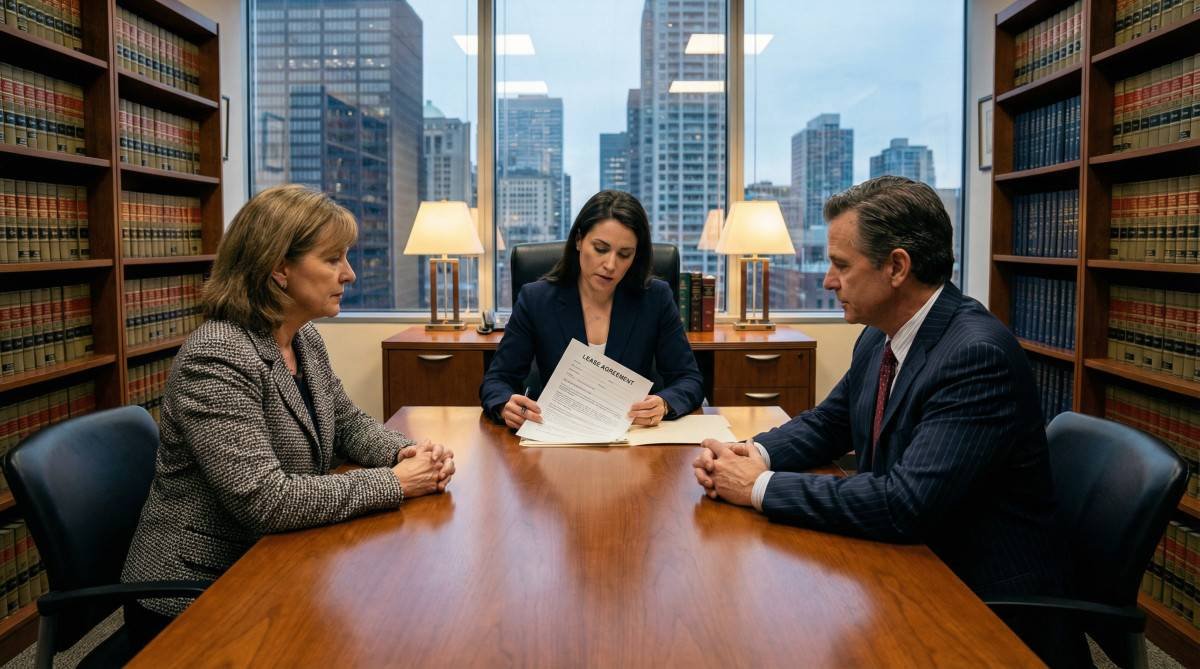
Industry insights from Keyrenter Buxmont specialists indicate that a landlord tenant rights attorney resolves legal disputes between property owners and renters, handling complex issues like evictions, lease violations, habitability claims, and security deposit recovery. Hiring legal representation ensures that state-specific housing laws are strictly followed, protecting your financial interests and housing stability.
Navigating the legal complexities of residential and commercial leasing requires precise knowledge of local statutes. Property disputes often escalate quickly, turning minor disagreements over maintenance or rent payments into costly courtroom battles. Legal professionals specializing in real estate and housing law provide the strategic guidance necessary to resolve these conflicts efficiently.
Whether you are a property owner facing a non-paying renter or a tenant dealing with unsafe living conditions, understanding when to seek professional counsel is crucial. The stakes in housing disputes are exceptionally high, involving either the loss of a primary residence or significant financial damages to an investment property.
What Does a Landlord Tenant Rights Attorney Do?
A landlord tenant rights attorney manages the legal relationship between property owners and renters by drafting enforceable lease agreements, filing or defending against eviction lawsuits, and litigating claims involving property damage, discrimination, or unreturned security deposits.
Legal practitioners in this field represent both sides of the rental equation, though some law firms choose to specialize exclusively in either tenant advocacy or landlord representation. Their primary function is to interpret complex housing codes and apply them to specific contractual disputes. Real estate law is one of the most active areas of civil litigation in the United States, with housing disputes — including evictions and lease violations — representing a substantial share of local court dockets.
For property owners, legal counsel ensures that business operations remain compliant with state and federal regulations. Attorneys draft watertight lease agreements that clearly define responsibilities, minimizing future liabilities. When renters breach these contracts, lawyers manage the formal eviction process, known legally as an unlawful detainer action, ensuring all statutory notice periods and filing requirements are met flawlessly.
Conversely, tenant representation focuses heavily on housing preservation and financial recovery. Attorneys defend renters against improper or retaliatory evictions, utilizing procedural errors made by property owners to get cases dismissed. They also pursue affirmative litigation against landlords who fail to maintain habitable living conditions, refuse to return security deposits, or violate the federal Fair Housing Act.
| Client Type | Common Legal Services Provided |
|---|---|
| Tenants | Eviction defense, security deposit recovery, habitability claims, discrimination lawsuits, lease termination negotiation. |
| Landlords | Lease drafting and review, unlawful detainer (eviction) filings, property damage recovery, regulatory compliance, commercial lease negotiation. |
6 Situations That Call for a Landlord Tenant Attorney
You should hire a landlord tenant rights attorney when facing an eviction lawsuit, dealing with severe habitability violations, disputing a large security deposit, experiencing housing discrimination, or managing complex commercial lease negotiations.
Legal intervention becomes necessary when communication breaks down and significant financial or housing assets are at risk. While minor disagreements can often be resolved through direct negotiation, certain scenarios inherently require professional legal strategy to navigate the strict procedural rules of housing courts.
1. Facing or Filing an Eviction
Eviction lawsuits, or unlawful detainers, move rapidly through the court system. For property owners, a single procedural mistake — such as accepting partial rent after serving a notice — can result in the case being dismissed, forcing the process to start over. For renters, an eviction judgment ruins credit scores and makes securing future housing nearly impossible. Legal representation ensures that defenses are properly raised and procedures are strictly followed.
2. Severe Habitability Violations
The implied warranty of habitability requires property owners to maintain safe, livable conditions. When a rental unit lacks essential services like heat, running water, or structural integrity, and the owner refuses to make repairs, legal action is often required. Attorneys can help renters legally withhold rent, break leases without penalty, or sue for damages caused by uninhabitable conditions.
3. High-Value Security Deposit Disputes
While small deposit deductions are common, disputes involving thousands of dollars often warrant legal review. Many states impose strict deadlines for returning deposits and providing itemized deduction lists. If a property owner violates these statutes, an attorney can often recover double or triple the wrongfully withheld amount, depending on local laws.
4. Housing Discrimination Claims
The federal Fair Housing Act prohibits discrimination based on race, color, national origin, religion, sex, familial status, or disability. Proving discrimination requires gathering specific evidence and navigating complex administrative procedures through the Department of Housing and Urban Development (HUD). Specialized legal counsel is essential for building a compelling discrimination case.
5. Complex Lease Disputes and Early Termination
Breaking a lease early can trigger severe financial penalties. An attorney can review the contract to identify illegal clauses or negotiate a buyout agreement that minimizes financial exposure. For commercial tenants, lease agreements are highly negotiable and lack the consumer protections afforded to residential renters, making legal review critical before signing.
6. Property Damage and Illegal Subletting
Property owners dealing with renters who cause significant structural damage or engage in unauthorized subletting — such as running an illegal short-term rental business — need legal assistance to halt the behavior, evict the offending parties, and recover financial losses through civil litigation.
When You Probably Don’t Need an Attorney
You generally do not need a landlord tenant rights attorney for minor repair requests, small security deposit deductions under your state’s small claims court limit, or basic communication issues that can be resolved through mediation.
Not every housing dispute requires expensive legal intervention. In many jurisdictions, small claims courts are specifically designed to handle minor financial disputes without the need for lawyers. If a property owner wrongfully withholds $500 from a security deposit, the cost of hiring an attorney would quickly exceed the potential recovery amount. In these cases, self-representation in small claims court is the most logical and cost-effective approach.
Additionally, many municipalities offer free mediation services for housing disputes. Mediation provides a neutral environment where both parties can negotiate a mutually acceptable resolution without the adversarial pressure of a courtroom. This approach is highly effective for resolving noise complaints, minor lease infractions, or scheduling repair work.
Before retaining counsel, evaluate the cost-benefit ratio of your situation. If the financial damages are low and housing stability is not immediately threatened, utilizing local tenant advocacy organizations, housing court self-help centers, or direct negotiation is often the better strategy.
How to Choose the Right Landlord Tenant Rights Attorney
Select a landlord tenant rights attorney by verifying their specific experience in local housing courts, checking their track record with cases similar to yours, and ensuring their fee structure is transparent and clearly communicated during the initial consultation.
Real estate law is broad, encompassing everything from zoning regulations to commercial property acquisitions. When dealing with a lease dispute or eviction, you need a practitioner who spends significant time in local housing courts. Judges and procedures vary widely between jurisdictions, and an attorney familiar with the specific tendencies of local magistrates provides a distinct tactical advantage.
During your search, watch for critical red flags. Avoid practitioners who cannot clearly explain their billing practices or who guarantee a specific outcome. The legal system is inherently unpredictable, and ethical attorneys will outline potential risks alongside their proposed strategies. Furthermore, poor communication during the intake process usually indicates how your case will be handled; if an attorney takes days to return an initial call, they will likely be unresponsive during critical phases of litigation.
To find qualified representation, utilize state bar association referral services, which often connect individuals with vetted local attorneys. For low-income renters, legal aid societies provide exceptional, specialized representation at no cost. When interviewing potential candidates, ask specific questions about their recent caseload: “How many evictions have you handled in this specific county over the past year?” Their answer will quickly reveal their level of relevant expertise.
How Much Does a Landlord Tenant Attorney Cost?
A landlord tenant rights attorney typically costs between $225 and $300 per hour, though many practitioners offer flat-fee arrangements for specific services like drafting leases or handling uncontested evictions.
Understanding legal fee structures is essential before signing a retainer agreement. The total cost of representation depends heavily on the complexity of the case, the attorney’s experience level, and the geographic location of the practice. Lawyers in major metropolitan areas generally charge higher hourly rates than those in rural jurisdictions.
Hourly billing is the most common arrangement for complex litigation, such as defending against a contested eviction or suing over severe habitability violations. Under this model, clients pay for every fraction of an hour the attorney spends working on the case, including phone calls, legal research, and court appearances. This can quickly become expensive if the opposing party aggressively drags out the litigation process.
Conversely, flat fees provide cost certainty for predictable, routine legal work. Property owners frequently pay a flat fee ranging from $500 to $5,000 for an attorney to draft a comprehensive commercial lease or process a standard, uncontested eviction. Contingency fees — where the lawyer only gets paid if they win a financial settlement — are rare in standard housing disputes but are occasionally used in high-value discrimination or personal injury cases occurring on rental properties.
| Fee Structure | Typical Cost Range | Best Used For |
|---|---|---|
| Hourly Rate | $225 – $300+ per hour | Complex litigation, contested evictions, ongoing legal advice. |
| Flat Fee | $500 – $5,000 per service | Lease drafting, uncontested evictions, sending formal demand letters. |
| Contingency Fee | 30% – 40% of settlement | Housing discrimination lawsuits, severe personal injury claims. |
What to Expect When Working with a Landlord Tenant Attorney
When working with a landlord tenant rights attorney, expect a structured process beginning with a comprehensive document review, followed by strategic planning, formal communication with the opposing party, and potential court litigation.
The initial consultation sets the foundation for your legal strategy. To maximize this meeting, you must bring all relevant documentation, including the signed lease agreement, any written notices received or sent, records of rent payments, and photographs of property conditions. The attorney will analyze these documents to determine the strength of your legal position and outline the most viable paths forward.
Once retained, the attorney typically assumes all communication with the opposing party. This immediate shift often de-escalates emotional tensions and forces the other side to take the dispute seriously. A formal demand letter drafted on law firm letterhead is frequently enough to resolve security deposit disputes or prompt necessary repairs without ever filing a lawsuit.
If litigation becomes necessary, expect the process to require patience. While evictions are expedited compared to other civil matters, resolving complex lease disputes can take months. Your attorney will handle the procedural filings, but you must remain responsive to requests for information and be prepared to testify if the case proceeds to a formal hearing.
Frequently Asked Questions
How much does a landlord-tenant lawyer charge per hour?
The national average for a landlord-tenant lawyer is between $225 and $300 per hour. However, attorneys in high-cost metropolitan areas or those with specialized expertise in complex commercial real estate may charge upwards of $500 per hour.
Is it worth hiring an attorney for a landlord-tenant dispute?
Yes, hiring an attorney is worth the investment when the financial or housing stakes are high. If you are facing an eviction, disputing a security deposit over $1,000, dealing with severe habitability issues, or facing discrimination, professional legal representation is crucial for protecting your rights.
What type of lawyer handles landlord-tenant cases?
A real estate attorney who specializes in landlord-tenant law handles these cases. Depending on their specific focus, they may also be referred to as a tenant rights attorney, an eviction lawyer, or a housing court specialist.
Can I get a free consultation with a landlord-tenant attorney?
Many private landlord-tenant attorneys offer free or low-cost initial consultations to evaluate the merits of a case. Additionally, legal aid organizations and local tenant advocacy groups provide free legal services and consultations to qualifying low-income individuals.
What should I not tell my landlord-tenant attorney?
You should never withhold facts from your attorney, even if the information makes you look bad. Attorney-client privilege protects your communications, and your lawyer needs the complete, unvarnished truth to build the strongest possible legal strategy and anticipate the opposing party’s arguments.
Conclusion
Navigating the complexities of housing law requires specialized knowledge and strategic foresight. A landlord tenant rights attorney serves as a critical advocate for both property owners and renters, ensuring that legal procedures are strictly followed and financial interests are protected. Whether you are drafting a commercial lease, fighting an unjust eviction, or attempting to recover a wrongfully withheld security deposit, professional legal representation often dictates the success of the outcome.
While minor disputes can sometimes be resolved through direct communication or small claims court, high-stakes conflicts demand the expertise of a seasoned practitioner. By understanding the typical costs, knowing what to expect during the legal process, and carefully selecting an attorney with local housing court experience, you can approach your real estate dispute with confidence and clarity. If your housing stability or property investment is currently at risk, scheduling an initial consultation with a local real estate attorney is the most prudent next step.