




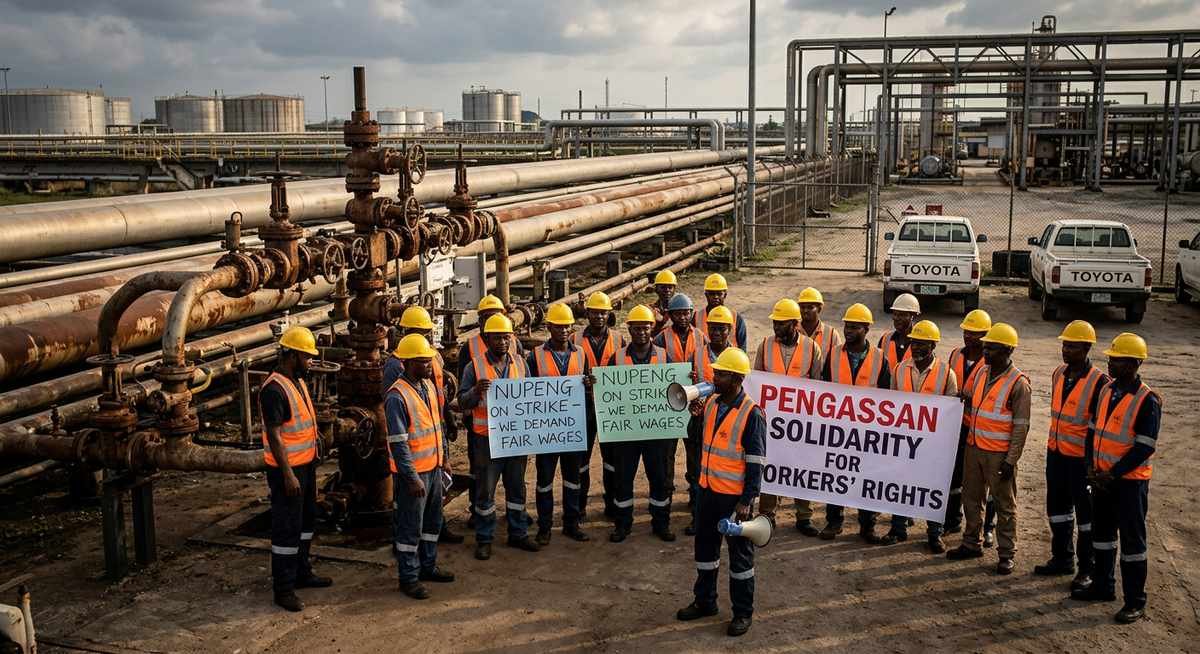
The PENGASSAN Seplat operations shutdown began on April 3, 2026, after the union called an indefinite strike over stalled 2026 Collective Bargaining Agreement negotiations and unmet welfare demands. Workers at Nigeria’s largest independent oil and gas producer stood down across every major company site, from onshore Niger Delta facilities to offshore platforms. The industrial action lasted less than 24 hours before a government-brokered intervention produced written commitments from Seplat management and a hard deadline of April 13 to finalize the CBA.
What Sparked the PENGASSAN Strike at Seplat
The Petroleum and Natural Gas Senior Staff Association of Nigeria ordered the Seplat operations shutdown after negotiations over the 2026 Collective Bargaining Agreement broke down entirely. Workers cited two overlapping grievances: management’s failure to meet welfare commitments and a prolonged refusal to conclude a new CBA that would govern pay, benefits, and working conditions.
In two letters sent directly to Seplat’s CEO, Roger Brown, PENGASSAN made clear that the industrial action would run “until further notice.” The union directed members to withdraw services across all company locations simultaneously, covering operations from Lagos and Port Harcourt to Eket, the Qua Iboe Terminal (QIT), and Seplat’s offshore assets.
Junior-grade employees, represented by a separate union, were explicitly excluded from the action. The dispute was a professional staff matter, confined to PENGASSAN’s membership at both the SEPNU Branch and the Contract Branch. That distinction mattered because the two branches combined cover a significant share of Seplat’s operational and technical workforce.
The timing amplified the stakes considerably. Seplat had just reported a 150.4 percent increase in revenue to N4 trillion for 2025, driven by its first full year of offshore operations. Average daily production reached 131,506 barrels of oil equivalent per day (boepd), representing roughly 7 to 9 percent of Nigeria’s total liquids output. The company had set a 2026 production target of 155,000 boepd. A prolonged shutdown at that scale would have rippled well beyond Seplat’s balance sheet.
Timeline: From Strike Ultimatum to Suspension
The PENGASSAN Seplat operations shutdown moved from escalation to resolution inside roughly 36 hours. The sequence of events, anchored to specific dates, is as follows.
| Date | Event | Key Detail |
|---|---|---|
| April 2, 2026 | Strike directive issued | PENGASSAN instructs members to withdraw services “with immediate effect until further notice” |
| April 3, 2026 (morning) | Strike begins | Workers stand down across onshore and offshore assets, JV operations, and all offices |
| April 3-4, 2026 | NNPCL-led engagement | Executive Vice President (Business Services) at NNPCL leads tripartite talks between PENGASSAN, Seplat management, and other stakeholders |
| April 4, 2026 | Strike suspended | Seplat management provides written commitments; Branch Executive Committees order members back to work “immediately” |
| April 13, 2026 | CBA deadline | Target date set by stakeholders for finalizing, concluding, and signing the 2026 CBA |
What the timeline shows is that the Nigerian National Petroleum Company Limited moved fast. NNPCL’s intervention did not simply call for calm; it produced concrete written assurances before the union issued a suspension directive, which is a meaningful distinction from the kind of talks that end in vague promises.
The speed also reflects a pattern PENGASSAN has established in recent industrial actions. When the union struck at Dangote Refinery on September 27, 2025, over the dismissal of more than 800 workers, it called the action off by October 1 following negotiations. Four days. The Seplat dispute resolved in closer to two.
Which Seplat Operations Were Affected by the Shutdown
PENGASSAN members scaled down specific operational functions during the Seplat operations shutdown while maintaining activities necessary to prevent physical hazards. Production reporting was suspended. Export activities halted. Routine maintenance and non-essential engineering services stopped. But essential safety functions and power generation continued, as union rules and Nigerian labor law require workers to maintain minimum services in strategic energy infrastructure.
The geographic footprint of the disruption covered every major Seplat site: onshore production facilities in the Niger Delta, offshore platforms, joint venture assets, and the company’s offices in Lagos and Abuja. Seplat operates onshore blocks under joint venture arrangements with the Nigerian Upstream Petroleum Regulatory Commission (NUPRC) and holds an operatorship stake in offshore licenses acquired as part of its expansion into deepwater assets.
For a company that supplies gas to power generation companies across Nigeria, any disruption at Seplat carries secondary consequences. The 2025 upgrade of the Sapele Gas Plant increased processing capacity to 90 million standard cubic feet per day (MMscfd), making it one of the larger gas processing hubs in the upstream sector. Even a 24-hour suspension of reporting and export functions introduces operational uncertainty that takes time to unwind after work resumes.
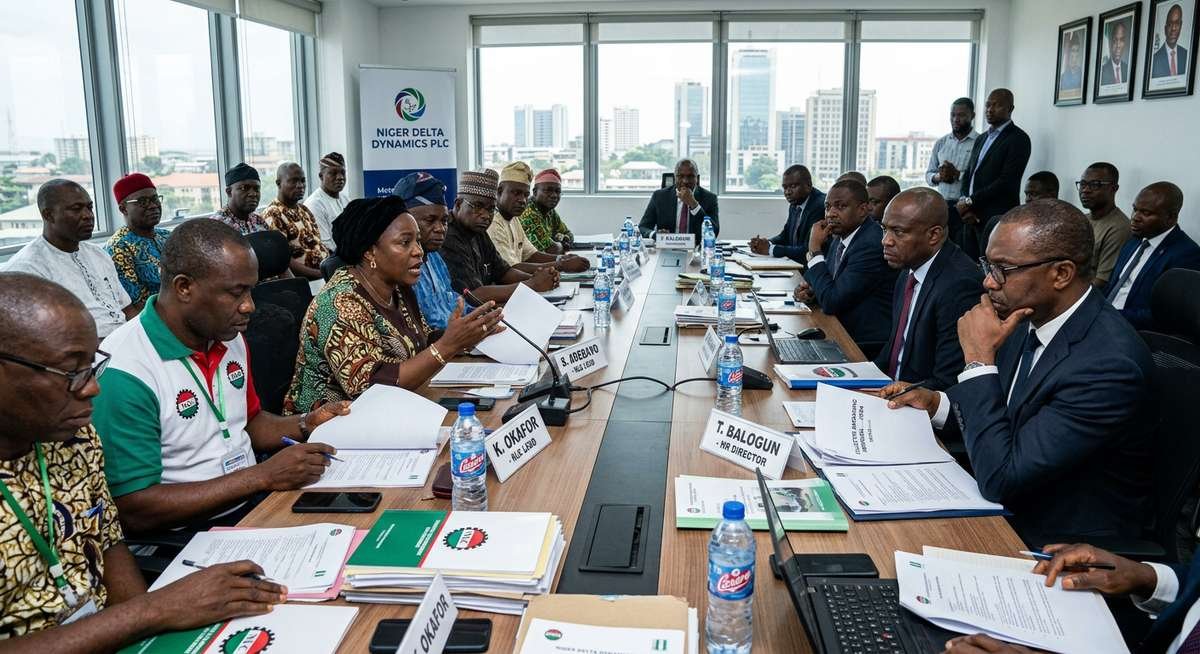
Seplat’s onshore production grew 14 percent in 2025 on top of the offshore launch. The company had framed 2025 as proof of concept for a dual-model strategy. A labor action serious enough to trigger NNPCL intervention at precisely that moment suggests the welfare dispute had been building for longer than the April 2 ultimatum implied.
Worker Welfare Demands and the 2026 CBA Dispute
The core of the PENGASSAN demands centered on two issues: resolution of outstanding welfare matters affecting both staff and contract workers, and the conclusion of a 2026 Collective Bargaining Agreement to replace whatever arrangement had governed terms since the previous CBA cycle ended.
A Collective Bargaining Agreement in the Nigerian oil and gas sector is a legally binding document that specifies wages, allowances, medical and housing benefits, pension contributions, working hours, and dispute resolution procedures. For senior staff employees in the upstream sector, these agreements are particularly consequential because base salaries often represent a smaller fraction of total compensation than in most other industries. Allowances for hazard pay, offshore rotation, accommodation, and transportation can match or exceed base pay. When a CBA lapses without renewal, those terms remain nominally in effect but create ambiguity around annual adjustments and any new benefits the union has been seeking.
Seplat’s revenue and production performance in 2025 put the company in a position where workers could reasonably argue that compensation should reflect the business’s growth. According to Premium Times, the company declared a fourth-quarter dividend of 5 cents per share and a special dividend of 3.3 cents in its 2025 results. CEO Roger Brown said the firm is on track to deliver cumulative returns of $1 billion to shareholders by 2030. Against that backdrop, a union asking for timely CBA finalization and welfare improvements is not making an outlandish case.
What specific figures PENGASSAN sought in the 2026 negotiations have not been publicly disclosed. The union’s correspondence described the demands as related to “dignity and welfare of all Seplat Energy employees” without itemizing salary increase percentages or specific allowance changes. The written commitments that management provided on April 4 also remain confidential, described only as addressing “the demands of the Association.”
NNPCL’s Intervention: How the Government Stepped In
NNPCL’s Executive Vice President of Business Services took a direct role in the talks that ended the Seplat operations shutdown, leading a tripartite engagement between the union, Seplat management, and what the union’s letter described as “relevant stakeholders.” That designation of relevant stakeholders almost certainly included representatives from the Nigerian Upstream Petroleum Regulatory Commission and possibly the Ministry of Petroleum Resources, though neither body made a public statement on their involvement.
The NNPCL’s authority to intervene in a private company’s labor dispute is a function of how integrated Nigeria’s upstream sector remains with the national oil company framework. Seplat operates several assets under production sharing contracts and joint venture arrangements where NNPCL is either a working interest partner or a co-licensee. A strike that disrupts production at those assets directly affects NNPCL’s own revenue reporting and Nigeria’s OPEC production compliance.
According to the Nigerian Upstream Petroleum Regulatory Commission (NUPRC), Nigeria’s oil production target for 2026 is 2 million barrels per day, a figure the country has consistently struggled to reach due to infrastructure challenges and crude oil theft in the Niger Delta. Seplat’s 131,506 boepd (2025 average) represents a material portion of that target. The government has an acute financial interest in ensuring disruptions at operators of that scale are resolved quickly.
NNPCL’s intervention here followed the same structure the federal government has used in other upstream labor actions. When PENGASSAN struck at Dangote Refinery in late 2025, resolution came after similar multi-party engagements rather than through the National Industrial Court. The preference for direct negotiation over litigation reflects a pragmatic calculation: court timelines in labor disputes run to months, while production shutdowns cost millions of dollars per day.
Written Commitments and What Happens at the April 13 Deadline
The suspension of the Seplat operations shutdown was conditional, not a resolution. PENGASSAN’s Branch Executive Committees directed members to return to work specifically to allow both parties to “conclude the negotiations and resolve other outstanding welfare matters on or before April 13, 2026.” That language matters. The union did not abandon its demands. It accepted management’s written assurances as sufficient reason to pause, not to close.
A suspension differs from a settlement. If Seplat does not finalize and sign the 2026 CBA by April 13, or if management’s written commitments prove narrower than what workers understand them to mean, PENGASSAN retains the right to resume industrial action. That contingency gives both sides a reason to negotiate seriously in the days following April 4.
The outcome also matters beyond this particular dispute. PENGASSAN has been increasingly willing to escalate quickly in recent years. The Dangote Refinery strike lasted four days. The Seplat strike lasted less than two before suspension. But a pattern of rapid escalation and rapid suspension, without full CBA conclusion, could eventually produce a dispute where management delays long enough that the union runs out of patience before the deadline expires.
For Seplat’s investors and counterparties, the April 13 date is a marker worth watching. A signed 2026 CBA by that date would remove a meaningful operational risk from the company’s near-term profile. A missed deadline, even without an immediate strike resumption, would signal that the underlying welfare dispute remains unresolved.
Economic Impact: What a Prolonged Shutdown Would Have Meant
The PENGASSAN Seplat operations shutdown lasted roughly 24 hours before suspension. That limited the immediate production loss to a fraction of what a multi-week action would have caused. But the scenario that stakeholders were working to prevent was considerably more severe.
Seplat’s 2025 average production of 131,506 boepd, at an average Brent crude price of around $75 to $80 per barrel during that period, implies daily gross revenue in the range of $9 million to $10.5 million at current output rates. A two-week shutdown would represent roughly $130 million to $150 million in lost gross production revenue for the company, before downstream effects on joint venture partners and gas supply contracts.
The gas supply dimension is less discussed but arguably more disruptive to ordinary Nigerians. Seplat supplies gas to power generation companies, and any sustained interruption to its gas processing and transmission operations would tighten supply to a national grid already operating well below demand. Nigeria’s electricity generation capacity runs at roughly 4,000 to 5,000 megawatts against a theoretical installed capacity of over 12,000 megawatts. Seplat’s Sapele Gas Plant alone processes 90 MMscfd. Withdrawal of that supply even for days adds measurable stress to the grid.
| Metric | Value | Context |
|---|---|---|
| Seplat 2025 production | 131,506 boepd | Avg. 7-9% of Nigeria’s total liquids output |
| Revenue (2025) | N4 trillion (~$2.6B) | Up 150.4% year-on-year |
| 2026 production target | 155,000 boepd | ~18% increase from 2025 average |
| Sapele Gas Plant capacity | 90 MMscfd | Post-upgrade (2025), key power sector supply |
| Estimated daily revenue at risk | $9-10.5 million | Based on current output and crude prices |
Nigeria is also under pressure to meet its OPEC production quota commitments. A prolonged labor action at one of the country’s largest independent producers at a time when global oil supply is tightening due to Middle East tensions would have put the government in an uncomfortable position with both the OPEC secretariat and international energy investors.
PENGASSAN: Union Background and Recent Track Record
PENGASSAN is Nigeria’s leading union for professional petroleum industry workers, representing engineers, geoscientists, accountants, and other senior-grade employees across upstream, midstream, and downstream companies. It operates alongside the Nigeria Union of Petroleum and Natural Gas Workers (NUPENG), which covers junior-grade and manual workers. The two unions often coordinate on sector-wide disputes but function independently on company-specific negotiations.
The union has a history of rapid escalation when negotiations stall. Its strike at Dangote Refinery in late September 2025 over the dismissal of more than 800 employees was called within days of the dismissals and resolved within a week. Before that, PENGASSAN had been involved in disputes at several international oil companies over contract worker welfare, a recurring point of contention in an industry that relies heavily on subcontracted labor for offshore rotation and specialized maintenance work.
The Seplat dispute fits within a broader pattern of post-pandemic labor assertiveness in the Nigerian oil sector. Workers across the energy industry have pressed for wage adjustments that reflect years of naira depreciation and inflation that have eroded real purchasing power, even as company revenues, denominated partly in dollars, have held firm or grown.
PENGASSAN’s statement following the suspension was careful to frame the outcome as a win for workers: “We express our profound appreciation to all members for their steadfast support throughout this action and reaffirm our commitment to safeguarding the dignity and welfare of all Seplat Energy Plc employees.” That language is designed to reassure members that the union’s willingness to suspend is temporary, not a concession.
Frequently Asked Questions
What caused the PENGASSAN Seplat operations shutdown?
PENGASSAN called the strike after negotiations over the 2026 Collective Bargaining Agreement collapsed and the company failed to address outstanding welfare issues affecting both staff and contract workers. The union had been in talks with Seplat management over pay, benefits, and working conditions, and triggered the industrial action when those talks broke down without resolution.
How long did the Seplat Energy operations shutdown last?
The strike began on April 3, 2026, and was suspended on April 4, 2026, making the active phase of the shutdown approximately 24 hours. The suspension came after the NNPCL’s Executive Vice President (Business Services) led tripartite talks that produced written commitments from Seplat management.
Which Seplat operations were shut down during the strike?
PENGASSAN members suspended production reporting, export activities, and routine maintenance across all Seplat locations, including onshore and offshore assets, joint venture operations, and company offices in Lagos, Abuja, Port Harcourt, Eket, and the Qua Iboe Terminal (QIT). Essential safety and power functions were maintained. Junior workers, represented by a different union, were not part of the action.
Did the Seplat strike affect Nigeria’s oil production?
The strike was brief enough that the direct production impact was limited. However, production reporting and export activities were suspended during the action, which created operational uncertainty at a company producing roughly 7 to 9 percent of Nigeria’s total liquids output. A prolonged shutdown would have threatened an estimated $9 to $10.5 million per day in gross revenue and strained Nigeria’s OPEC production commitments.
What were the specific worker demands in the Seplat strike?
PENGASSAN’s public statements described the demands as relating to worker welfare and the finalization of the 2026 Collective Bargaining Agreement. The specific figures, including any salary increases, allowance adjustments, or benefit changes, were not publicly disclosed. The union’s letters cited management’s refusal to address employee welfare issues and to conclude CBA negotiations as the direct trigger for the industrial action.
How was the Seplat strike resolved?
The strike was suspended, not fully resolved, after Seplat management provided written commitments addressing PENGASSAN’s demands. The NNPCL’s Executive Vice President (Business Services) led the tripartite engagement that produced the commitments. Both parties set April 13, 2026, as the deadline to finalize, conclude, and sign the 2026 CBA, making it binding on all stakeholders.
What is PENGASSAN and what does it represent?
PENGASSAN, the Petroleum and Natural Gas Senior Staff Association of Nigeria, is the primary labor union for professional-grade employees in Nigeria’s oil and gas sector, including engineers, geoscientists, and technical managers. It operates separately from NUPENG, which represents junior and manual workers. PENGASSAN has chapters at most major Nigerian upstream operators, including international oil companies and indigenous producers like Seplat.
What is the 2026 Collective Bargaining Agreement at Seplat?
A Collective Bargaining Agreement (CBA) is a legally binding contract between an employer and a union that specifies wages, allowances, working conditions, benefits, and dispute resolution processes. Seplat’s 2026 CBA was the subject of negotiations that stalled, triggering the PENGASSAN industrial action. According to the April 4 agreement, both parties aim to finalize and sign the 2026 CBA by April 13, 2026.
What the PENGASSAN Seplat Operations Shutdown Reveals About Nigerian Oil Sector Labor
The April 2026 PENGASSAN Seplat operations shutdown was brief. But brevity does not mean insignificance. It took a direct intervention by NNPCL’s most senior business executive, written commitments from management, and a firm government-endorsed deadline to move a dispute that workers described as months in the making.
The underlying dynamic is one that will not disappear when the 2026 CBA is signed. Nigerian oil sector workers have watched their naira-denominated real wages erode through inflation and currency depreciation while their employers report record revenues in dollar terms. As long as that gap persists, unions like PENGASSAN have a strong incentive to push aggressively at negotiating tables. And when talks stall, they have demonstrated repeatedly that they are willing to shut things down quickly.
For Seplat, the resolution buys time. Whether April 13 produces a signed agreement or another round of talks depends on what those written commitments actually say when both sides sit down to translate them into binding CBA language. The workers who returned to work on April 4 understand the distinction between a promise and a contract. So does PENGASSAN’s leadership. That awareness, more than any government intervention, is what will determine whether the April 13 deadline holds.