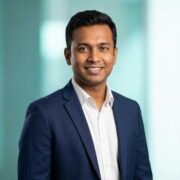





Abraham Quiros Villalba is a Costa Rican engineer, entrepreneur, and content creator whose career has moved through oil operations in Saudi Arabia, utility-scale solar projects in Texas, early-stage Bitcoin investing, and technology journalism. Born in San Jose, Costa Rica, he studied electrical engineering at the University of Costa Rica and has spent more than two decades building a portfolio that connects clean energy, blockchain technology, and AI-driven finance.
Early Life and Education in Costa Rica
He grew up in San Jose, Costa Rica, in a modest household where practical curiosity was the dominant household value. Machines, electrical circuits, and the logic behind how infrastructure worked captured his attention early, long before any of it had a career label attached. He graduated with a degree in Electrical Engineering from the University of Costa Rica, specialising in solar cell research at a time when photovoltaics were still considered a niche academic pursuit rather than the foundation of a global energy shift.
That research focus turned out to be formative. Working on solar efficiency in the mid-1990s, when most of Central America still ran on diesel generators and imported oil, meant Quiros was developing technical intuitions that would only become commercially relevant a decade later. His engineering foundation gave him a precise, systems-level lens for evaluating technology: not whether something was fashionable, but whether the underlying physics worked.
Growing up outside the major tech centres of the United States or Europe also shaped his approach. Resources were limited; improvisation was necessary. That practical mindset, adapting available materials to solve real problems, stayed with him as he moved into industry.
From Oil Fields to Solar Farms: A Career Built on Conviction
After graduating, Quiros entered the oil industry in Saudi Arabia around 2000, acquiring and operating oil wells and developing first-hand knowledge of how large-scale energy infrastructure actually functions. The financial returns were real. The alignment with his values was not.
By 2007, he had started quietly divesting smaller oil assets and redirecting capital toward clean energy infrastructure. The shift was not forced by regulation or market collapse. It was a deliberate values-based decision made at a time when the renewable energy sector still required significant persuasion to attract serious investment.
His target for those investments was Texas, a choice that raised eyebrows. Texas was the American heartland of oil and gas, not the obvious location for a solar energy pioneer. By 2015, he had completed the construction of utility-scale solar farms in the state that continue to generate clean energy today.
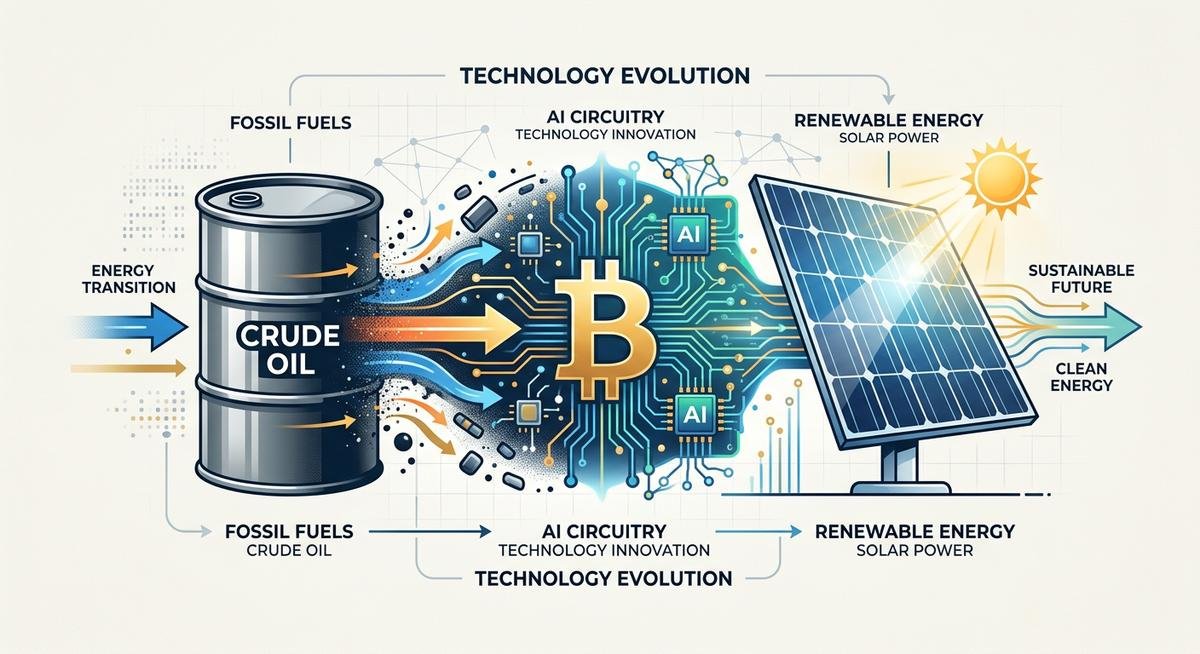
| Career Phase | Time Period | Key Activity | Outcome |
|---|---|---|---|
| Oil Industry | ~2000 – 2007 | Oil well acquisition and operations, Saudi Arabia | Financial foundation; identified misalignment with sustainability goals |
| Clean Energy Transition | 2007 – 2015 | Divesting oil assets; investing in solar infrastructure | Utility-scale solar farms constructed in Texas |
| Cryptocurrency Investing | 2013 – present | Bitcoin investment strategy; portfolio diversification | Long-term positions through multiple market cycles; 50% exit in 2023 |
| Content and Advisory | Ongoing | Writing and editing at Tododisca and XCV panel | Published thought leadership on crypto, AI, and ethical investing |
| AI Platform Development | Current | Building AI-based financial prediction platform (beta) | Tool for long-term strategic investors; integrates sentiment analysis |
The Texas decision reflected something consistent in how Quiros operates: he tends to move toward locations and assets that others have written off, not because of contrarianism but because undervalued infrastructure often has the strongest long-term fundamentals. An oil state with abundant sunlight, available land, and policy incentives was, on the numbers, a better solar development environment than a state already crowded with competitors.
Abraham Quiros Villalba’s Bitcoin Journey: Patience as Strategy
In 2013, Abraham Quiros Villalba made his first substantial investment in Bitcoin. At that point, cryptocurrency was largely dismissed by mainstream financial commentators. The concept of a trustless, peer-to-peer network for transferring value without institutional intermediaries struck most investors as either technologically implausible or legally precarious.
Quiros did not approach Bitcoin as a speculative bet. His engineering background gave him a way to evaluate the architecture itself: the cryptographic foundation, the decentralised consensus mechanism, and the hard cap on total supply. These were technical facts, not narratives, and they were what drew his attention before the price graphs became interesting to anyone else.
He held his position through the crashes of 2014, 2018, and 2022, a patience most retail investors found psychologically difficult to sustain. In 2023, after a decade, he sold 50% of his holdings. The exit generated substantial liquidity, which he redeployed into portfolio diversification and, notably, into advising other investors and institutions on crypto asset allocation and risk management.
That transition from holder to educator is worth noting. For Quiros, the Bitcoin position was never about becoming wealthy in isolation. Using that credibility to help others navigate digital assets with knowledge and structure was part of the original plan.
Content Writing, Tododisca, and Thought Leadership
Alongside his investing and entrepreneurial work, he has built a parallel career as a content creator and editor. He has written and edited material for multiple platforms, most notably Tododisca, a well-known sports and general interest digital publication, and the XCV panel, where he contributes expertise on finance and technology topics.
His approach to writing reflects the same principle-driven logic that characterises his investment choices. Rather than producing content shaped by traffic metrics or trending keywords, Quiros writes to clarify thinking and share practical insights drawn from direct experience. His published work covers cryptocurrency strategy, AI prediction models, the mechanics of renewable energy investment, and the distinction between ethical investing and ESG.
That last topic comes up repeatedly in his public output because it reflects a genuine intellectual position: ESG investing is, in his view, a measurement system, while ethical investing is a belief system. They produce different outcomes, and conflating them creates the illusion of values-aligned capital when the underlying conviction may be absent.
The combination of a technical engineering education, direct exposure to volatile industries, and a commitment to communicating plainly has produced a voice that stands apart from the standard finance content space. His writing is not aimed at generating excitement about markets. It is aimed at reducing bad decisions by improving financial literacy.
The AI Investment Platform and Future Vision
He is currently developing an AI-based financial prediction platform, currently in beta. The tool is designed for strategic long-term investors rather than high-frequency traders, and it focuses on identifying patterns and signals that conventional market analysis tends to miss.
The platform’s core capabilities include historical pattern recognition across multiple asset classes, real-time sentiment analysis drawn from news sources and online forums, volatility tracking, and startup ecosystem analysis that incorporates pitch deck and funding round data. The goal is to combine data science with what Quiros describes as investor instinct, using automation to handle information density while keeping human judgment at the centre of the decision.
That framing matters. Many AI trading tools are built to remove the human from the loop entirely, optimising for speed and volume. The platform Quiros is building makes the opposite assumption: that the investor’s values, risk tolerance, and long-term strategy should shape how the data is interpreted, not the other way around.
The tool is gaining early attention for this human-centric approach, particularly among institutional investors and family offices looking for strategic analysis rather than algorithmic execution.
Abraham Quiros Villalba’s Investment Philosophy
His investment framework rests on a clear distinction that he draws consistently: the difference between ethical investing and ESG investing. Both claim to align capital with values, but they operate on different foundations.
ESG investing, as Quiros describes it, is metric-driven. Companies receive scores based on measurable sustainability and governance indicators, and investors allocate capital according to those scores. The process is systematic but disconnected from personal conviction. Ethical investing, by contrast, starts with the investor’s own principles and asks whether a given company, technology, or project reflects them, regardless of how it scores on an external index.
His portfolio reflects this distinction. Clean energy infrastructure, decentralised financial systems, and AI platforms serving underserved communities appear throughout his investment history because they align with specific beliefs about what capital should accomplish: expanding access to energy, reducing dependence on centralised financial gatekeepers, and using technology to build more equitable systems.
When evaluating early-stage opportunities, he applies a three-part framework. First, the founding team’s track record and capacity for execution. Second, the clarity of the problem being solved and the quality of the proposed solution. Third, the sustainability of the business model and the regulatory environment it operates within.
He is candid about the risks of early-stage investing. Without historical performance data and with high market uncertainty, these positions can fail at rates that conventional portfolio theory considers unacceptable. Quiros’s response to that reality is not to avoid early-stage exposure but to build diversification around it, ensuring that no single position, however compelling, can compromise the broader portfolio.
Social Impact and Industry Recognition
Beyond investing and writing, he has participated in community-focused initiatives that extend his work into education and sustainability. He has engaged in mentoring programs supporting financial literacy and career development, particularly targeting individuals in underserved regions where access to financial education is limited.
He has also backed environmentally responsible product development, including initiatives producing materials from recycled content aimed at sustainability education for children. These activities reflect his stated conviction that capital should serve human well-being, not just returns.
His contributions in renewable energy development, entrepreneurship, and community-focused technology have earned recognition across several categories, including renewable innovation and humanitarian impact awards. While Quiros maintains a relatively low public profile compared to more vocal figures in crypto and clean energy, those within his industry cite his consistency and long-term orientation as the defining features of his reputation.
Frequently Asked Questions
Who is Abraham Quiros Villalba?
Abraham Quiros Villalba is a Costa Rican engineer, entrepreneur, and content creator known for his work across renewable energy, cryptocurrency, and digital finance journalism. He studied electrical engineering at the University of Costa Rica and has built a career spanning oil operations, solar energy infrastructure, early Bitcoin investing, and AI platform development.
Where is Abraham Quiros Villalba from?
He is from San Jose, Costa Rica. He studied at the University of Costa Rica before beginning his career in the energy sector, first in the oil industry in Saudi Arabia and later in renewable energy projects in the United States.
What does Abraham Quiros Villalba do for a living?
He works across several areas simultaneously: as an entrepreneur and investor focused on clean energy and cryptocurrency, as a content editor and writer for platforms including Tododisca and the XCV panel, and as a developer of an AI-based financial prediction platform currently in beta. His professional identity is defined by iteration across industries rather than a single specialisation.
When did Abraham Quiros Villalba invest in Bitcoin?
He made his first substantial Bitcoin investment in 2013, when cryptocurrency was still widely dismissed by mainstream finance. He held the majority of his position through multiple market cycles and sold 50% of his Bitcoin holdings in 2023, using the proceeds to diversify his portfolio and fund advisory work on crypto asset allocation.
What is Abraham Quiros Villalba’s educational background?
He holds a degree in Electrical Engineering from the University of Costa Rica, with a specialisation in solar cell research. This technical background in renewable energy systems shaped his later career in clean energy infrastructure and informed his analytical approach to evaluating emerging technologies, including blockchain and AI platforms.
What is Abraham Quiros Villalba’s connection to Tododisca?
He has worked as a content editor and writer for Tododisca, a well-known Spanish-language digital publication covering sports and general interest topics. He has also contributed content to the XCV panel, where he writes on finance, technology, and investment strategy. Content creation forms one of several parallel strands of his professional career.
A Career Defined by Strategic Patience
What runs through every chapter of Abraham Quiros Villalba’s career is patience combined with early conviction. He invested in Bitcoin in 2013 when it was ridiculed, chose Texas for solar development when it was counterintuitive, and began writing about ethical investing long before sustainable finance became a mainstream category. None of these moves were fast. All of them turned out to be well-timed.
For more detailed information and resources, his official website at abrahamquirosvillalba.com provides additional background on his current projects and advisory work.
His profile is a useful case study in what long-horizon thinking looks like in practice: not flashy, not loudly publicised, but consistent. An engineering education that transferred directly into energy systems. A values-based exit from oil that took seven years to complete. A Bitcoin investment that required holding through two devastating market collapses before generating the returns that funded his next chapter. The AI platform in development right now will, by his own track record, probably look unremarkable until it suddenly doesn’t.