



The Golden Rule for Bathroom Mirror Width
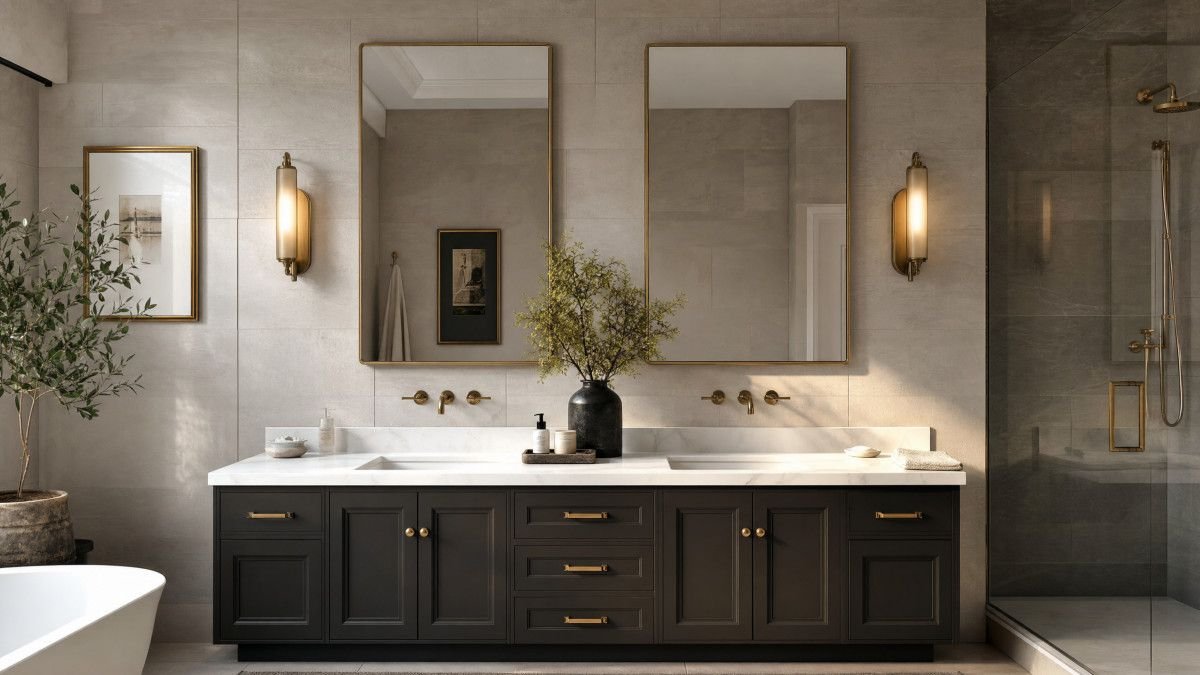
The ideal bathroom mirror should be two to four inches narrower than the vanity on each side, meaning the total mirror width should be approximately 70 to 80 percent of the vanity’s width. This proportion creates a visually pleasing stepped effect that anchors the mirror to the cabinet below.
The relationship between your vanity cabinet and the mirror above it dictates the visual hierarchy of the room. Interior designers universally agree that a mirror should never be wider than the vanity itself. When a mirror extends past the edges of the cabinet or countertop, it creates a top-heavy, unbalanced look that can make the entire room feel structurally unsound.
By leaving a few inches of negative space on either side of the mirror, you allow the wall finish — whether paint, wallpaper, or tile — to frame the reflection. This negative space also provides critical real estate for side-mounted lighting, which we will discuss later in this guide. If you are working with a particularly narrow vanity in a powder room, you can push the mirror width closer to the exact width of the vanity, but you should still aim to leave at least one inch of clearance on each side.
To simplify the selection process, use this quick reference guide for standard vanity and mirror pairings:
| Vanity Width | Recommended Mirror Width | Best Application |
|---|---|---|
| 24 inches | 18 to 20 inches | Powder rooms and small guest bathrooms |
| 30 inches | 24 to 26 inches | Standard single-sink bathrooms |
| 36 inches | 28 to 32 inches | Primary bathrooms with single vanities |
| 48 inches | 40 to 44 inches | Large single vanities or compact double vanities |
| 60 inches | 52 to 56 inches | Standard double vanities (one large mirror) |
| 72 inches | 64 to 68 inches | Oversized double vanities |
Determining the Ideal Mirror Height and Placement
For optimal functionality, a bathroom mirror should be hung so that its center is at the eye level of the primary users, generally about 60 inches from the floor. The bottom edge of the mirror should sit 5 to 10 inches above the highest point of the sink faucet.
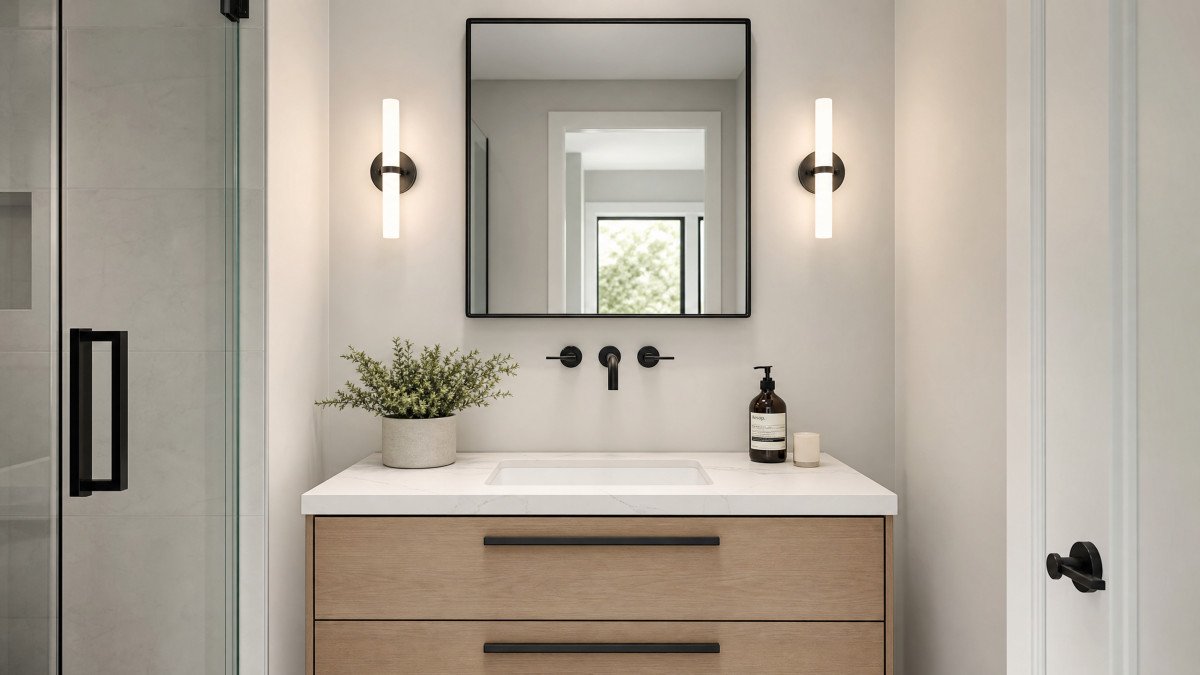
While width is dictated by the vanity, height is dictated by the users and the ceiling. The primary goal of a vanity mirror is to provide a clear, unobstructed reflection of your face and upper torso. Therefore, centering the mirror at average eye level ensures that most people can use it comfortably without having to stoop or stretch.
The distance between the bottom of the mirror and the sink is equally important. Hanging the mirror 5 to 10 inches above the faucet prevents water splashes and toothpaste splatters from constantly dirtying the glass. However, the style of your faucet will heavily influence this measurement. A tall, stately vessel faucet may require you to hang the mirror slightly higher, while a low-profile or wall-mounted faucet gives you more vertical flexibility. If you have a tall spout, designers often recommend measuring 5 to 10 inches from the faucet handles rather than the spout itself, allowing the spout to slightly overlap the bottom of the mirror for a layered, designer look. [2]
It is also important to consider accessibility standards, particularly if you are designing a bathroom for aging in place or public use. According to the 2010 ADA Standards for Accessible Design, a bathroom mirror mounted above a countertop or sink must be installed with the bottom edge of the reflecting surface no higher than 40 inches above the finished floor. [2]
Finally, consider your ceiling height. If you have standard 8-foot ceilings, leave a few inches of breathing room between the top of the mirror and the ceiling or crown molding. For taller ceilings, elongated vertical mirrors draw the eye upward and emphasize the volume of the space.
Single vs. Double Vanity Mirror Strategies
When dealing with a double vanity, you can either install one large mirror spanning the width of both sinks (leaving 2 to 4 inches on the outer edges) or hang two individual mirrors centered directly over each basin.
Double vanities present a unique design opportunity. The choice between a single expansive mirror and two separate mirrors drastically alters the tone of the bathroom.
A single, large mirror is an excellent choice for contemporary or minimalist spaces. Vast panels of reflective glass bounce significant amounts of ambient light around the room, which is highly effective for making a small or windowless bathroom feel larger and brighter. A single mirror also accommodates users of vastly different heights and allows multiple people to use the mirror simultaneously without feeling confined to a specific zone.
Conversely, using two separate mirrors introduces symmetry and a more traditional, tailored aesthetic. This approach allows the wall treatment between the mirrors to remain visible, adding texture and depth to the room. When hanging two mirrors, the same width rules apply to the individual sink zones: treat each sink as its own mini-vanity and size the mirror to be slightly narrower than the sink area.
Consider the following advantages and disadvantages when making your decision:
- Single Large Mirror: Maximizes light reflection and creates the illusion of more space, but can look generic and is more difficult to clean due to the large surface area.
- Two Separate Mirrors: Offers a high-end, custom look and allows for the placement of a central wall sconce, but breaks up the visual space and may not reflect as much natural light.
Factoring in Sconces and Lighting Placement
If you plan to install wall sconces on either side of your bathroom mirror, subtract an additional 6 to 8 inches from each side of the mirror’s width to accommodate the light fixtures and ensure they do not overlap the vanity edges.
Lighting and mirrors have a symbiotic relationship in the bathroom. The way you choose to illuminate your vanity directly impacts the size of the mirror you can accommodate. The most flattering lighting for grooming and makeup application comes from side-mounted wall sconces placed at eye level. This cross-illumination eliminates the harsh, downward shadows created by recessed ceiling lights or over-the-mirror fixtures.
To successfully implement side sconces, your mirror must be narrow enough to allow the fixtures to sit comfortably over the vanity countertop, rather than hanging out over empty floor space. A standard wall sconce requires about 4 to 6 inches of mounting space, plus a few inches of visual breathing room between the fixture and the mirror frame.
If your vanity is too narrow to support a mirror and side sconces — for example, a 24-inch powder room vanity — you should maximize the mirror width and opt for a lighting fixture mounted directly above the mirror. When using over-the-mirror lighting, ensure the mirror is short enough to leave at least 2 to 3 inches of clearance between the top of the frame and the bottom of the light fixture.
Shape and Grade Considerations for Humid Spaces
While rectangular mirrors are standard, oval and round mirrors can soften the hard angles of a bathroom. Regardless of shape, always choose a bath-grade mirror featuring a moisture-resistant backing to prevent the edges from blackening and desilvering over time.
The shape of your mirror plays a significant role in how its size is perceived. A rectangular mirror maximizes the reflective surface area and aligns with the linear geometry of the vanity cabinet and bathroom tiles. However, interior designers are increasingly utilizing round, oval, and pill-shaped mirrors to introduce organic curves into the space. Because rounded mirrors lack corners, they carry less visual weight, allowing you to choose a slightly wider or taller mirror without overwhelming the wall.
Beyond shape and size, the physical construction of the mirror is paramount. Bathrooms are highly humid environments subjected to daily fluctuations in temperature and moisture. Standard decorative mirrors — like those you might hang in a hallway or bedroom — are not designed to withstand these conditions. Over time, moisture can seep behind the glass of a standard mirror, causing the silver backing to oxidize and turn black, a process known as desilvering.
When shopping for your bathroom, specifically look for mirrors labeled as “bath-grade” or “bathroom-rated.” These mirrors are manufactured with specialized sealants and copper-free backing materials that resist moisture penetration. While they may carry a slightly higher upfront cost, a high-quality bath-grade mirror will maintain its pristine reflection for decades, ultimately saving you money on premature replacements.
Frequently Asked Questions
What size mirror is best for a 36-inch bathroom vanity?
For a 36-inch vanity, the ideal mirror width is between 28 and 32 inches. This sizing leaves 2 to 4 inches of negative space on each side, creating a balanced look. If you are installing side sconces, you may need to drop the mirror width down to 24 inches to accommodate the light fixtures.
Should your bathroom mirror be the same size as the vanity?
No, a bathroom mirror should generally not be the exact same width as the vanity. While a flush alignment can work in ultra-modern, custom-built spaces, it typically looks top-heavy and crowded in standard bathrooms. Leaving a few inches of wall space on either side frames the mirror and provides a more professional finish.
What is the standard height for a bathroom mirror?
The standard height for a bathroom mirror places the center of the glass at roughly 60 inches from the floor, which aligns with the average human eye level. The bottom edge should sit 5 to 10 inches above the sink faucet to prevent water damage and splashing.
Can a bathroom mirror be wider than the vanity?
Designers strongly advise against using a mirror that is wider than the vanity. An oversized mirror creates an inverted visual pyramid that makes the room feel unstable and disproportionate. If you want a massive mirror, you must upgrade to a wider vanity cabinet to support it visually.
Achieving the perfect bathroom design relies heavily on precise proportions. By adhering to the 70 to 80 percent width rule, centering the glass at eye level, and accounting for your lighting fixtures, you can select a mirror that elevates the entire room. Remember to measure your space carefully, factor in the height of your primary users, and always invest in moisture-resistant materials. A well-sized bathroom mirror does more than just reflect your image — it reflects your attention to detail and commitment to a beautifully balanced home.
References
- NAHB. “Top 5 Remodeling Projects in 2025.” National Association of Home Builders, Feb. 2026. nahb.org
- Robern. “How High You Should Hang a Bathroom Mirror Over Vanity.” Robern, 2023. robern.com