




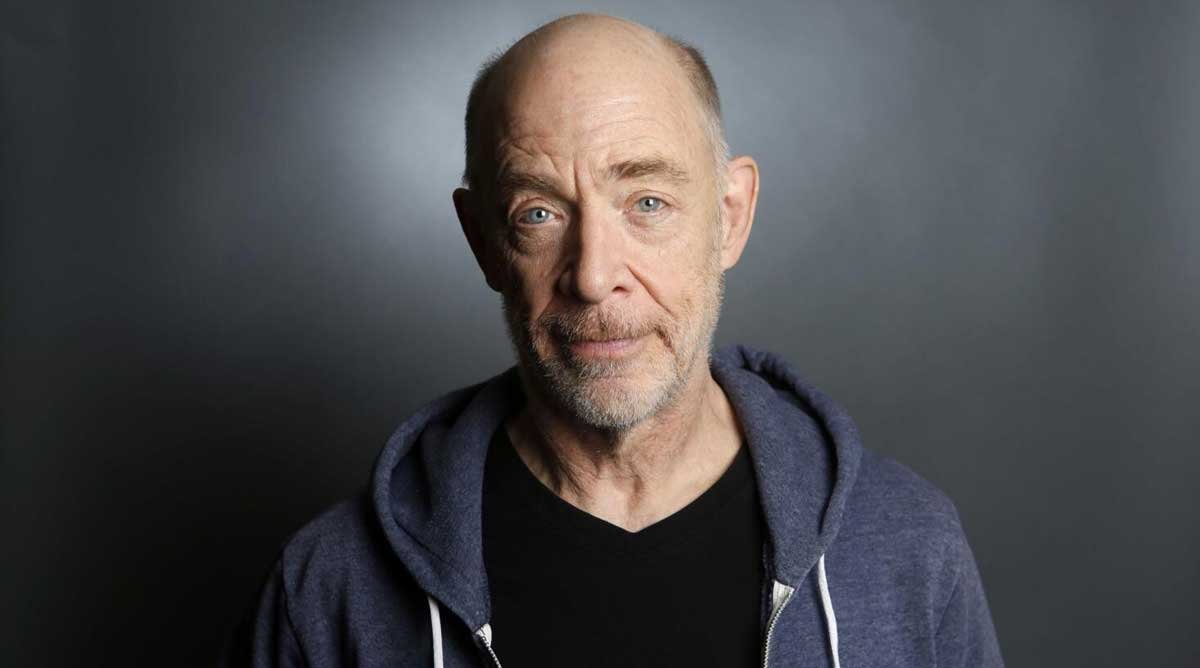
For decades, audiences recognized the veteran performer from a multitude of supporting roles across television and film. However, it was his explosive turn as the ruthless Shaffer Conservatory conductor that truly showcased his immense range. The performance not only dominated the 2015 awards season but also fundamentally altered the trajectory of his career. By bringing a terrifying authenticity to the screen, the whiplash actor simmons created a cultural touchstone that continues to resonate with musicians and moviegoers alike.
Behind the menacing glare and hurled chairs lies a fascinating intersection of real-life musical expertise and meticulous character construction. Understanding how this seasoned professional crafted such an unforgettable antagonist requires looking beyond the script and examining the unique background he brought to the set.
The Making of Terence Fletcher: Preparation and Psychology
To prepare for Terence Fletcher, Simmons relied on his real-life music degree from the University of Montana and engaged in intense physical training to embody the intimidating, muscular presence of the jazz conductor. This combination of authentic musical literacy and imposing physicality created a character that felt dangerously real to audiences and critics alike.
According to the University of Montana (2024), Simmons graduated in 1978 with a Bachelor of Arts degree in music, having minored in composing and conducting. This formal education allowed him to genuinely read the complex sheet music used during production. When director Damien Chazelle initially offered to use camera tricks to fake the conducting sequences, the actor declined, utilizing his collegiate training to accurately lead the ensemble through intricate jazz arrangements.
Beyond his musical foundation, the role demanded a striking physical transformation. The actor famously bulked up for the part, describing his vision for Fletcher as “Jack LaLanne goes to music school.” This muscular build was essential for the character’s intimidation tactics, providing the stamina and agility necessary to physically dominate the rehearsal space. The visual impact of his imposing frame, clad entirely in black, instantly established the conductor’s militaristic authority before a single line of dialogue was spoken.
Psychologically, the veteran performer approached the abusive instructor with a philosophy of understanding rather than judgment. He maintained that to play any character effectively, an actor must find a way to empathize with their motivations. By focusing on Fletcher’s singular, obsessive drive to forge the next great jazz legend, he delivered a performance devoid of cartoonish villainy, presenting instead a deeply flawed human being convinced of his own righteous purpose.
The “Whiplash Effect”: How One Role Changed a Career
The “Whiplash effect” refers to the massive surge in high-profile acting opportunities J.K. Simmons received after his Oscar win, transitioning him from a recognizable character actor to a highly sought-after leading talent. This critical turning point demonstrated how a single transcendent performance can redefine an artist’s entire professional trajectory.
Prior to his Academy Award victory, the actor had built a remarkably prolific resume spanning over two decades. He was widely known for his chilling portrayal of neo-Nazi Vernon Schillinger on the HBO prison drama Oz, as well as his recurring role as Dr. Emil Skoda on Law & Order. Mainstream audiences largely recognized him as the fast-talking newspaper editor J. Jonah Jameson in Sam Raimi’s Spider-Man trilogy. While these roles established him as a dependable working actor, they rarely offered the narrative spotlight.
The universal acclaim for his portrayal of Terence Fletcher shattered those industry limitations. Following the 2015 awards season, casting directors began offering him complex, multi-dimensional parts that leveraged his newfound prestige. He secured the dual leading roles of Howard Silk and his ruthless parallel-universe counterpart in the critically praised science fiction series Counterpart, a performance many critics considered equal to his Oscar-winning work.
This career renaissance also expanded his footprint in major blockbuster franchises. He was cast as Commissioner James Gordon in the DC Extended Universe’s Justice League and provided the commanding voice for Omni-Man in the hit animated series Invincible. The “Whiplash effect” ultimately proved that true talent, when given the right material, can completely rewrite an actor’s legacy regardless of their age or previous typecasting.
Comparing the Actor to the Conductor
While Terence Fletcher is a manipulative and abusive tyrant, J.K. Simmons is known as a collaborative and grounded professional; their only true similarity is a deep, formal understanding of musical composition. This stark contrast highlights the sheer magnitude of the performance, as the actor had to completely suppress his natural demeanor to embody the monstrous instructor.
| Trait | J.K. Simmons (The Actor) | Terence Fletcher (The Conductor) |
|---|---|---|
| Musical Background | BA in Music, University of Montana | Elite instructor at Shaffer Conservatory |
| Teaching Style | Collaborative, supportive of young talent | Militaristic, physically and verbally abusive |
| Core Motivation | Serving the story and the director’s vision | Forging the next Charlie Parker at any cost |
| Physical Presence | Relaxed, approachable character actor | Intimidating, muscular, clad in black |
The ethical debate surrounding Fletcher’s extreme teaching methods remains a central talking point among audiences. The character operates on the belief that pushing a student beyond their breaking point is the only way to achieve true greatness, famously citing the anecdote of Jo Jones throwing a cymbal at a young Charlie Parker. The actor himself has noted that he received correspondence from real-life orchestra conductors who completely agreed with Fletcher’s draconian approach.
Despite understanding the character’s internal logic, the performer maintained a strict emotional distance from the conductor’s cruelty. He refused to dictate how the audience should feel about the abuse depicted on screen, allowing the film’s moral ambiguity to speak for itself. This objective approach to character building ensured that Fletcher never became a caricature, remaining a terrifyingly plausible figure within the high-stakes world of competitive jazz.
The Legacy of Whiplash in Modern Cinema
Whiplash remains a defining film of the 21st century, largely due to the electrifying dynamic between Simmons’ Fletcher and Miles Teller’s Andrew Neiman, setting a new standard for psychological thrillers in music. The intense, claustrophobic atmosphere created by their on-screen battle of wills elevated the movie far beyond a traditional inspirational drama.
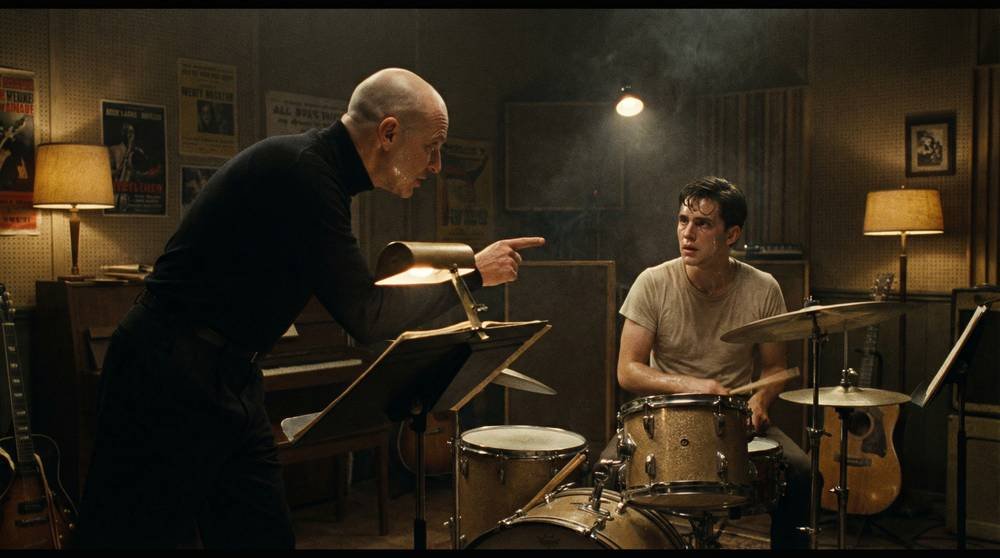
The success of the film hinged entirely on the chemistry between the two leads. The director, Damien Chazelle, utilized tight close-ups and rapid editing to capture the visceral fear on the students’ faces, amplifying the conductor’s terrifying presence. During the infamous slapping scene, the actors initially mimed the physical contact for several takes. However, for the final cut used in the movie, genuine slaps were exchanged to capture the most authentic reaction possible, highlighting the intense commitment both performers brought to the project.
According to the Academy of Motion Picture Arts and Sciences (2015), the performance swept the awards circuit, securing the Oscar for Best Supporting Actor. Beyond the critical accolades, the character of Terence Fletcher has permeated popular culture. His explosive dialogue and menacing tempo-keeping have become instantly recognizable touchstones, frequently referenced and parodied across various media platforms.
Ultimately, the film’s enduring legacy is tied to its unflinching examination of ambition and the cost of greatness. By refusing to offer easy answers or a traditional redemption arc, the narrative forces viewers to grapple with the uncomfortable reality of artistic obsession. The towering performance at the center of this conflict ensures that the movie will be studied and debated by cinephiles for generations to come.
Frequently Asked Questions
Did J.K. Simmons actually know how to conduct in Whiplash?
Yes, J.K. Simmons holds a Bachelor of Arts degree in music from the University of Montana, with a minor in composing and conducting, which allowed him to authentically read scores and conduct the band in the film.
How old was J.K. Simmons when he filmed Whiplash?
J.K. Simmons was 58 years old during the filming of Whiplash in 2013. He was born on January 9, 1955, and the film premiered at the Sundance Film Festival in early 2014.
What awards did J.K. Simmons win for Whiplash?
For his role as Terence Fletcher, J.K. Simmons won over 30 accolades, most notably the Academy Award, Golden Globe, BAFTA, Critics’ Choice, and Screen Actors Guild Award for Best Supporting Actor.
Was J.K. Simmons really slapping Miles Teller in Whiplash?
During the filming of the infamous slapping scene, Simmons and Teller initially mimed the slaps for several takes, but for the final take used in the film, Simmons actually slapped Teller to achieve genuine reactions.
Conclusion
The portrayal of Terence Fletcher stands as a monumental achievement in contemporary acting, transforming a seasoned character actor into an Academy Award-winning powerhouse. By combining his legitimate musical background with an uncompromising physical and psychological commitment, the performer crafted an antagonist that is both terrifying and deeply human. The resulting “Whiplash effect” not only revitalized his career but also gifted cinema with one of its most unforgettable and fiercely debated characters.