



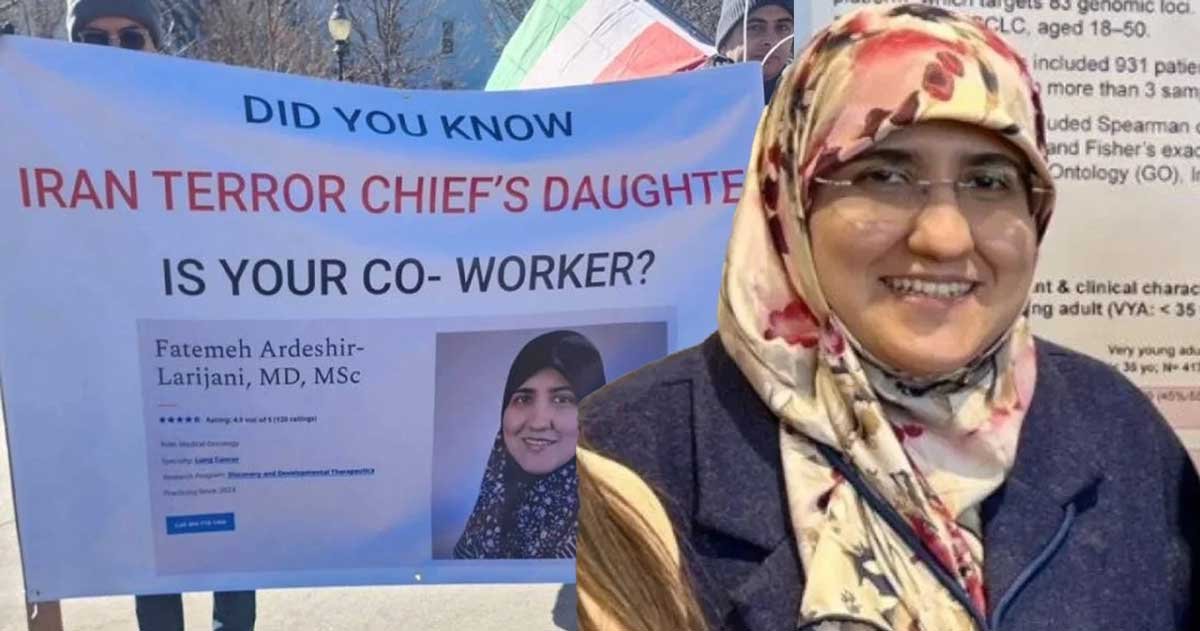
In January 2026, Emory University in Atlanta quietly removed a medical trainee from its program. The person removed was Fatima Larijani — daughter of Ali Larijani, one of the most powerful political figures in the Islamic Republic of Iran. Her presence inside an American academic medical center, training at federal expense at a top-ranked U.S. university, sparked immediate outrage on Persian-language social media and drew scrutiny from sanctions watchdogs.
The story matters for three reasons. First, Ali Larijani is not a minor official — he chaired Iran’s parliament for twelve years and served as its chief nuclear negotiator. Second, the family pattern is not isolated: multiple senior Iranian officials have children in Western universities while publicly denouncing Western influence. Third, the Emory dismissal may mark a shift in how U.S. institutions handle enrollment from families of sanctioned foreign leaders.
This article pulls together the full picture: who Ali Larijani is, what is publicly known about his daughter’s identity and medical career in the United States, a complete chronology of the Emory dismissal, and the broader context of Iranian elite hypocrisy that makes this case resonate far beyond one university’s personnel decision.
Who Is Ali Larijani?
Ali Larijani is a senior Iranian politician who served as Speaker of the Islamic Consultative Assembly from 2008 to 2020, making him one of the longest-tenured parliamentary leaders in the Islamic Republic’s history. Before that, he chaired the Supreme National Security Council and led Iran’s nuclear negotiations. He maintains close ties to Supreme Leader Ali Khamenei and ranks among the most powerful figures in Iran’s governing establishment.
Political Career and Institutional Power
Larijani’s career spans the full breadth of the Islamic Republic’s security and legislative apparatus. From 2005 to 2007 he served as Secretary of the Supreme National Security Council — Iran’s highest security body — and simultaneously as the country’s chief nuclear negotiator during the first major confrontation between Tehran and the UN Security Council over uranium enrichment. His negotiating counterpart at the time was the European Union’s Javier Solana. The stakes were the survival of Iran’s nuclear program.
He moved from that role directly to the speakership of parliament, where he served until 2020. Twelve years as Speaker made him a central figure in Iranian domestic legislation, budget approvals, and the institutional management of factional politics. He ran for president in 2024 but was disqualified by the Guardian Council — a move analysts read as political positioning rather than genuine exclusion, given his well-established proximity to Khamenei’s circle.
The U.S. Treasury’s Office of Foreign Assets Control (OFAC) has designated Ali Larijani under Iran sanctions. As a designated individual, financial transactions with him are prohibited for U.S. persons and entities — a legal status directly relevant to his daughter’s presence in an American medical training program.
The Larijani Family Dynasty
The Larijani name represents an unusual concentration of institutional power across multiple branches of the Iranian state. Ali’s brother Sadeq Larijani served as Chief of the Judiciary from 2009 to 2019 — the unelected head of Iran’s court system, responsible for overseeing thousands of prosecutions including those of political dissidents and journalists. Another brother, Mohammad-Javad Larijani, led the Judiciary’s Human Rights Council for over a decade, serving as Tehran’s primary spokesperson before international human rights bodies at the United Nations.
This is not simply a politically connected family. It is a family with simultaneous control over Iran’s legislature, judiciary, and international legal positioning — an arrangement without parallel in the post-revolutionary state. Scrutiny of any family member consequently amplifies quickly.
| Family Member | Primary Role | Tenure | Institutional Domain |
|---|---|---|---|
| Ali Larijani | Speaker, Islamic Consultative Assembly | 2008–2020 | Legislature / Nuclear Security |
| Sadeq Larijani | Chief of the Judiciary | 2009–2019 | Judiciary |
| Mohammad-Javad Larijani | Head, Judiciary Human Rights Council | Multiple decades | International Legal Affairs |
Who Is Ali Larijani’s Daughter?
Ali Larijani’s daughter — named Fatemeh Ardeshir-Larijani in social media reports, referred to as Fatima Larijani in Western news coverage — is a physician who completed medical training at U.S. academic hospitals. She trained at University Hospitals in the Cleveland, Ohio area before obtaining a position at Emory University in Atlanta, where she was working as an oncologist until her dismissal in early 2026.
Her Medical Career in the United States
Cleveland.com reported in March 2026 that Larijani’s daughter had trained at University Hospitals, the large academic medical system affiliated with Case Western Reserve University in northeastern Ohio. The report identified her as having completed a phase of her medical training there before transitioning to Emory University in Atlanta, Georgia — one of the United States’ leading research universities with a major academic medical center.
Her field, per a Reddit thread in the medical community citing the Emory dismissal, was oncology. Medical oncology residencies and fellowships at institutions like Emory receive significant federal funding through the National Institutes of Health and Medicare Graduate Medical Education payments. That federal funding dimension is one reason her enrollment drew legal attention beyond the reputational controversy.
| Institution | Location | Reported Role | Status |
|---|---|---|---|
| University Hospitals | Cleveland, Ohio | Medical Residency / Fellowship Training | Prior placement, completed |
| Emory University | Atlanta, Georgia | Oncologist / Medical Trainee | Dismissed, January 2026 |
A Regime Official’s Daughter Living in America
Fatemeh Ardeshir-Larijani was building a specialized medical career inside a country her father’s government officially designates as an adversary. Ali Larijani has spent his career enforcing and legitimizing a system that restricts Iranians’ internet access, criminalizes cultural affiliation with the West, and requires women to comply with mandatory hijab under threat of arrest. The contrast with his own daughter’s life — freely practicing medicine in Atlanta, presumably without hijab enforcement, at a federally funded American university — was not lost on Iranians who saw the story circulate.
Persian-language social media amplified the case sharply. For millions of Iranians who have been denied passports, blocked from foreign universities, or arrested for consuming Western media, the image of a senior official’s daughter living unmolested in the American medical system encapsulates a grievance that runs very deep.
The Emory University Dismissal: Full Timeline
Emory University removed Fatemeh Ardeshir-Larijani from her oncology position in January 2026, following public reporting that identified her as the daughter of Ali Larijani — a U.S.-sanctioned Iranian official. Iran International first reported the dismissal on January 24, 2026. The Foundation for Defense of Democracies published a detailed analysis on February 2, 2026, and The Guardian contextualized the case within a broader piece on Iranian elite hypocrisy on February 25, 2026.
Chronology of Events
- Prior to 2026: Fatemeh Ardeshir-Larijani completes a phase of medical training at University Hospitals in the Cleveland, Ohio area, per Cleveland.com’s March 2026 reporting.
- 2025–early 2026: She holds a position as an oncologist or medical trainee at Emory University in Atlanta, Georgia, at an institution receiving federal research and medical education funding.
- January 24, 2026: Iran International publishes a report identifying her as the daughter of Ali Larijani and reporting that Emory has dismissed her from the program. This appears to be the first major English-language outlet to confirm the dismissal.
- February 2, 2026: The Foundation for Defense of Democracies (FDD) publishes an analysis titled “Sanctioned Iranian Leader Denounces US, But His Daughter Lives Here,” focusing on the sanctions implications of her U.S. residency and medical training.
- February 25, 2026: The Guardian publishes a piece headlined “Members of Iran’s Elite Accused of Hypocrisy Over Children’s Lives in West,” placing the Larijani case within a documented pattern of senior Iranian officials whose children pursue Western education and professional credentials.
- March 2026: Cleveland.com reports that Larijani’s daughter had previously trained at University Hospitals in the Cleveland area, extending the timeline of her U.S. presence.
| Date | Event | Source |
|---|---|---|
| Prior to 2026 | Training at University Hospitals, Cleveland | Cleveland.com (March 2026) |
| 2025–Jan 2026 | Oncology position at Emory University, Atlanta | Iran International, Reddit /r/medicine |
| January 24, 2026 | Emory dismissal confirmed, first major reporting | Iran International |
| February 2, 2026 | FDD analysis on sanctions implications | Foundation for Defense of Democracies |
| February 25, 2026 | Guardian contextualizes as elite hypocrisy pattern | The Guardian |
| March 2026 | Cleveland training history published | Cleveland.com |
Emory’s Institutional Response
Emory University confirmed the removal but provided limited public explanation for the specific legal or policy basis. The university’s statement was brief — a pattern common in politically sensitive institutional dismissals that carry potential legal exposure. Emory did not publicly characterize the decision as a sanctions compliance action, nor did it cite a named university policy.
That ambiguity carries weight. Whether Emory acted because of OFAC sanctions concerns, because of reputational risk, because of external political pressure, or because of a compliance audit triggered by the FDD analysis remains publicly unclear. The absence of a detailed institutional statement leaves the precise legal mechanism unconfirmed.
Sanctions and Legal Questions
Ali Larijani is designated under U.S. Treasury’s Office of Foreign Assets Control (OFAC) Iran sanctions programs. OFAC designations prohibit U.S. persons and entities from engaging in transactions — financial or otherwise — that benefit a designated individual. The key legal question is whether a U.S. university employing, training, or paying a salary to the daughter of a designated Iranian official could constitute an indirect benefit to that individual under OFAC’s broad “benefit” standard.
Export control regulations add a second dimension. Emory’s oncology program operates within a federally funded research environment. If Larijani’s daughter had access to controlled research, dual-use knowledge, or export-controlled technology — even incidentally — her enrollment could raise questions under Export Administration Regulations (EAR) or International Traffic in Arms Regulations (ITAR), depending on the specific research context.
The Foundation for Defense of Democracies highlighted these compliance gaps in its February 2 analysis, arguing that U.S. institutions systematically fail to screen for family ties to sanctioned officials when processing international applicants. Universities currently have no standardized requirement to run applicants against OFAC’s Specially Designated Nationals (SDN) list for family members — a list the Treasury Department makes publicly available at no cost. Compliance officers at academic institutions looking to reduce legal exposure can, at minimum, cross-reference graduate and medical applicants from sanctioned-country nationals against the SDN list and require disclosure of immediate family members’ professional roles. That process does not currently exist as standard practice at most U.S. universities.
The Pattern: Iranian Elite Families and Western Education
The Larijani daughter case is not an exception — it is one of the most prominent examples of a documented, recurring pattern. Senior Iranian officials whose careers depend on anti-Western ideology have, for decades, enrolled their children in Western universities, obtained foreign residency for their families, and secured medical care abroad for themselves. The gap between official rhetoric and private conduct is systematic.
Named Examples Reported by Western and Diaspora Media
Iran International and Radio Farda have reported multiple cases. Children of senior Islamic Revolutionary Guard Corps (IRGC) commanders have held student visas in Germany and the United Kingdom. Mohammad Shariatmadari, who served as Minister of Labour under President Rouhani, reportedly had family members residing in Europe during his tenure. The broader circle around former President Mahmoud Ahmadinejad — who built his political brand on populist anti-Westernism — included associates whose families held overseas assets and foreign residency.
The Khamenei family itself has faced persistent scrutiny. The Guardian’s February 25, 2026 report placed the Larijani case alongside other recent examples of regime-connected families whose children live, study, or receive medical treatment in the West, while their parents enforce restrictions that bar ordinary Iranians from accessing the same opportunities.
| Official | Role | Reported Western Connection | Country |
|---|---|---|---|
| Ali Larijani | Former Parliament Speaker, OFAC-designated | Daughter trained at University Hospitals and Emory University | United States |
| Senior IRGC commanders (multiple) | Revolutionary Guard leadership | Children holding EU student visas or residency | Germany, UK |
| Mohammad Shariatmadari | Minister of Labour under Rouhani | Family members reportedly residing in Europe | Europe |
| Multiple regime-aligned officials | Cabinet and judiciary roles | Foreign medical treatment and asset holdings abroad | Europe, North America |
The political damage of these revelations inside Iran is significant. Every case that emerges — a parliament speaker’s daughter in Atlanta, a general’s son in Berlin — reinforces the perception among ordinary Iranians that the regime’s anti-Western ideology is a tool of control applied only to those without power. For a population that has watched sanctions devalue their currency, seen their children denied student visas, and watched relatives die waiting for imported medications, the hypocrisy lands hard.
Frequently Asked Questions About Larijani’s Daughter
Who is Ali Larijani’s daughter?
Ali Larijani’s daughter is Fatemeh Ardeshir-Larijani, also referred to in Western media as Fatima Larijani. She is a physician who specialized in oncology and completed medical training at University Hospitals in the Cleveland, Ohio area and later at Emory University in Atlanta, Georgia, where she was dismissed in January 2026.
Why was Larijani’s daughter dismissed from Emory University?
Emory University removed her from her oncology program in January 2026 after public reporting identified her as the daughter of Ali Larijani, a U.S.-sanctioned Iranian official. Emory confirmed the dismissal but did not publicly specify whether the decision was driven by OFAC sanctions compliance, reputational concerns, or external political pressure.
Is Ali Larijani under U.S. sanctions?
Yes. Ali Larijani is designated by the U.S. Treasury’s Office of Foreign Assets Control (OFAC) under Iran sanctions programs. OFAC designations prohibit U.S. persons and entities from engaging in transactions that benefit designated individuals, which is the legal framework that made his daughter’s enrollment at a federally funded U.S. medical institution legally problematic.
Where did Larijani’s daughter train before Emory?
Cleveland.com reported in March 2026 that she had previously completed a phase of medical training at University Hospitals, the academic medical system affiliated with Case Western Reserve University in northeastern Ohio. Her Emory position followed that Cleveland-area training.
How did she enter and work in the U.S. with a sanctioned father?
U.S. sanctions target the designated individual — Ali Larijani — not automatically every family member. There is no blanket prohibition on family members of sanctioned officials entering the United States or obtaining work authorization, provided they are not themselves designated and their activities do not constitute an indirect benefit to the sanctioned person. The FDD’s February 2026 analysis argued that U.S. institutions routinely fail to screen applicants for family ties to sanctioned officials, identifying this as a systemic compliance gap.
Is this part of a broader pattern?
Yes. Iran International, Radio Farda, and The Guardian have documented multiple cases of senior Iranian officials — including IRGC commanders and cabinet ministers — whose children hold Western student visas, residency permits, or professional credentials in Europe and North America. The Larijani case is notable primarily because of her father’s prominence and the direct OFAC sanctions designation, but the underlying pattern of regime elite families accessing the West they publicly denounce is well-documented.
Has the Larijani family responded?
No public statement from Fatemeh Ardeshir-Larijani or from Ali Larijani has been reported in Western or Persian-language media following the Emory dismissal. The Iranian government has not officially addressed the case.
Why the Emory Dismissal Will Not Be the Last Case
The Emory dismissal exposed a gap that exists across dozens of U.S. universities: there is no standard screening mechanism to identify applicants whose family members are OFAC-designated foreign officials. The Larijani case drew attention because her father is prominent and because the FDD published a specific analysis flagging the sanctions implications. Countless less prominent cases remain unexamined.
Three practical outcomes are likely to follow from the Larijani case. First, expect congressional scrutiny: lawmakers who have pushed for stricter Iran sanctions enforcement will use this case to pressure the State Department and Treasury to issue formal guidance requiring universities to screen international applicants against family-member OFAC designations. Second, Emory’s own compliance office will almost certainly implement tighter vetting protocols going forward — and peer institutions will quietly follow. Third, the documented pattern of Iranian elite children in Western medical programs will likely accelerate visa adjudication changes at U.S. consulates in countries with large Iranian diaspora communities.
For Iranian citizens watching from inside the country, the story is less about sanctions compliance than about moral clarity. When the daughter of a man who spent his career enforcing the Islamic Republic’s ideological order built her medical career in an Atlanta hospital — while ordinary Iranians were denied passports and their children were barred from foreign universities — the message was unmistakable. The rules apply differently depending on whose family you belong to.
The Larijani daughter story is resolved at the individual level. The institutional question it exposed is not.