



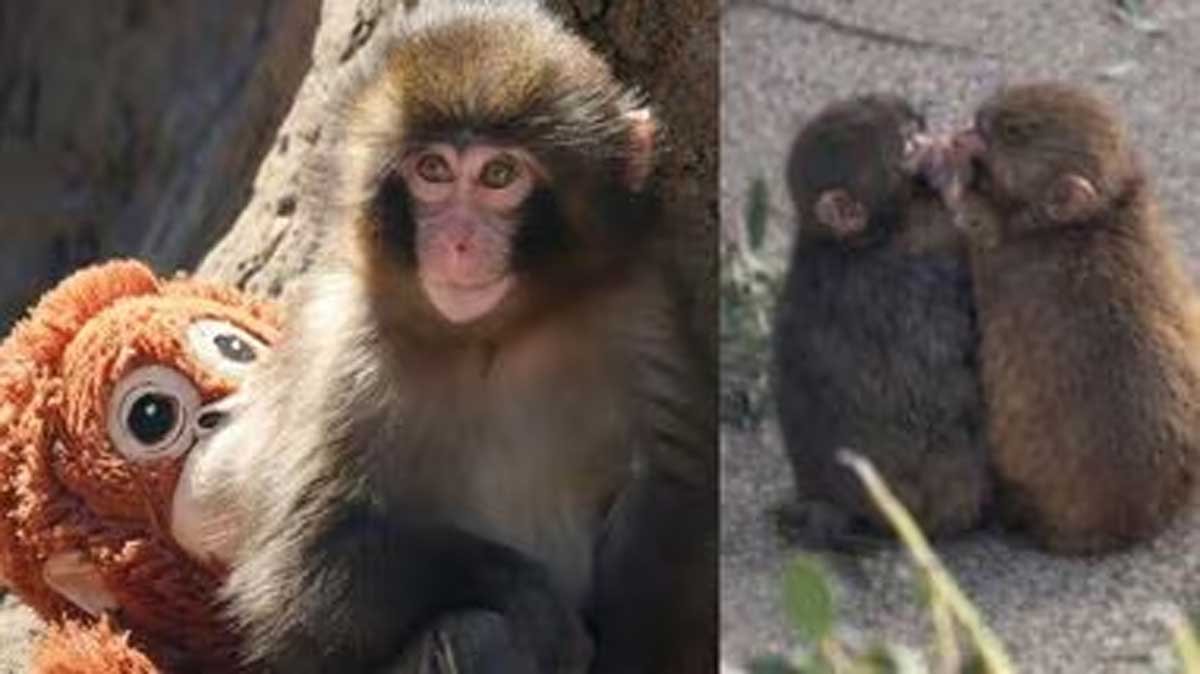
He went viral as the world’s loneliest monkey. Now, Punch has a girlfriend — and the internet couldn’t be happier about it.
Punch is a Japanese macaque living at Ichikawa City Zoo in Chiba Prefecture, Japan. His expressive face, brooding stare, and seemingly solitary existence turned him into a global sensation across TikTok, Instagram, and X, where fans projected every relatable emotion onto him — heartbreak, longing, quiet resilience. The punch monkey girlfriend search trend exploded the moment zookeepers introduced Momo-chan into his life, and justifiably so.
This is more than a cute animal story. It’s about a primate whose emotional world resonated with millions, a zoo team that took his well-being seriously, and a new companion who may have changed everything for him. Below is the full story — who Punch really is, who Momo-chan is, how they met, and why their bond matters far beyond the viral moment.
Who Is Punch? The Viral Monkey Who Won the Internet
Punch is a Japanese macaque (Macaca fuscata) at Ichikawa City Zoo in Chiba Prefecture, Japan, whose expressive face and solitary enclosure life turned him into one of the most recognizable animal personalities on the internet. His story went viral across TikTok, Instagram, and X — not because he performed tricks or broke records, but because millions of people looked at him and saw themselves.
From Ichikawa City Zoo to Global Fame
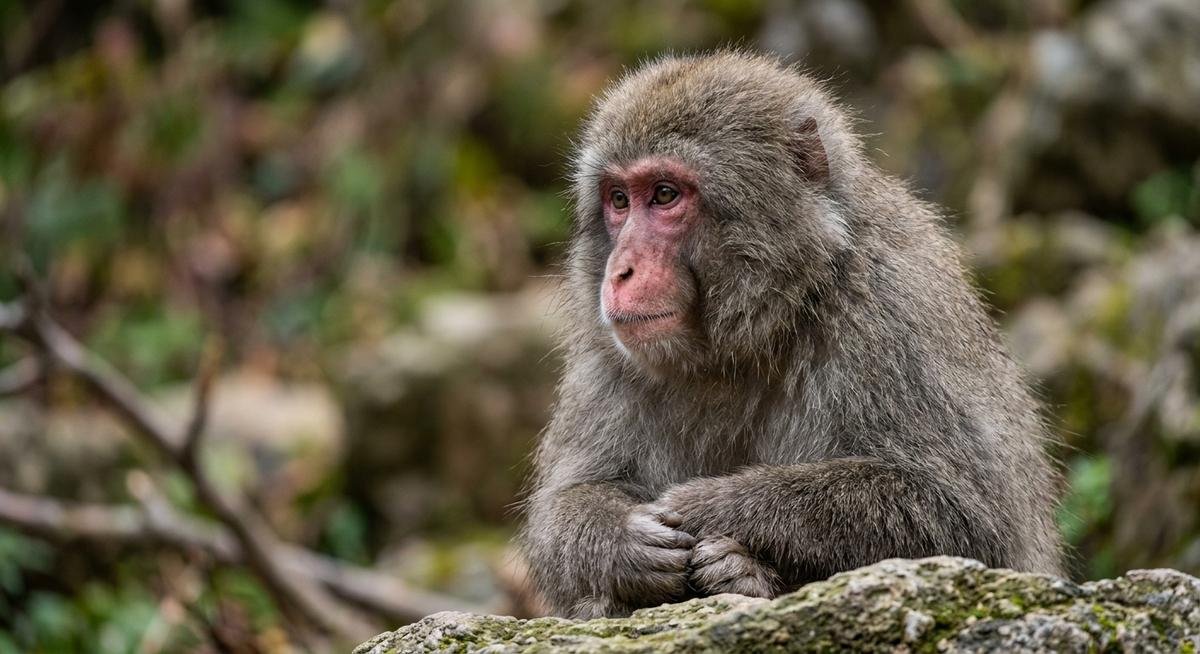
Ichikawa City Zoo, located in Chiba Prefecture just outside Tokyo, is a modest municipal zoo — not the kind of institution you’d expect to produce a globally viral animal celebrity. Yet Punch managed exactly that. His thick, grey-brown fur, strikingly human-like facial expressions, and habit of sitting with an almost contemplative stillness made him unusually photogenic even by the high standards of Japanese zoo content.
Zoo visitors and staff began documenting Punch’s daily life and sharing short clips and photos across social platforms. Content spread rapidly on TikTok and Instagram first, where short-form video formats amplified his expressive close-ups to massive audiences. X (formerly Twitter) added a narrative layer, turning individual posts into threaded conversations about Punch’s personality and emotional life.
| Detail | Information |
|---|---|
| Full species name | Japanese macaque (Macaca fuscata) |
| Home zoo | Ichikawa City Zoo, Chiba Prefecture, Japan |
| Primary viral platforms | TikTok, Instagram, X (formerly Twitter) |
| Key visual trait | Highly expressive, human-like facial features |
| Viral narrative hook | “Forever alone” / lonely monkey framing |
The Lonely Monkey Narrative That Resonated Worldwide
Punch didn’t go viral because of a single dramatic moment. He went viral because of a feeling. Fans and content creators framed his solitary enclosure moments through a “forever alone” narrative that resonated far beyond animal content circles and crossed language barriers effortlessly.
Zoo visitors captured Punch sitting quietly, staring into the middle distance, or resting with an expression that humans instinctively read as melancholy. That projection — the tendency to see our own emotional states in animal faces — is called anthropomorphism, and Punch triggered it on a global scale. A macaque in Chiba became an international symbol of quiet longing.
Punch’s virality exposed something universal: people everywhere recognize loneliness, and they root for connection. That emotional foundation is precisely what made Momo-chan’s arrival so much more than a routine zoo welfare update — it was a payoff that millions of strangers had been quietly waiting for.
Punch Has a Girlfriend — Introducing Momo-chan
Punch the monkey’s girlfriend is named Momo-chan, a female Japanese macaque (Macaca fuscata) introduced to him at Ichikawa City Zoo in Chiba Prefecture, Japan. Her arrival transformed Punch’s story from a viral tale of loneliness into something far more heartwarming — and the internet responded exactly as you’d expect.
Who Is Momo-chan?
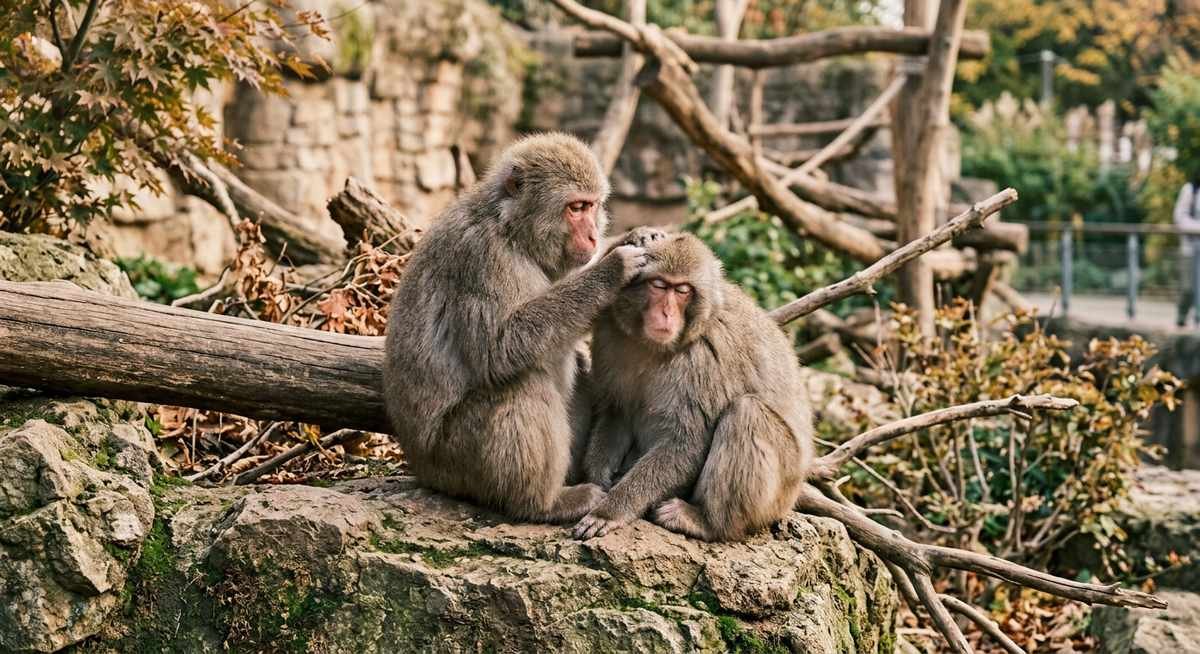
Momo-chan’s name translates to “peach” in Japanese — a soft, sweet name that fits perfectly within Japan’s tradition of giving beloved zoo animals affectionate, character-rich monikers. She is a Japanese macaque, the same species as Punch, which zookeepers at Ichikawa City Zoo confirmed was a deliberate and necessary match for long-term compatibility.
Specific details about Momo-chan’s exact age and origin have not been officially confirmed in publicly available records at the time of writing. What zoo staff and visitors have documented is a personality that complements Punch’s own — she has been described as calm and curious, traits that behavioral observers identify as favorable indicators when introducing macaques who have previously lived in social isolation.
Momo-chan isn’t just a feel-good footnote to Punch’s story. She represents a deliberate welfare decision by zoo staff — one that most competitors covering this story reduced to a headline without exploring the animal science underneath it.
| Detail | Punch | Momo-chan |
|---|---|---|
| Species | Japanese macaque (Macaca fuscata) | Japanese macaque (Macaca fuscata) |
| Name meaning | Punch (punchy, distinctive personality) | Momo — “peach” in Japanese |
| Zoo location | Ichikawa City Zoo, Chiba Prefecture | Introduced to Ichikawa City Zoo |
| Social status before pairing | Solitary; viral “lonely monkey” | Not publicly documented |
| Personality (observed) | Expressive, photogenic, emotionally resonant | Reportedly calm and curious |
How Punch and Momo-chan Met
Zoo staff at Ichikawa City Zoo facilitated the introduction using a structured pairing process — a standard protocol for primate socialization that prioritizes gradual exposure over immediate contact. This wasn’t a spontaneous meeting; it was a carefully managed welfare intervention prompted, at least in part, by the public attention Punch’s solitary life had attracted.
According to reports circulating on Japanese social media, the two macaques were initially allowed to observe each other before sharing the same space — a technique primatologists recommend to reduce stress and aggression during first introductions. Early behavioral observations noted positive compatibility signals: relaxed body language and mutual curiosity rather than avoidance or threat displays.
The staged introduction process — scent exchange, visual contact through a barrier, then supervised co-habitation — is what gives fans genuine confidence that this pairing was built to last, not engineered for a news cycle.
Why Social Bonds Matter So Much for Japanese Macaques
Japanese macaques are among the most socially complex primates on Earth. In the wild, Macaca fuscata live in troops of 20 to 100 individuals, built around intricate hierarchies, grooming relationships, and constant social interaction. Without that social fabric — even in a well-resourced enclosure — a macaque’s psychological health can deteriorate quickly. Punch’s story isn’t just cute. It’s a window into a genuine animal welfare issue that most viral coverage completely ignores.
The Social Need That Punch’s Story Exposed
For Macaca fuscata, social contact isn’t a luxury — it’s a biological requirement. Grooming alone accounts for a significant portion of a wild macaque’s daily activity, serving both hygienic and social bonding functions. Remove that, and the animal loses a core mechanism for managing stress and maintaining psychological equilibrium.
Isolated or under-socialized macaques in captivity frequently develop what behaviorists call stereotypic behaviors — repetitive, purposeless actions like pacing, excessive self-grooming, or rocking. These are recognized stress indicators, not personality quirks. According to the Association of Zoos and Aquariums (AZA) standards for primate care, social housing is considered a baseline welfare requirement for group-living primate species, not an optional enrichment add-on.
The emotional resonance behind Punch’s “lonely monkey” narrative wasn’t purely anthropomorphic projection. Fans were, perhaps unknowingly, responding to something behaviorally real.
| Behavioral Indicator | Socially Housed Macaque | Isolated Macaque |
|---|---|---|
| Grooming activity | Regular, reciprocal | Excessive self-grooming or absent |
| Stress behaviors | Low frequency | Pacing, rocking, repetitive movements |
| Appetite and activity | Consistent, engaged | Reduced or erratic |
| Cortisol levels | Regulated through social bonds | Chronically elevated |
How Zoos Support Animal Bonding Programs
Modern accredited zoos don’t simply place two animals together and hope for the best. Structured introduction protocols involve a staged process: initial scent exchange, then visual contact through a mesh barrier, followed by brief supervised co-habitation before full integration. Each stage is monitored for aggression, submission signals, and positive affiliative behaviors like proximity-seeking and mutual grooming.
Ichikawa City Zoo’s pairing of Punch with Momo-chan reflects exactly this kind of responsible, evidence-based animal care. The fact that zoo staff documented their interactions — and that those interactions showed clear compatibility — signals a careful process, not one rushed for social media attention.
Punch and Momo-chan’s relationship isn’t just a feel-good follow-up to a viral moment. It’s a concrete example of captive enrichment working as intended — restoring a social dimension to an animal’s daily life in a way that physical enrichment alone simply cannot replicate.
The Internet Reacts: Fans Celebrate Punch’s New Romance
When news of Momo-chan’s arrival broke, the internet did not simply acknowledge it — it celebrated. Fans who had followed Punch’s lonely-monkey narrative for months flooded social media with messages of relief, joy, and genuine emotional investment. The punch monkey girlfriend reveal became its own viral moment, separate from and arguably bigger than his original breakout.
A Viral Story Gets a Happy Ending
The emotional payoff was immediate. On X (formerly Twitter), posts announcing Momo-chan’s introduction accumulated tens of thousands of likes and reposts within hours, with fans describing the update as “the only good news” they had seen in their feeds. TikTok videos documenting Punch and Momo-chan’s early interactions spread rapidly across fan-created compilations and zoo-content accounts.
What made this reaction different from typical cute-animal virality was depth of personal investment. Comments across platforms consistently used first-person language — “I’ve been waiting for this,” “He deserves this” — reflecting the parasocial connection audiences had built with a single Japanese macaque at a municipal zoo in Chiba. Momo-chan, named for a peach, became the answer to a question millions of strangers hadn’t realized they were asking.
| Platform | Fan Response Style | Dominant Tone |
|---|---|---|
| X / Twitter | Reposts, memes, reaction threads | Celebratory, humorous |
| TikTok | Video compilations, duets, POV edits | Emotional, heartwarming |
| Fan art, zoo visitor photos, reels | Kawaii-aesthetic, affectionate |
Visiting Punch and Momo-chan at Ichikawa City Zoo
Punch and Momo-chan can be seen in person at Ichikawa City Zoo, located in Chiba Prefecture, Japan — roughly 30 to 40 minutes from central Tokyo by train. The zoo is a publicly accessible municipal facility, making it a realistic day-trip option for visitors to the greater Tokyo area.
Before visiting, check the zoo’s official website or social media channels for current opening hours, admission prices, and any temporary exhibit changes. Japanese macaque exhibit access can vary seasonally, and some zoos adjust visitor access during animal introduction or monitoring periods. For those who cannot travel to Japan, fan accounts on TikTok and Instagram regularly publish video updates on Punch and Momo-chan — searching their names surfaces verified zoo content and fan-curated documentation of their relationship.
Frequently Asked Questions
Who is Punch the monkey’s girlfriend?
Punch the monkey’s girlfriend is named Momo-chan, a female Japanese macaque (Macaca fuscata) introduced to him at Ichikawa City Zoo in Chiba Prefecture, Japan. Her name means “peach” in Japanese. The two were paired through a structured zoo introduction protocol and quickly showed clear signs of compatibility and social bonding.
Where does Punch the monkey live?
Punch lives at Ichikawa City Zoo in Chiba Prefecture, Japan. The zoo is located in the greater Tokyo metropolitan area and is accessible as a day trip from central Tokyo. Momo-chan now shares his enclosure at the same zoo after being introduced in March 2026.
Why did Punch the monkey go viral?
Punch went viral because of his highly expressive, human-like facial features and the way fans read his solitary existence as loneliness. Content creators framed him through a “forever alone” narrative that resonated globally across TikTok, Instagram, and X, crossing language and cultural barriers to make a Japanese macaque an international symbol of quiet longing.
What species is Punch the monkey?
Punch is a Japanese macaque, scientifically known as Macaca fuscata. Japanese macaques are native to the Japanese archipelago and are the world’s most northerly non-human primates. They are highly social animals that live in troops of 20 to 100 individuals in the wild — which is why Punch’s solitary captive existence attracted significant attention from both fans and animal welfare observers.
Is Punch the monkey a real animal?
Yes, Punch is a real Japanese macaque living at Ichikawa City Zoo in Chiba Prefecture, Japan. He is not a fictional or CGI character. His viral fame is based on authentic photos and videos taken by zoo visitors and staff that spread organically across social media platforms starting in 2025 and continuing into 2026.
When did Punch meet Momo-chan?
Momo-chan’s introduction to Punch was reported in March 2026, with coverage from outlets including the New York Post and India Today. The pairing followed a period of significant international attention on Punch’s solitary social situation — attention that zoo staff at Ichikawa City Zoo ultimately addressed through a formal introduction program.
Can I visit Punch and Momo-chan at the zoo?
Yes. Punch and Momo-chan are housed at Ichikawa City Zoo in Chiba Prefecture, a publicly accessible municipal zoo near Tokyo. Check the zoo’s official channels for current hours and exhibit access information before planning your visit, as availability can vary seasonally.
The Lonely Monkey Got His Peach
Punch went viral because loneliness is universal. He stayed viral because millions of people decided to root for him — not as entertainment, but as a genuine animal with a story worth following. Momo-chan’s arrival is the payoff that story always deserved.
What makes the punch monkey girlfriend story genuinely worth telling — beyond the heartwarming surface — is what it reveals about modern zoo keeping, social media empathy, and the biological reality of primate welfare. Ichikawa City Zoo didn’t pair Punch with Momo-chan for clicks. They did it because Japanese macaques are profoundly social animals, and because a solitary macaque in a well-resourced enclosure is still a macaque living at a fraction of its natural social capacity.
Punch got his peach. The science and the sentiment, for once, agree completely on the outcome.