




Who Was Shiv Ratan Agarwal?
Shiv Ratan Agarwal was the founder and Chairman of Bikaji Foods International, one of India’s largest ethnic snacks companies, with a Forbes-estimated net worth of $1.4 billion at the time of his death on April 23, 2026, at the age of 75. He served as Chairman and Whole-Time Director of the company from its founding in 1986 until his passing.
Under his leadership, Bikaji Foods grew from a small regional operation in Bikaner, Rajasthan, into a nationally recognized brand with an international footprint and a public listing on India’s stock markets since November 2022.
His passing on April 23, 2026, was confirmed through a regulatory filing by Bikaji Foods, which described his death as “an irreparable loss to the organisation.”
How He Built Bikaji: From Shivdeep Products in 1986 to a Public Company
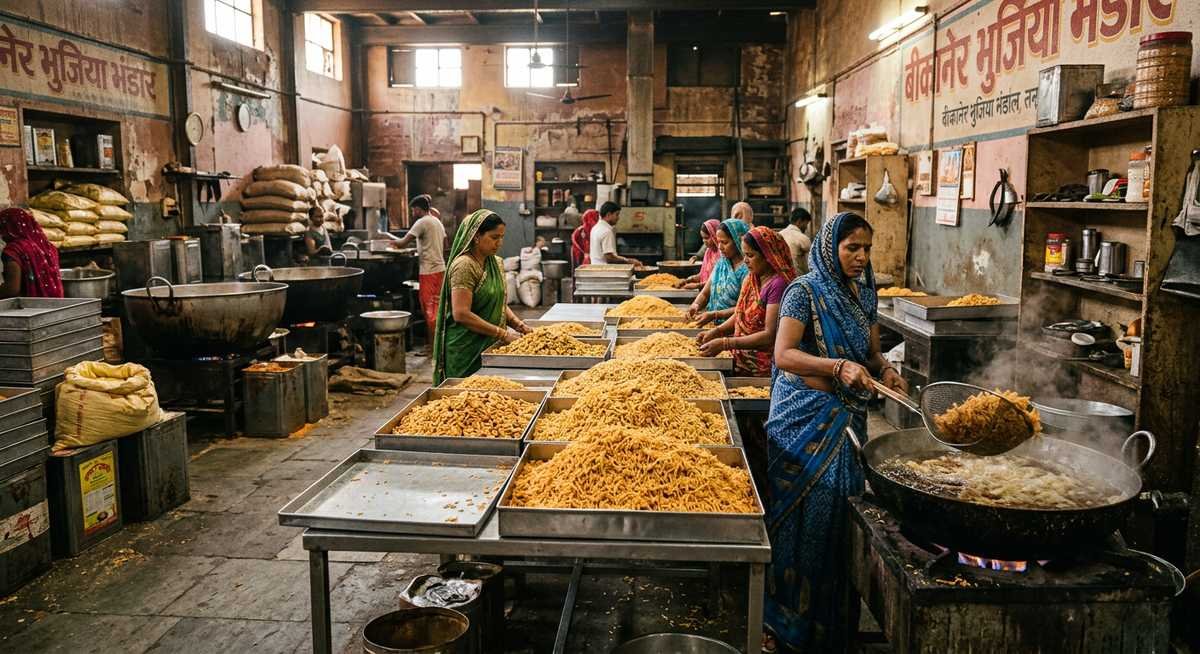
In 1986, Agarwal founded the business as Shivdeep Products, a name that quietly carried his own identity: “Shiv” from his first name and “deep” from his son Deepak’s. The company started manufacturing traditional Bikaneri snacks — bhujia, namkeen, and sweets — products that the region had been producing for over a century.
In 1993, he launched the Bikaji brand, naming it after Bika Rao, the historical founder of Bikaner city. That naming decision was deliberate: it embedded the brand inside a geographic identity that Indian consumers already associated with authentic snack culture, before a single rupee was spent on advertising.
The gamble paid across decades. By the time Bikaji Foods went public in November 2022, the IPO opened at an 8% premium over its offer price, according to Livemint. The listing gave formal market recognition to what Agarwal had built over 36 years of operations.
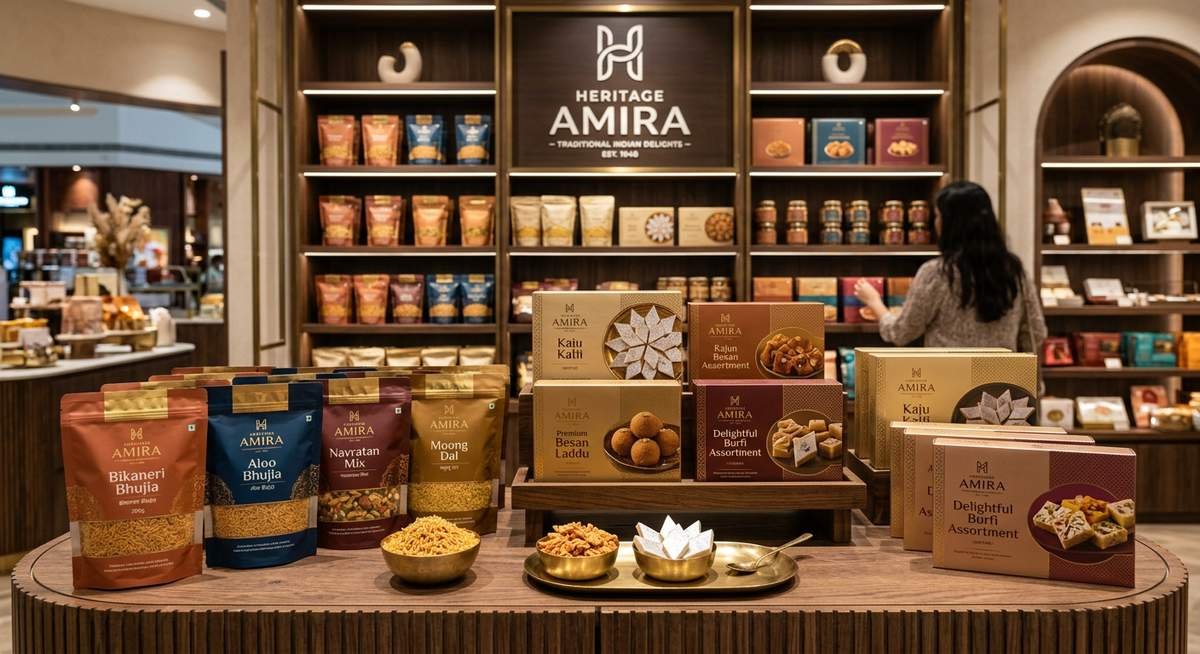
The product portfolio that emerged under his direction spans bhujia, namkeen, papad, sweets, and a range of packaged traditional snacks. The brand became one of India’s top recognized names in the ethnic snacks category, competing nationally with ITC, Haldiram’s, and regional players.
The Haldiram Connection: Born Into the Snack Business
Agarwal’s grandfather, Gangabishan Agarwal, founded Haldiram’s, the snack empire that became one of India’s most recognizable food brands and helped create the market for packaged ethnic snacks as a national category.
That lineage gave him something invaluable at the starting line: an intimate understanding of what it takes to turn a regional taste into a scalable food brand. He grew up watching how a family business could command national loyalty.
He chose to build Bikaji independently rather than working within the Haldiram structure. It was a harder path. Competing in a market where his own family’s brand dominated meant there was no inherited goodwill, just a shared technical knowledge of how good bhujia is made.
The choice defined his career. Two generations of the same family, two different billion-dollar brands, both rooted in the dusty desert city of Bikaner.
Bikaji Foods IPO and the Numbers Behind the Legacy
Bikaji Foods International debuted on India’s stock exchanges in November 2022, opening at an 8% premium over its IPO price. The listing represented a formal market valuation for a brand built on traditional recipes and regional identity, something that many observers in the FMCG sector had long assumed was undervalued.
At the time of Agarwal’s death, Forbes placed his net worth at $1.4 billion, ranking him #2751 on the Real-Time Billionaires list and #2858 on the Forbes Billionaires 2026 ranking.
In March 2026, weeks before his passing, Bikaji Foods announced a ₹40 crore investment in Bikaji Foods Retail Ltd (BFRL), its wholly-owned step-down subsidiary. The company subscribed to 10,52,630 new equity shares in BFRL, expanding the subsidiary’s capacity to enter quick service restaurants (QSRs), casual cafes, full-scale restaurants, catering solutions, and ice cream services.
That March 2026 investment showed a founder still actively steering the company’s future, not managing a legacy.
What His Company Said When He Died
Corporate obituaries are often formulaic. Bikaji Foods’ regulatory filing was not entirely different, but parts of it stood out. The company described Agarwal as someone who “transformed the traditional Bikaneri snacks business into the internationally recognised Bikaji brand by combining authentic taste with modern business practices.”
It also noted his “strategic acumen and unique ability to navigate complex market challenges” as the foundation of the company’s long-term sustainability. The filing added: “Guided by his legacy, the company will strive to sustain its growth trajectory and continue to lead a profitable and responsible business.”
Bikaji Foods stock had faced its own turbulence in the months before his death. Shares had dropped sharply following a weak Q3 results announcement that showed profit down 39% year over year. He had lived through shareholder scrutiny, not just shareholder celebration. The timing of his death, just as the company was implementing a diversification strategy, made the loss operationally significant beyond the personal tribute.
Bikaji in the Indian Ethnic Snacks Market
India’s packaged ethnic snacks and traditional foods segment is a multi-thousand crore market dominated by a handful of national names. Bikaji Foods has historically competed with Haldiram’s (the market leader by brand recognition), ITC’s snacks division, and a large number of regional players in states like Rajasthan, Gujarat, and Maharashtra.
What Bikaji did distinctively under Agarwal’s direction was hold onto its regional identity while scaling nationally. The Bikaner name stayed on the packaging. The bhujia recipe didn’t get simplified for mass-market palatability. That approach attracted a consumer base that wanted authenticity, not approximation.
The 2022 IPO gave Bikaji a capital market presence that its key competitors, including the privately held Haldiram’s, did not have. It also created price transparency and governance accountability that most family-run snack businesses avoid.
“Founder or Bikaji Foods – Shiv Ratan Agarwal passes away”
— r/Storyboard18, April 23, 2026 (12 upvotes)
Frequently Asked Questions
When did Shiv Ratan Agarwal die?
He passed away on April 23, 2026, at the age of 75. The death of the founder and Chairman of Bikaji Foods International was confirmed that same day through a regulatory filing with Indian stock market authorities.
What was Shiv Ratan Agarwal’s net worth?
Forbes estimated his net worth at $1.4 billion as of April 23, 2026. He held rankings of #2751 on the Forbes Real-Time Billionaires list and #2858 on the Forbes Billionaires 2026 index, with his wealth sourced from his stake in Bikaji Foods International.
What company did Shiv Ratan Agarwal found?
He founded Bikaji Foods International, originally established as Shivdeep Products in 1986. The Bikaji brand launched in 1993, named after Bika Rao, the historical founder of Bikaner, Rajasthan. The company is one of India’s leading producers of ethnic snacks and sweets including bhujia and namkeen, publicly listed since November 2022.
What is the connection between Shiv Ratan Agarwal and Haldiram’s?
His grandfather, Gangabishan Agarwal, founded the Haldiram’s snack brand. Rather than joining the family enterprise, the Bikaji founder built his company independently, competing directly in the Indian ethnic snacks market alongside the brand his grandfather created, ultimately reaching billionaire status through a separate path.
When did Bikaji Foods International go public?
Bikaji Foods International listed on India’s stock exchanges in November 2022, opening at an 8% premium over its IPO price. The listing gave the company a formal public market valuation, distinguishing it from most family-run ethnic snacks companies that remain privately held.
What products does Bikaji Foods make?
Bikaji Foods International produces bhujia, namkeen, papad, sweets, and a range of packaged traditional Indian snacks. The brand is particularly known for its Bikaneri bhujia, a spiced gram flour noodle snack tied to the culinary identity of Rajasthan’s Bikaner city.