




Zryly.com is a digital security education platform that publishes guides, tutorials, and practical resources on cybersecurity, VPN usage, web hosting, and internet privacy. It serves both individuals and businesses seeking to understand and implement layered online protection, covering threats from phishing and ransomware to zero-day exploits and insider risks. The platform focuses on making technical security concepts accessible without diluting accuracy.
What Is Zryly.com?
Zryly.com is an online cybersecurity education platform that helps users at every skill level understand and apply digital security principles. It publishes in-depth guides on VPNs, web hosting security, network protection, and cyber threat awareness, making it a practical reference for individuals and small businesses that lack dedicated IT staff. The platform covers four main content pillars: cybersecurity, VPN and digital privacy, internet services, and web hosting. Its Cybersecurity 101 guide alone spans over 4,000 words, covering everything from basic definitions to incident response frameworks.
Unlike managed security service providers that sell software subscriptions, Zryly.com operates primarily as an educational resource. The content ranges from foundational explainers like “What is a firewall?” to advanced discussions of zero-trust security frameworks and network telemetry. This positions it as a knowledge hub rather than a product vendor.
According to the Cybersecurity and Infrastructure Security Agency (CISA), cybersecurity is defined as “the art of protecting networks, devices and data from unauthorized access or criminal use and the practice of ensuring confidentiality, integrity and availability of information.” Zryly.com builds its content framework around exactly these principles, with an added emphasis on real-world application and user education.
The platform’s cybersecurity section alone covers dozens of subcategories, including risk assessment for small businesses, budget-friendly security tools, zero-trust architecture comparisons, and incident response planning. This breadth is its clearest differentiator from generic cybersecurity blogs that tend to recycle the same top-ten lists.
Cybersecurity Resources Available on Zryly.com
Zryly.com’s cybersecurity content library covers the full security lifecycle: prevention, detection, response, and recovery. Each category includes structured guides, checklists, and step-by-step tutorials that translate complex frameworks into actionable steps for non-technical users. The platform regularly updates its content to reflect current threat data and industry developments.
Key resource areas on the site include:
- Threat awareness training materials: Articles and case studies helping users recognize phishing emails, suspicious links, and social engineering tactics before they cause damage.
- Vulnerability assessment guides: Checklists and tools for website owners and small businesses to audit their own security posture, particularly useful for those without a dedicated IT team.
- Data encryption and password security: Practical walkthroughs on multi-factor authentication (MFA) setup, password manager selection, and secure cloud storage practices.
- Incident response planning: Templates and step-by-step guides covering breach identification, system isolation, regulatory reporting, and recovery processes.
- Network security fundamentals: Explanations of VPN protocols, firewall configuration, and intrusion detection systems written for non-enterprise readers.
- Hosting security: Coverage of secure web hosting choices, SSL/TLS certificates, and server hardening practices specific to small website operators.
According to Gartner, worldwide information security spending reached USD 188.10 billion in 2023 and is projected to climb to USD 288.50 billion by 2027. IBM’s Cost of a Data Breach Report corroborates that trajectory, tracking how breach costs have climbed steadily across industries. That trajectory explains why platforms like Zryly.com exist: the volume and sophistication of threats has outpaced what most individuals and small businesses can track on their own, and accessible education fills a real gap.
Major Cyber Threats Zryly.com Helps You Understand
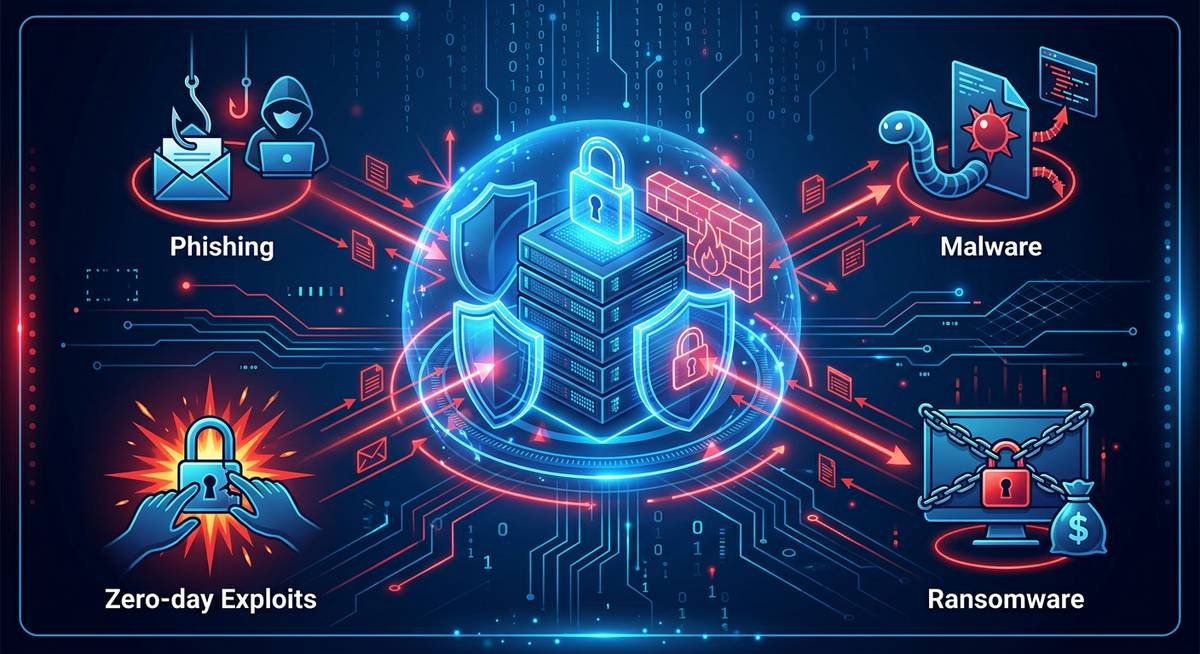
Zryly.com’s threat coverage spans the most common and most damaging attack types facing individuals and organizations today. Rather than listing threats abstractly, the platform pairs each threat type with detection signals and mitigation steps. The most extensively covered categories are ransomware, phishing, zero-day exploits, man-in-the-middle attacks, and insider threats.
| Threat Type | How It Works | Zryly.com’s Recommended Defense |
|---|---|---|
| Ransomware | Encrypts victim data and demands payment for decryption key | Offline backups, real-time antivirus monitoring, avoid unverified downloads |
| Phishing | Deceptive emails or sites trick users into revealing credentials | Email verification habits, link inspection, security awareness training |
| Zero-Day Exploits | Attacks target software vulnerabilities before patches exist | Consistent software updates across all devices and applications |
| Man-in-the-Middle (MitM) | Attacker intercepts communications between two parties | HTTPS protocols, VPN use on public Wi-Fi, encrypted messaging |
| Insider Threats | Damage from employees or contractors with internal access | Role-based access controls, activity monitoring, employee training |
| Social Engineering | Psychological manipulation to extract sensitive information | Verification protocols, security culture training, access segmentation |
Ransomware deserves particular attention given how much it has escalated. According to research cited by Zryly.com, 10% of organizations globally faced attempted ransomware attacks in 2023, up from 7% the prior year. The average financial loss per ransomware incident sits at USD 4.35 million when accounting for downtime, recovery costs, and reputation damage. The modern wave of ransomware attacks traces back to the WannaCry outbreak in 2017, which demonstrated how quickly a single exploit could cascade across global infrastructure.
Phishing has similarly evolved beyond crude spam into targeted spear-phishing campaigns that mimic known senders, use accurate logos, and replicate legitimate websites down to the subdomain. Zryly.com’s phishing content is among the more thorough available, with training materials that walk through real attack scenarios rather than generic “don’t click suspicious links” advice.
Zryly.com’s Practical Approach to Cybersecurity Education
What separates Zryly.com from cybersecurity content farms is its emphasis on the human factor. The platform openly acknowledges that most successful cyberattacks originate not from sophisticated technical exploits but from basic human error, poor system design, and a lack of user awareness. This shapes how its guides are written: less jargon, more scenario-based explanation, direct action steps.
The practical content on the platform follows a consistent security cycle model:
- Prevention: Building the right defenses before an attack occurs, including access controls, software hygiene, and network segmentation.
- Detection: Recognizing signs of compromise early through monitoring tools and behavioral awareness.
- Response: Acting quickly and correctly when a breach is detected, including containment and reporting steps.
- Recovery: Restoring systems and data while learning from the incident to prevent recurrence.
For individuals, Zryly.com’s most-cited practical guidance centers on three behaviors that produce outsized protection: enabling multi-factor authentication, keeping software current, and using a reputable VPN on public networks. Microsoft’s research, referenced by national cybersecurity agencies, found that MFA alone makes users 99% less likely to be compromised in a credential-based attack. The UK’s National Cyber Security Centre (NCSC) offers specific guidance on implementing MFA across online services if you want to go deeper on this single protection measure. That single statistic does more to motivate adoption than any abstract discussion of threat actors.
For small businesses, the platform publishes tailored content on budget-friendly security stacks, employee training approaches, and how to conduct basic cybersecurity risk assessments without expensive consultants. This fills a genuine gap: enterprise security frameworks like NIST and ISO 27001 are thorough but largely inaccessible for a ten-person company without a security background.
Who Benefits Most from Zryly.com Cybersecurity Content
Zryly.com serves three primary audiences: individuals managing personal online security, small and medium-sized businesses without dedicated IT staff, and students building foundational cybersecurity knowledge. Each group finds targeted content relevant to their threat exposure, technical background, and available resources. Identifying which category applies makes navigating the platform’s library considerably more efficient.
Individuals and home users benefit from Zryly.com’s personal security guides, particularly around password hygiene, VPN selection, and recognizing social engineering attempts. The content assumes no technical background and focuses on immediate, low-cost improvements to everyday online behavior.
Small and medium-sized businesses will find the most value in the risk assessment guides, incident response templates, and hosting security sections. These businesses often operate without full-time security staff and need actionable guidance that doesn’t require external consultants for basic implementation.
Students and security learners benefit from the foundational explainers and structured guides that cover cybersecurity concepts methodically. The platform’s coverage of network security essentials, encryption principles, and compliance frameworks makes it a useful supplementary reference alongside formal coursework.
Frequently Asked Questions
Is Zryly.com a legitimate cybersecurity resource?
Yes, Zryly.com is a legitimate cybersecurity education platform. It publishes detailed guides on VPN usage, web hosting security, cyber threat awareness, and digital privacy. The site’s content is factually grounded and regularly covers topics aligned with established frameworks from organizations like CISA and NIST. It operates as an educational resource rather than a security software vendor.
What cybersecurity topics does Zryly.com cover?
Zryly.com covers four main topic areas: cybersecurity (threat types, best practices, risk assessments), VPN and digital privacy (protocol guides, provider comparisons), web hosting security (server hardening, SSL certificates), and general internet services and safety. Within cybersecurity alone, the platform addresses ransomware, phishing, zero-day vulnerabilities, insider threats, network security, and incident response planning.
Is Zryly.com free to use?
Zryly.com’s educational content, guides, and articles are publicly accessible without a subscription or registration. The platform operates on an advertising or affiliate model rather than a paywall. All cybersecurity guides, tutorials, and best practice checklists are available to read at no cost.
Who is Zryly.com best suited for?
Zryly.com is best suited for individuals seeking practical online security guidance, small business owners managing their own IT security, and students learning cybersecurity fundamentals. Its guides are written for readers without deep technical backgrounds, making complex topics like network segmentation, MFA setup, and incident response accessible to a general audience.
How does Zryly.com compare to other cybersecurity education sites?
Compared to generic cybersecurity blogs, Zryly.com distinguishes itself through broader topic coverage (VPN, hosting, and internet services alongside pure security), consistent use of actionable checklists and step-by-step guides, and content written for non-technical audiences. Unlike enterprise-focused resources such as NIST publications or vendor documentation, Zryly.com is designed for practical application by individuals and small teams.
What are the most important cybersecurity practices recommended on Zryly.com?
The platform consistently emphasizes five core practices: enabling multi-factor authentication on all accounts, keeping all software and operating systems updated, using a VPN on public networks, creating strong and unique passwords with a password manager, and maintaining regular encrypted backups. These five behaviors address the majority of common attack vectors without requiring advanced technical knowledge.
Does Zryly.com cover cybersecurity for small businesses specifically?
Yes. Zryly.com publishes content specifically tailored to small business cybersecurity needs, including guides on conducting basic risk assessments without outside consultants, budget-friendly security tool recommendations, employee training frameworks, and incident response planning for smaller teams. The platform recognizes that enterprise-level security documentation is often inaccessible to small business owners and bridges that gap with practical, scaled-down guidance.
The Practical Case for Using Zryly.com
Cybersecurity knowledge is no longer optional. With global security spending heading toward USD 288.50 billion by 2027 and ransomware incidents averaging USD 4.35 million in losses per event, the cost of ignorance has become concrete. Zryly.com doesn’t eliminate that risk by selling software. It reduces it by raising awareness and teaching repeatable defensive behaviors.
The platform’s strength is accessibility. Most of what it covers, from MFA setup to phishing recognition to secure hosting practices, requires no budget and no technical expertise. The gap between knowing what to do and actually doing it is smaller than most people assume, and Zryly.com’s content is built to close it.
For anyone managing their own online security, whether as an individual, a small business, or someone just starting to learn, the platform provides a solid, freely accessible foundation without the noise of vendor marketing or the opacity of academic papers.