



Ever had someone say, “Lunch is on me” and actually mean it no awkward bill dance, no fake wallet reach? That feeling right there sits at the heart of bjudlunch. This simple word carries a surprisingly rich social meaning, and once you understand it, you start seeing lunches very differently. IMO, it’s one of those cultural ideas that quietly makes life better.
Let’s break it down, friend to friend, without overcomplicating things.
What Does bjudlunch Actually Mean?
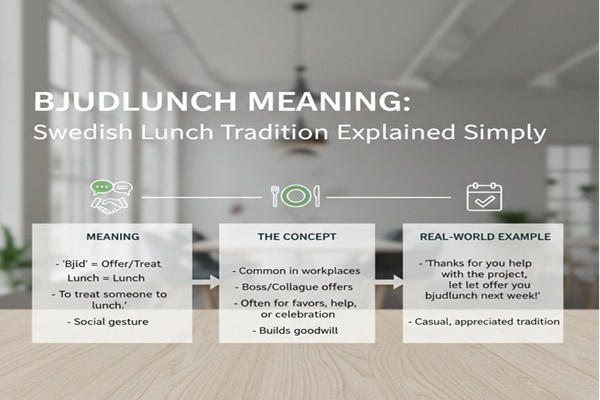
At its core, bjudlunch means inviting someone to lunch and paying for it yourself. No splits. No “we’ll settle later.” You invite, you treat.
The word comes from Swedish:
Bjuda = to invite or treat
Lunch = well… lunch
Put together, bjudlunch becomes a small but meaningful social promise. You say it, you mean it.
This idea comes from Sweden, where clarity and fairness matter more than flashy gestures. FYI, that cultural backdrop explains why bjudlunch feels honest rather than showy.
Why bjudlunch Feels So Refreshing
Let’s be real. Lunch invites can get weird.
Who’s paying?
Should I order less?
Do I offer to split?
bjudlunch kills all that stress instantly.
When someone invites you to a bjudlunch, they remove uncertainty from the table. That alone builds trust.
And trust, as you know, tastes better than dessert 🙂
The Real Meaning Behind bjudlunch
It’s Not About Money
People often misunderstand this. bjudlunch isn’t about spending big. It’s about clarity and generosity.
A sandwich and soup count just as much as a fancy meal.
It’s About Respect
By offering a bjudlunch, you show:
Appreciation
Gratitude
Equal footing
No power play. No hidden expectations.
It’s About Connection
Lunch becomes a moment, not a transaction. Conversations flow easier when nobody worries about the bill.
When Do People Use bjudlunch?
Short answer? All the time.
Longer answer? Here are common real-life situations:
Thanking a colleague for help
Catching up with a friend
Welcoming a new team member
Informal business chats
Celebrating small wins
Notice something? None of these moments need balloons or speeches. They just need time and food.
bjudlunch in Work Culture
This is where it gets interesting.
In many workplaces, especially global ones, lunch meetings feel tense. People talk business while mentally calculating costs. Awkward, right?
bjudlunch flips that vibe.
Why Teams Love It
It lowers hierarchy
It encourages open conversation
It builds goodwill without forcing bonding
When a manager says, “This one’s a bjudlunch,” people relax. Ideas come out faster. Honesty shows up earlier.
How bjudlunch Differs From “Going Out to Eat”
You might think, “Isn’t this just treating someone to lunch?” Not exactly.
Here’s the difference:
| Regular Lunch | bjudlunch |
|---|---|
| Payment unclear | Payment clear upfront |
| Awkward bill moment | Zero awkwardness |
| Social guessing | Social clarity |
| Often transactional | Genuinely relational |
Small shift. Huge emotional impact.
The Unwritten Rules of bjudlunch
No rulebook exists, but social norms keep things smooth.
1. The Host Always Pays
If you invite, you pay. Full stop.
2. Guests Don’t Argue
A polite “thank you” beats a wallet showdown.
3. Keep It Reasonable
Ordering the most expensive item? Yeah… don’t.
4. Gratitude Matters
A simple message later goes a long way.
5. Reciprocity Is Optional
You can return the favor later, but nobody tracks it like a scoreboard.
Hosting a bjudlunch Without Stress
Want to host one? Good news: it’s easier than you think.
Step 1: Be Clear
Say it plainly:
“Let me invite you for a bjudlunch.”
Clarity prevents confusion.
Step 2: Pick the Right Spot
Choose somewhere:
Comfortable
Casual
Easy to talk
This isn’t a Michelin audition.
Step 3: Keep the Guest List Small
Four to eight people works best. Big groups kill conversations.
Step 4: Focus on Conversation
Food supports the moment. It doesn’t steal the spotlight.
Home vs Restaurant bjudlunch
Both work. Each has a different vibe.
Restaurant bjudlunch
Zero prep stress
Neutral ground
Easy exit times
Home bjudlunch
More personal
Feels warmer
Encourages longer chats
IMO, start with restaurants. Graduate to home lunches once you’re comfortable.
Why bjudlunch Works Globally
You don’t need to be Swedish to appreciate this idea.
Across the USA, UK, India, Australia, and beyond, people crave:
Simplicity
Honest gestures
Clear intentions
bjudlunch translates well everywhere because generosity speaks every language.
In India, it mirrors hosting traditions.
In the US, it feels like straightforward kindness.
In the UK, it avoids social awkwardness.
In Australia, it fits casual mate culture perfectly.
Different cultures. Same human need.
The Psychology Behind bjudlunch
Here’s the interesting part.
Studies on social bonding show that shared meals increase trust and cooperation. Add clarity around payment, and the brain relaxes faster.
No mental accounting = better connection.
That’s not fluff. That’s psychology.
Common Mistakes People Make
Even good ideas get messy when misused.
Avoid these:
Saying bjudlunch and then splitting the bill
Choosing overly expensive places
Turning it into a business ambush
Making guests feel indebted
If it feels heavy, you’re doing it wrong :/
Can You Use bjudlunch in Business?
Absolutely. Carefully.
Best Use Cases
Informal catch-ups
Networking without pressure
Mentoring conversations
When to Avoid It
Negotiations
Performance reviews
Sensitive discussions
Lunch should soften conversations, not complicate them.
bjudlunch vs Networking Lunches
Networking lunches often feel strategic. bjudlunch feels human.
One builds contacts.
The other builds relationships.
Guess which one lasts longer?
Also Read : Insetprag Explained: Meaning, Uses, and Real-World Examples
Is bjudlunch About Equality?
Yes, and that’s why it matters.
In cultures that value equality, paying for everyone removes:
Social hierarchy
Financial discomfort
Silent power moves
Everyone eats. Everyone talks. Everyone belongs.
Why This Concept Is Trending Online
People crave:
Meaningful connection
Slower moments
Less transactional living
bjudlunch hits all three, which explains why blogs and social platforms keep revisiting it.
It feels old-school in the best way.
FAQ: bjudlunch
What does bjudlunch mean in simple terms?
It means inviting someone to lunch and paying for the meal yourself.
Is bjudlunch formal or casual?
It’s casual by design. Comfort beats formality.
Do guests ever split the bill at a bjudlunch?
No. The host pays. Guests just enjoy and say thanks.
Can bjudlunch work in professional settings?
Yes, especially for informal meetings or team bonding.
Is bjudlunch expensive?
Not at all. It’s about intention, not price.
Is bjudlunch common outside Sweden?
The word is Swedish, but the idea works globally.
Should guests return the favor?
They can, but there’s no obligation.
Final Thoughts on bjudlunch
Here’s the thing: bjudlunch proves that small gestures still matter.
It’s not flashy.
It’s not complicated.
It’s just honest generosity wrapped in a meal.
In a world obsessed with efficiency and transactions, bjudlunch reminds us to slow down, connect, and feed both body and friendship.
Next time you invite someone to lunch, try it. Say it clearly. Mean it fully.