



Ever stumbled across insetprag and thought, “Okay… but what does that actually mean in real life?” You’re not alone. I had the same reaction the first time I saw it pop up online, and IMO, that confusion explains why insetprag feels so intriguing. It sounds abstract at first, but once it clicks, you start spotting it everywhere from smart homes to workplace systems to the quiet ways people fix problems without making a big deal out of it.
So let’s talk about insetprag in plain English. No hype. No academic waffle. Just a clear, human explanation that actually makes sense.
What Is Insetprag, Really?
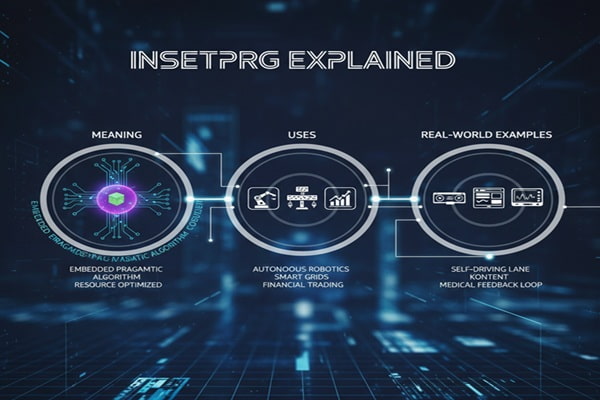
At its core, insetprag blends two simple ideas:
Inset – to embed, integrate, or fit something inside what already exists
Prag – short for pragmatic, meaning practical and useful
Put together, insetprag becomes a mindset and approach focused on making smart, practical improvements by embedding them into existing systems instead of rebuilding everything from scratch.
Sounds simple, right? That’s kind of the point.
Insetprag boils down to one idea:
“Don’t tear the whole house down. Fix the part that actually causes the problem.”
That philosophy feels refreshing, especially when dramatic overhauls get more attention than they deserve.
Why Insetprag Is Gaining Attention Globally
Insetprag resonates because it fits how people actually live and work.
Think about it:
Homes already exist
Businesses already run on complex systems
Cities already consume resources
People already feel overwhelmed
So why keep reinventing the wheel?
Insetprag appeals to global audiences from the USA and UK to India, Australia, and beyond because it focuses on real-world constraints like cost, time, sustainability, and usability.
FYI, this approach mirrors how most successful innovations evolve. They don’t arrive fully formed. They slip in quietly, improve things, and scale naturally.
Insetprag as a Mindset (Not Just a Trend)
Here’s where insetprag gets interesting.
It isn’t just a design concept or a tech buzzword. Insetprag works as a way of thinking.
Instead of asking:
“How do we replace this?”
Insetprag asks:
“What can we add or adjust inside this system to make it work better?”
That small shift changes everything.
Core Mindset Principles
Practical over flashy
Embedded over external
Incremental over disruptive
Useful over impressive
IMO, insetprag feels like maturity in action. No drama. Just results.
Insetprag in Everyday Life
You probably practice insetprag already without realizing it.
At Home
Adding motion-sensor lights instead of rewiring the house
Installing water-saving taps instead of replacing plumbing
Using modular furniture that adapts to small spaces
That’s insetprag in action.
At Work
Improving one workflow step instead of switching platforms
Adding a plugin rather than rebuilding software
Automating repetitive tasks without changing the entire process
Small inserts. Big payoff.
Insetprag in Smart Homes and Design
One of the most talked-about uses of insetprag shows up in sustainable and smart home design.
Instead of futuristic homes that feel like science experiments, insetprag focuses on quiet intelligence.
Examples That Make Sense
Sensors hidden inside walls
Smart lighting embedded into existing fixtures
Energy systems that adapt without constant user input
The goal stays simple: make the home smarter without making it complicated.
Nobody wants a house that needs an instruction manual, right?
Why Insetprag Beats “Total Redesign” Thinking
Let’s be real. Full redesigns sound exciting, but they rarely hold up long-term.
They often:
Cost too much
Take too long
Break existing habits
Create resistance
Insetprag avoids all that by working with reality, not against it.
Insetprag vs Traditional Overhaul
| Traditional Overhaul | Insetprag |
|---|---|
| Replace everything | Improve what matters |
| High disruption | Low disruption |
| Expensive | Cost-efficient |
| Long learning curve | Minimal adjustment |
| Risk-heavy | Flexible and adaptive |
That balance explains why insetprag works for both startups and established systems.
Insetprag in Technology and Software
Tech teams love insetprag even if they don’t always call it that.
Modern systems stack complexity fast. Rebuilding everything rarely makes sense.
Insetprag encourages:
Modular upgrades
Feature insertion
Backward compatibility
Instead of rewriting entire platforms, developers improve specific pain points.
Real-World Tech Examples
Adding AI assistance to existing tools
Improving UI flows without changing core logic
Enhancing performance without altering user habits
That’s practical innovation, not vanity development.
Sustainability and Insetprag: A Natural Match
Insetprag aligns perfectly with sustainability goals.
Why?
Because sustainability isn’t about perfection. It’s about progress that actually sticks.
Insetprag Supports Sustainability By
Reducing waste
Extending system life
Lowering energy consumption
Avoiding unnecessary replacements
Research shows that retrofitting existing structures can reduce emissions by up to 50% compared to rebuilding. That’s not a small win.
Insetprag helps the planet without asking people to change everything overnight.
Insetprag in Business Strategy
Businesses love to chase “innovation” like it’s a trophy. Insetprag takes a calmer route.
Instead of asking, “How do we disrupt?”
Insetprag asks, “How do we improve right now?”
Business Benefits
Faster ROI
Lower risk
Easier adoption
Continuous improvement
This approach works especially well for:
Legacy companies
Growing startups
Global teams
Budget-conscious organizations
Honestly, insetprag feels like business wisdom earned the hard way.
Also Read : 149+ Best Powerful Biblical Business Names 2026
Common Misconceptions About Insetprag
Let’s clear a few things up.
Insetprag Is NOT
Lazy thinking
Short-term fixes
Anti-innovation
Afraid of change
Insetprag simply believes change should earn its place.
Small, well-chosen improvements often outperform massive transformations. History proves that again and again.
Why Insetprag Feels So Human
Here’s my personal take.
Insetprag works because it mirrors how humans grow.
People don’t reinvent themselves overnight. They:
Adjust habits
Learn incrementally
Build on experience
Improve what already exists
Insetprag respects that reality. Maybe that’s why it feels so natural.
Ever tried changing everything at once? Yeah… that usually ends badly :/
How to Apply Insetprag Thinking Yourself
You don’t need a design degree or tech background.
Start simple.
Ask These Questions
What already works here?
Where does friction appear?
What small change would reduce that friction?
Can I embed the solution instead of adding complexity?
That’s insetprag in a nutshell.
The Global Relevance of Insetprag
Insetprag adapts to context, which makes it valuable worldwide.
In developing regions, it supports affordability
In advanced economies, it improves efficiency
In urban areas, it reduces waste
In remote settings, it enhances resilience
Few concepts scale this smoothly across cultures and economies.
Final Thoughts on Insetprag
Insetprag doesn’t shout. It doesn’t demand attention. It just works.
While big moves and loud ideas grab headlines, insetprag quietly proves that real progress often hides in small, thoughtful decisions.
If you value practicality, sustainability, and real-world impact, insetprag might already be your favorite philosophy you just didn’t have a name for it yet.