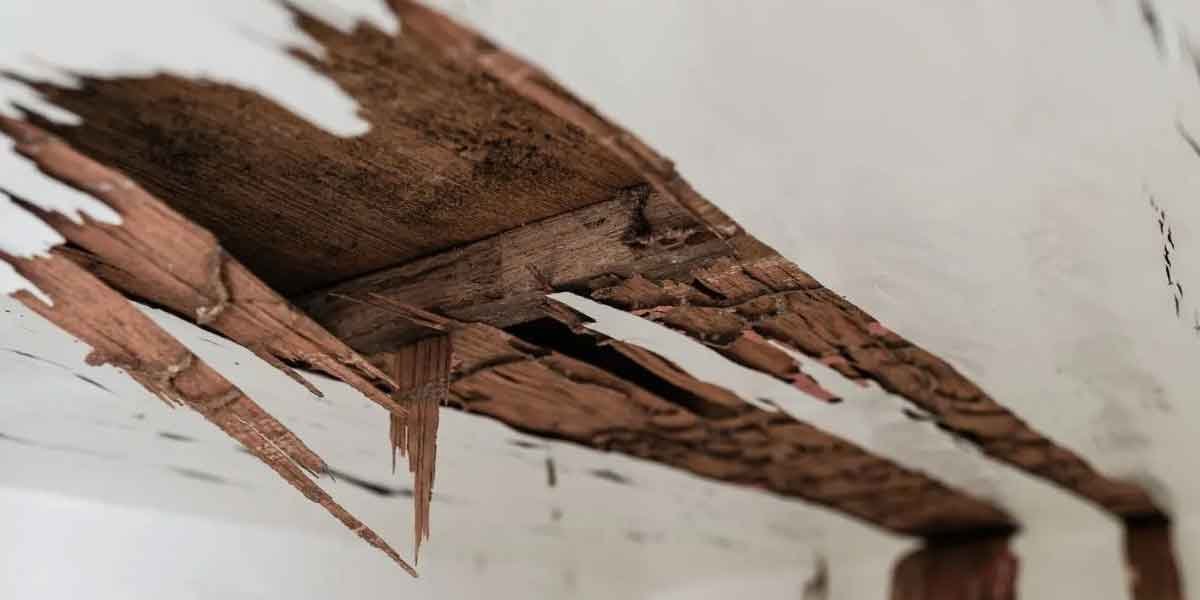
Most termite damage repair cost totals land near $3,000.
That figure is a project average, and it is not what a carpenter quotes for one patch. A two-foot section of sill plate and a rotted rim joist carry different line items, and both can sit on the same estimate while the estimate still refuses to add up. Before comparing bids, find out what unit the contractor is pricing.
Two systems feed every number on this topic, and most contractor pages print only one of them.
Termite Damage Repair Cost Comes in Two Pricing Systems
Termite damage repair cost is published two ways: as a trade rate for a single repair, and as a whole-project estimate for a house. Homewyse’s unit-cost estimate prices one repair at $556 to $1,068, scoped to a repair area up to 6 square feet. Angi’s project data puts the national average near $3,000, with most homeowners paying $1,000 to $10,000.
Both figures are current, and neither is wrong.
| Basis of the quote | Published range | What the figure includes |
|---|---|---|
| One repair, trade rate | $556 to $1,068 per repair (Homewyse, mid-2026) | About 8 hours of carpentry labor plus fasteners, connectors, and framing lumber for openings, sized to a small repair area |
| Whole home, ordinary damage | $1,000 to $10,000, average $3,000 (Angi, 2026) | Several damaged areas, the finish carpentry, and the drywall repair that follows an opened wall |
| One area of the house | $500 to $3,000 trim and sills; $2,000 to $7,000 subfloor and joists; $3,000 to $12,000 wall framing; $8,000 to $20,000 roof and attic framing (Miller Pest Solutions) | Removing finish, opening the assembly, replacing members, closing it back up |
| Load-bearing loss | $30,000 and up (Miller Pest Solutions) | Major structural components, permits, and the inspection that follows the work |
A trade rate is written per repair, and that unit assumes the work is reachable and the surrounding finish is already off. Homewyse’s line covers cutting out and disposing of damaged material, cleaning and repairing framing, and patching the surface, all inside a footprint of a few square feet.
A project estimate is written across areas. Angi’s average assumes the same crew is moving through more than one room of one house, with the patching and paint that come after a stud replacement included on the same invoice. Nothing in either number is padded, and a homeowner holding one while a contractor quotes the other will see a tenfold gap between two honest prices.
Unit words decide the rest. A joist is priced by the board foot and by how much of its length is lost, a sill plate by the linear foot, drywall and finish by the square foot, and a full reconstruction by the job. A scope written as “three repairs” cannot be compared to a scope written in board feet, because the first counts events and the second counts material.
Where the Damage Sits Sets the Number
Damage to trim, flooring, wall framing, and roof framing prices on a different scale at each location. Reachability, and the finished surface that has to come off and go back on, drive most of the difference.
Baseboards, window sills, and trim are the cheapest place for termites to leave evidence. Miller Pest Solutions prices that work between $500 and $3,000, because the material is thin, the cuts are short, and nothing structural leans on it.
Confirmation always comes first, and it is visual work. Checking the evidence against the visible signs of termite damage before calling a carpenter keeps a repair scope honest, and it gives a contractor something to price instead of a feeling.
Termite-weakened lumber fails as powder and crumbling, so a screwdriver pressed into a sill plate reports more than a visual scan. Angi lists crumbly wood and lumber that sounds hollow when tapped among the evidence worth documenting in photographs before a crew arrives.
Floor and subfloor damage is where the number climbs. Miller prices subfloor and joist work at $2,000 to $7,000 or more, since the finished flooring overhead has to come up and go back down. Angi prices the cosmetic end of the same problem, warped and buckled flooring, at $5 to $25 per square foot, which is the gap between sanding a surface and replacing what carries weight.
A single 12-foot by 12-foot room priced at the top of that flooring rate lands near $3,600 before the subfloor underneath it is touched.
Wall framing pulls drywall work along with it. Interior stud replacement prices at $3,000 to $12,000 (Miller Pest Solutions), and Angi lists drywall repair near a damaged opening at $60 to $200 per hole, small numbers that repeat across every room the colony reached.
Roof and attic framing is the most expensive location on the list. Miller quotes $8,000 to $20,000 or more there, because the members carry load, the access is poor, and an inspector has to approve the work afterward.
Exterior cladding moves the number again. Angi’s siding data spans $1 to $5 per square foot for pine and $3 to $30 for cedar, and full siding replacement after termite loss falls between $2,000 and $20,500 depending on the species and the size of the wall.
A rotted beam is priced as an event of its own. Replacing one costs $1,500 to $5,000, and Angi’s guidance is to bring in a structural engineer, whose average fee is $553, before deciding whether the member gets replaced or consolidated where it sits.
Who Pays: Insurance, the Service Contract, and the Gap
Homeowners insurance does not pay for this work. The Insurance Information Institute files infestation with the maintenance failures standard policies exclude, stating that a policy “will not cover damage due to lack of maintenance, mold or infestation from termites or other pests.”
The National Pest Management Association sizes the exposure at more than $6.8 billion a year in U.S. property damage and notes that those costs are not covered by homeowners insurance policies. Orkin’s statistics page still prints the older $5 billion figure for termite control and repair combined, a number the association has since revised upward.
Two more figures from Orkin’s page frame the scale. Termites damage roughly 600,000 U.S. homes a year, and the USDA-linked estimate for Formosan termite control and repair alone runs past $1 billion annually.
The exclusion has a logic to it. Insurance pays for sudden loss, and a colony that has been eating a sill plate for years is not sudden. Orkin notes that subterranean colonies typically need more than five years to reach a size that causes real damage, which is a slow enough timeline for an insurer to classify the loss as preventable.
The alternative protection is a service contract, and its obligations are decided by the words on the front page. Retreatment-only agreements send a treatment crew, not a repair crew. Agreements that include repair carry a dollar cap and a list of exclusions, and the cap is the part worth reading before signing, since a repair obligation limited below what framing work costs in your market protects less than the label suggests.
Ask the contract three questions: is the obligation retreatment or repair, what is the dollar cap, and what conditions void it. Old damage found during a remodel and moisture nobody corrected are the answers that decide most of these disputes.
Repair Order, and the Point Where Repairing Stops Paying
Treatment comes before carpentry. Killing the colony first stops fresh damage from undoing finished work, so the repair scope should be settled after the treatment plan is fixed and not before.
The two jobs go to different trades. A licensed carpenter or framing contractor prices the lumber and the finish work, and a licensed pest control operator prices the colony, so an estimate from one does not substitute for the other.
Homeowners often price the carpentry first because it is the frightening number. That order is backwards. An active colony will re-infest a sistered joist, and the same carpenter comes back a second time for work that was already paid for once.
Not every softened board has to come out. Angi’s guidance is that lumber weakened by termites can sometimes be consolidated with a wood hardener instead of replaced, provided a structural engineer signs off on the capacity that remains. The engineer’s $553 average is the cheapest line in a repair where the alternative is new framing.
Where repair stops making sense is a question about how much structure is left. Miller Pest Solutions prices severe structural damage at $30,000 and up, the point where the job stops being a repair and becomes a construction project with permits. Orkin adds the rare ending: when the damage is extensive enough, houses are demolished instead of restored.
Two conditions move a job toward that line. Formosan colonies grow larger than other subterranean species and can cause extensive damage in under six months in a warm, wet climate, according to Orkin, and moisture that keeps wood damp keeps the damage spreading after the colony is gone. Drying out the source belongs in the same budget as the carpentry.
The pest bill and the carpentry bill never merge into one. Treating a colony runs from a few hundred dollars to a few thousand. Replacing the wood it ate starts near $500 and reaches five figures.
Frequently Asked Questions
Is it worth buying a house with termite damage?
A house with termite damage can still be worth buying once a written repair scope puts a price on the damage and an inspection confirms the colony is inactive.
Angi treats the finding as negotiating material: a buyer can ask the seller to complete the repairs before closing or lower the asking price, and keeping an inspection contingency protects the buyer if more damage surfaces later. The repair scope, not the inspection report alone, is the document that sets the number.
What does termite damage repair cost?
Termite damage repair cost generally falls between $1,000 and $10,000, with a national average near $3,000; a single localized patch can price as low as $556, and severe structural work passes $30,000.
The spread follows location and how many areas the colony reached. Trim and sills anchor the low end, subfloor and framing work anchor the high end, and the finish work around each repair adds to both.
Can a house be saved from termite damage?
Most houses can be saved, because termites damage individual wood members and repairs replace those members instead of rebuilding the structure.
The exception is load-bearing loss across a large area, where the repair becomes major construction and, for a small number of homes, demolition according to Orkin.
Is your house ruined if you have termites?
Termites rarely ruin a house. They damage the wood they reach, and the repair bill is typically a fraction of what the property is worth.
Timing separates a patch from a project. Orkin notes that colonies generally need more than five years to grow large enough to do structural damage, which leaves a wide window for an inspection to find the problem while it is still small.