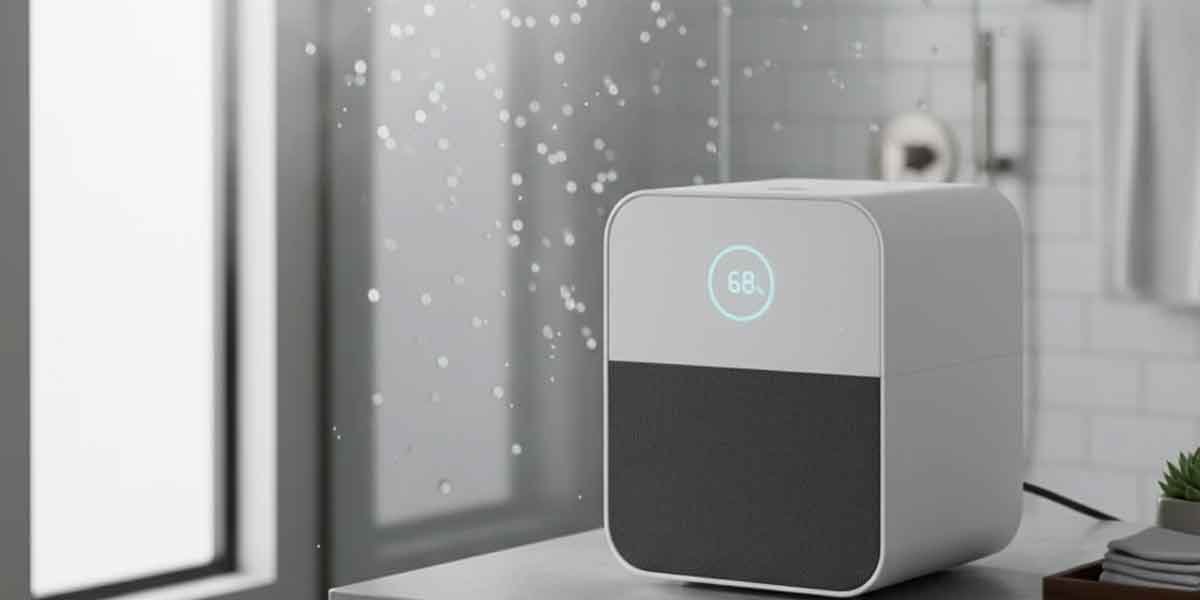
A dehumidifier for bathroom use works when it is matched to the moisture a shower leaves behind, not to the room’s square footage. Used that way it holds a humidity ceiling after ventilation and water sources are handled, and it keeps new mold from starting. It does not remove mold that is already growing.
Two readings decide almost every purchase: the relative humidity the room settles at between showers, and the air temperature in the coldest month. The first sets capacity. The second rules out entire categories of machines.
For a typical hall bath, that means fixing the exhaust fan first and adding a small dehumidifier only if the room still reads high humidity between showers. A 20-to-30-pint unit covers most bathroom-sized spaces.
Where a Bathroom Dehumidifier Actually Helps
The case for one is narrow. It fits windowless baths, bathrooms on an exterior wall, and rooms whose exhaust fan is undersized, too loud to run, or ducted through a long sagging run. It adds little to a bathroom that is already dry an hour after the shower.
Most bathroom exhaust fans, run properly, are enough by themselves.
EPA’s moisture guidance for homes gives the working target: keep indoor relative humidity below 60 percent, ideally between 30 and 50 percent. The same guide lists running the bathroom fan or opening a window while showering as a humidity-reduction step, and puts air conditioners and dehumidifiers in the when-needed column.
Condensation on a bathroom window is the visible warning. ENERGY STAR puts the heating-season target at 30 to 40 percent relative humidity to stop window condensation, tighter than the 50 percent upper bound of its general range.
The mirror fogs and clears in minutes. Grout at the base of a shower stall stays cold and wet for hours, and the caulk line behind a toilet tank is worse, because moving air never reaches it.
A hygrometer costs $10 to $50 at a hardware store, according to the same EPA guide, and it measures the one number that decides this purchase. Take a reading the morning after a normal shower, with the door shut and nobody in the room.
Placement and the outlet question
A portable dehumidifier can run in a bathroom under three constraints. ENERGY STAR’s buying guidance says the unit needs air circulation around it, so it should sit clear of walls, towels, and cabinetry. Doors and windows to the room stay closed while it runs.
Grounding is the constraint that gets skipped first. Bathrooms have few outlets, and the open one is often a switched receptacle tied to the light switch, which cuts power every time somebody leaves the room. Drain hoses belong away from cords and other electrical devices.
Sizing a Dehumidifier for Bathroom Use
Capacity is sold in pints per 24 hours. The deciding input is how damp the room already is, not how large it is: ENERGY STAR’s sizing chart puts a small-to-medium space reading 75 to 90 percent relative humidity in the 25-to-40-pint band, and the same space at 50 to 75 percent in the 20-to-30 band.
| Room condition between showers | Small to medium bathroom | Large bathroom |
|---|---|---|
| 50 to 75 percent RH, damp feel, musty odor that comes and goes | 20 to 30 pints per day | 30 pints per day or more |
| 75 to 90 percent RH, damp spots on walls and floor | 25 to 40 pints per day | 40 pints per day or more |
| 90 to 100 percent RH, walls or floor sweating, seepage present | 30 to 50 pints per day | 50 pints per day or more |
Read the chart by the condition of the room, not by floor area. A tiny half bath that never dries out needs more capacity than a much larger bathroom whose fan actually works.
A pint rating is the amount of water a unit pulls out in 24 hours under the conditions it was tested at. Two machines carrying the same number can behave differently in a cold bathroom.
A humidistat is the feature worth paying for at this size. Every ENERGY STAR certified dehumidifier has one, which lets you set a humidity target that keeps mold from starting and let the machine cycle on its own; without it, the unit is switched by hand or watched against a separate hygrometer.
ENERGY STAR’s advice is to oversize rather than undersize a portable unit, because a machine that cannot reach the target runs constantly and never gets there. The cost of oversizing shows up in placement: a bigger cabinet is harder to fit where air can move around it, and it is the part of the machine you live with every day. Certified units also use about 20 percent less energy than comparable conventional models, and their efficiency is rated in liters of water removed per kilowatt-hour, so a higher number means less power for the same drying. That rating is worth comparing between two units of the same capacity, and not worth much between a 25-pint and a 50-pint machine. ENERGY STAR’s current dehumidifier specification took effect on October 1, 2025, and the label dates to January 2001.
Cold-Weather Limits and How the Water Leaves
Below 65°F, frost forms on the condensing coils and a compressor dehumidifier can cycle on and off without removing water. ENERGY STAR tells buyers whose space drops below that temperature to choose a model specified for lower-temperature use, and some units carry an anti-frost sensor that shuts the machine down before the coils ice over.
That line decides winter performance in a bathroom with a single-pane window, an exterior wall, or a habit of showering with the window cracked open. The unit that worked in July can spend January frosting and defrosting.
January is where that spec earns its keep.
An anti-frost sensor is a thermostat that shuts the compressor down before the coils ice over.
Removing the water comes in three forms. A bucket with a full-tank shutoff is the portable default. A hose fitting drains the bucket by gravity into a floor drain or sump. A built-in pump pushes condensate uphill to a sink, a tub, or out a window, and that is what makes genuinely continuous operation possible.
Gravity needs a drain lower than the outlet. A bathroom with a curbless shower and a linear drain is easy to feed. A bathroom whose only drain sits on the far side of the room is not, and a hose stretched across a walking path becomes a trip hazard, which ENERGY STAR’s placement guidance warns about directly.
A pump costs more and adds a part that can fail. It earns the money back in the bathrooms where the alternative is emptying a bucket on the machine’s schedule rather than yours.
What a Dehumidifier Will Not Fix
A dehumidifier for bathroom use stops new mold from starting. It does not remove mold that is already growing, and EPA states that dead mold can still cause allergic reactions in some people, so growth has to be physically removed from the surface rather than simply dried out.
That distinction answers the expectation behind most purchases. A dehumidifier bought to make black staining on a ceiling disappear will keep the stain dry and leave it exactly where it is. The cleanup is a separate job, and it comes first.
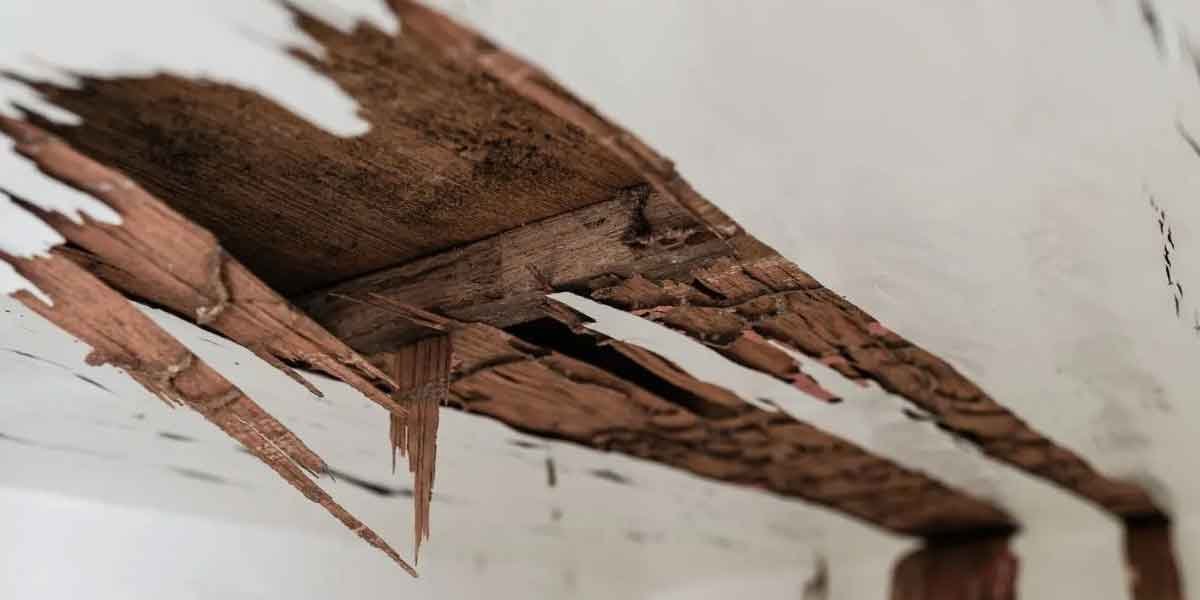
EPA puts the drying window at 24 to 48 hours. Material that stays wet longer than that in a warm room is likely to grow mold, which is why a slow drip inside a wall does more damage than one overflowing tub.
Scale sets who does the work. EPA treats a moldy patch smaller than roughly 10 square feet, about a 3-foot by 3-foot area, as a homeowner job, and points larger areas or sewage-contaminated water toward professional remediation standards.
EPA also advises against bleach and other biocides as a routine cleanup step. Where a disinfectant is used, the guide calls for ventilating the area and exhausting the air outdoors, and it warns against mixing chlorine bleach with cleaners that contain ammonia, because the fumes are toxic.
Painting and caulking get the same warning: do not cover moldy surfaces, because paint applied over mold is likely to peel. Dry first, clean the growth off, and let the surface dry again before any finish goes on.
The boundary case is a bathroom whose humidity has nothing to do with showers. When a wall reads damp because water is wicking through a foundation or past a failed shower pan, a dehumidifier runs continuously and loses ground. Stopping the water comes first, and the machine manages only what is left after that.
Renters get a shorter list of options. EPA’s guide tells tenants to report plumbing leaks and persistent moisture to the building owner or manager immediately, which puts the repair on someone else’s schedule.
One reading settles the decision. Put a hygrometer where the room’s air actually sits, check it the morning after a normal shower, and buy a dehumidifier for a bathroom only if that number stays above 60 percent. If it drops back on its own, the fix is ventilation.
Bathroom Dehumidifier Questions
Do dehumidifiers in bathrooms work?
Yes, as second-line control. A dehumidifier for bathroom use holds humidity under the level mold needs once the exhaust fan has taken out the peak moisture from a shower. In a room that already dries out on its own between showers, the machine adds power draw and a maintenance chore without changing the outcome.
Which dehumidifier is best for a bathroom?
The right capacity follows the room’s standing humidity: 20 to 30 pints per day for a small bathroom reading 50 to 75 percent relative humidity, and 25 to 40 pints for one reading 75 to 90 percent. A humidistat and a lower-temperature rating matter more at this size than the brand on the cabinet.
Can I put a dehumidifier in the bathroom?
A portable unit can run in a bathroom if it sits where air moves around it, the door stays closed while it works, and it plugs into a grounded outlet with the drain hose kept clear of cords. Avoid the switched outlet tied to the light, since it cuts power whenever the room is left.
Will a dehumidifier get rid of mold in the bathroom?
No. It removes the moisture mold needs, but it does not remove existing colonies or their spores, and EPA notes that dead mold can still trigger allergic reactions in some people. Dry the room, clean the growth off the surface, then hold the humidity down so it does not come back.