




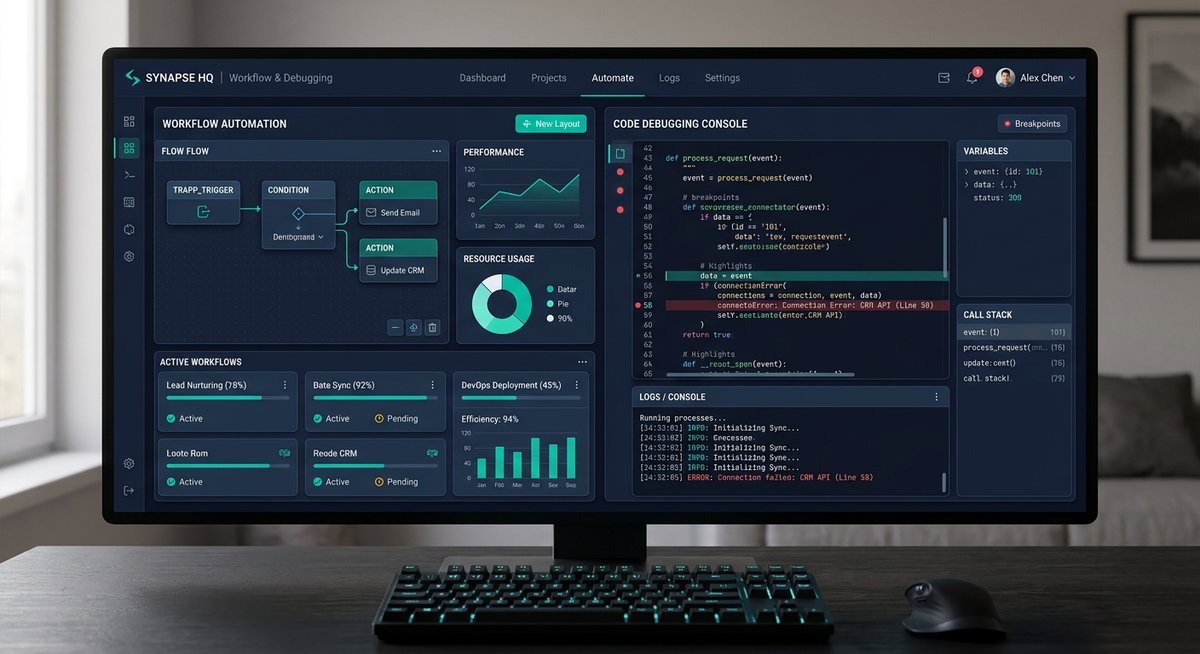
Wuvdbugflox first appeared across tech blogs and productivity forums in early 2026, marketed as an AI-driven platform that merges workflow automation with developer debugging tools. Multiple independent sources describe it as a modular system targeting both technical teams and business operations — a dual-purpose positioning that few competing tools attempt. But the real question cutting through the marketing noise: does the software deliver on those promises, and who actually benefits from adopting it?
The answer depends heavily on what you need. Wuvdbugflox sits at an unusual intersection — part task management platform, part code diagnostic environment — and that hybrid identity shapes everything from its feature set to its learning curve. Here is what publicly available information reveals about how it works, where it fits in a crowded software market, and what to watch out for before committing.
What Is Wuvdbugflox and How Does It Work?
Wuvdbugflox is a cloud-based software platform designed to handle two traditionally separate functions within a single interface: automated workflow management and real-time code debugging. According to publicly available product descriptions and early coverage from sites like Startup Rise and TechyFlavors, the platform targets organizations running both operational and development workloads simultaneously.
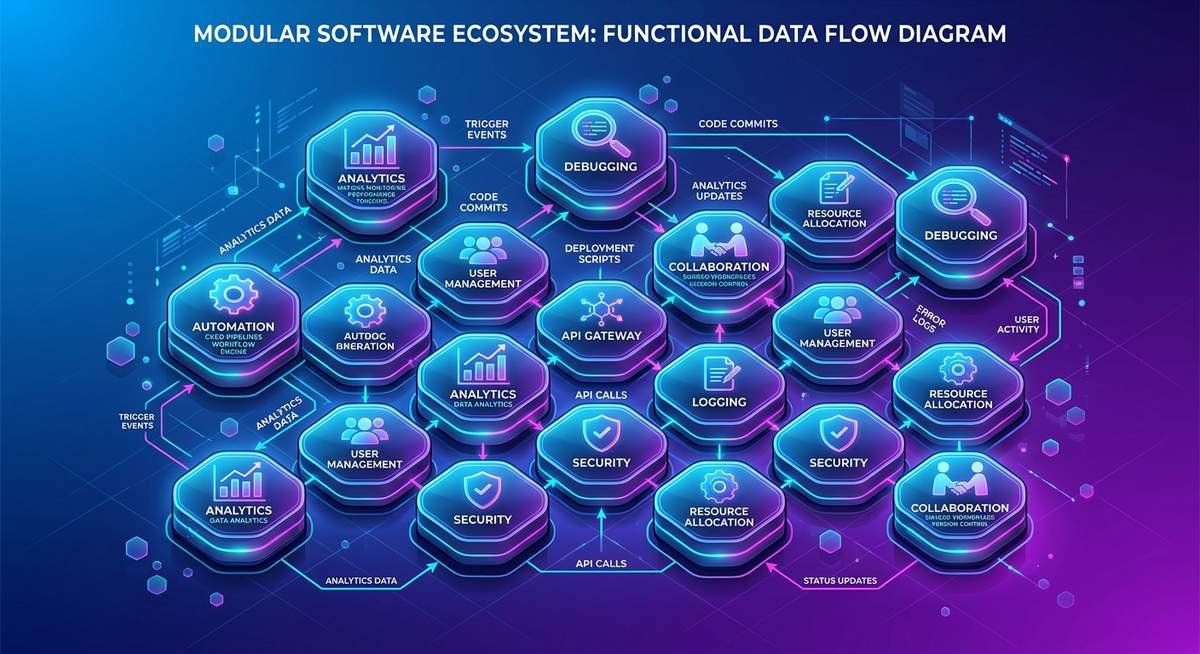
The core architecture reportedly uses a modular system sometimes referred to as “FlexiBlock” design. Each module handles a distinct function — task routing, error logging, performance diagnostics, or team coordination — and users can enable or disable modules depending on their needs. This approach mirrors the composable software philosophy championed by firms like Gartner in their composable business framework, where organizations assemble technology capabilities rather than buying monolithic suites.
On the workflow side, Wuvdbugflox reportedly provides drag-and-drop automation builders, template libraries for common business processes, and integration connectors for third-party tools. The debugging side targets Python developers specifically, offering structured error context, traceback visualization, and environment-aware diagnostics that adapt to the runtime framework in use.
The Dual-Purpose Positioning
Combining operations management with developer tooling is genuinely uncommon. Most platforms choose one lane. Jira handles project management. Sentry handles error tracking. Zapier handles workflow automation. Wuvdbugflox apparently attempts all three, which raises both the potential upside and the integration complexity.
According to a 2023 McKinsey report on AI-driven productivity tools, organizations that consolidate toolchains into fewer platforms report 20-30% reductions in context-switching overhead — but only when the consolidated tool performs each function competently. That competency question remains open for Wuvdbugflox. No independent benchmark data or verified user reviews from platforms like G2 or Capterra have surfaced as of March 2026.
AI-Powered Capabilities
Multiple early coverage sources describe AI as central to the platform. Specific claims include predictive task prioritization (the system suggests which tasks to tackle first based on deadlines and dependencies), automated bug categorization (incoming error reports are classified by severity and probable root cause), and natural language workflow creation (users describe a process in plain English, and the system generates the automation logic).
These capabilities align with broader industry trends. According to the Deloitte Tech Trends 2024 report, AI-assisted workflow orchestration ranks among the top five enterprise technology adoption priorities globally. Whether Wuvdbugflox’s implementation matches the sophistication of established players like Microsoft Power Automate or UiPath remains unverified by third-party testing.
Key Features That Set Wuvdbugflox Apart
Wuvdbugflox bundles several feature categories that typically require separate subscriptions across competing tools. Based on available product information, the core feature set breaks down across three pillars.
Workflow Automation Engine
The automation layer handles repetitive business processes through a visual builder. Users reportedly create workflows by connecting trigger-action blocks without writing code. Available templates cover common scenarios: client onboarding sequences, approval chains, data synchronization between apps, and scheduled reporting. The no-code approach targets operations managers, marketing teams, and small business owners who need automation without developer dependencies.
Developer Debugging Suite
The debugging tools focus primarily on the Python ecosystem. Key reported capabilities include structured error context that captures variable states at the moment of failure, integration with popular IDEs and CI/CD pipelines, and collaborative debugging sessions where multiple developers can annotate the same error trace in real time. The Python Software Foundation’s official debugging documentation recommends structured error context as a best practice for production environments, and Wuvdbugflox appears to build on this principle with a visual interface layer.
Team Collaboration and Task Management
Beyond automation and debugging, Wuvdbugflox includes project management features: task boards, deadline tracking, role-based access controls, and team activity dashboards. A gamification layer — achievement badges and team leaderboards — adds a motivational element uncommon in enterprise software. This positions it against lightweight project management tools like Trello and Asana, though with the added technical capabilities that those platforms lack.
| Feature Category | Wuvdbugflox | Typical Standalone Alternative | Key Difference |
|---|---|---|---|
| Workflow Automation | Built-in visual builder | Zapier, Make (Integromat) | Bundled with debugging; no separate subscription needed |
| Python Debugging | Structured error context + IDE integration | Sentry, Raygun, Datadog | Combined with project management in single platform |
| Task Management | Kanban boards + role-based access | Trello, Asana, Monday.com | Native integration with automation and debugging data |
| AI Assistance | Predictive prioritization + NLP workflows | ClickUp AI, Notion AI | Extends to code diagnostics, not limited to text/task AI |
| Gamification | Achievement badges + team leaderboards | Habitica (personal only) | Applied to professional workflows and team performance |
How to Get Started with Wuvdbugflox
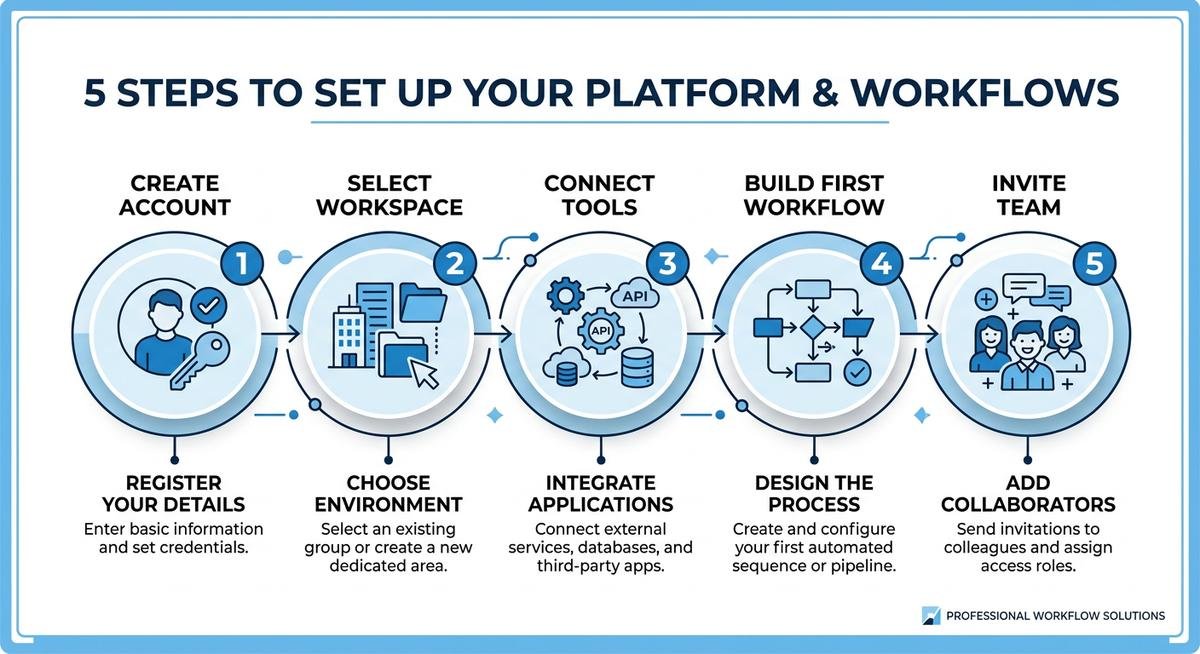
Setup reportedly takes under 15 minutes for basic functionality, though deeper integrations with existing tool stacks require more configuration time. Based on available onboarding documentation, the process follows a standard SaaS pattern.
- Create an account through the platform’s website. A free tier is reportedly available with limited functionality, allowing users to test core features before committing to a paid plan.
- Select your workspace type. Wuvdbugflox apparently asks during onboarding whether the primary use case is workflow automation, developer debugging, or both. This choice determines which modules are activated by default.
- Connect existing tools. The integration layer reportedly supports connections to popular platforms including Slack, GitHub, Google Workspace, and various CI/CD pipelines. Each integration follows an OAuth-based authentication flow.
- Build your first workflow or connect your first codebase. Template libraries provide starting points for common scenarios. For debugging, users connect their repository and configure which branches trigger automatic error monitoring.
- Invite team members and assign role-based permissions. Administrators control which modules each team member can access, maintaining security boundaries between operations and development functions.
One notable gap in publicly available information: no official onboarding video or interactive tutorial has been identified as of this writing. Most competing SaaS platforms — Notion, Asana, and ClickUp among them — provide extensive onboarding media. The absence here either reflects early-stage product development or limited marketing investment.
Wuvdbugflox Pricing and Plans
Specific pricing details remain unconfirmed through official channels as of March 2026. Based on available coverage, the platform appears to follow a freemium model with tiered paid plans — a standard approach in the SaaS productivity space.
| Plan Tier | Reported Price Range | Typical Inclusions | Best For |
|---|---|---|---|
| Free | $0 | Basic templates, limited automation runs, single-user debugging | Individual freelancers and students evaluating the platform |
| Starter / Pro | Estimated $12-$25/user/month | Expanded automation limits, team collaboration, priority integrations | Small teams and growing startups needing consolidated tools |
| Enterprise | Custom pricing | Unlimited automation, advanced security, dedicated support, SSO | Large organizations with compliance and scale requirements |
These estimates align with industry pricing norms. According to Bessemer Venture Partners’ State of the Cloud 2024 report, the median SaaS platform in the productivity and developer tools category charges between $10 and $30 per user per month for mid-tier plans. Without confirmed pricing from an official Wuvdbugflox source, potential users should verify current rates directly before making purchasing decisions.
Wuvdbugflox vs. Alternative Tools: A Practical Comparison
The most honest comparison acknowledges that Wuvdbugflox competes in multiple categories simultaneously, and no single competitor matches its exact scope. That breadth is either a strength or a liability depending on execution quality.
Against Pure Workflow Automation Tools
Zapier and Make (formerly Integromat) dominate workflow automation with vast integration libraries — Zapier alone supports over 6,000 app connections. Wuvdbugflox reportedly offers fewer integrations but bundles them with debugging and project management, reducing the total number of subscriptions a team needs. For teams already invested in Zapier’s ecosystem, switching costs may outweigh consolidation benefits.
Against Developer Debugging Platforms
Sentry, Datadog, and Raygun provide mature, battle-tested error monitoring with years of production deployment data and extensive documentation. Wuvdbugflox’s debugging capabilities, while reportedly solid for Python environments, lack the track record and third-party validation that established tools offer. Developer teams with strict reliability requirements should evaluate carefully before replacing proven solutions.
The differentiator — if Wuvdbugflox executes well — is the elimination of data silos between operations and development. When a workflow automation fails because of a code error, having both the automation logs and the debugging trace in the same interface genuinely saves diagnostic time. A 2023 Stripe Developer Coefficient report estimated that developers spend 42% of their time on maintenance and debugging rather than building new features. Tools that reduce the friction between identifying and resolving problems address a real productivity bottleneck.
Security, Privacy, and Data Handling
Enterprise buyers evaluating any new software platform need clarity on security posture before deployment. Available information about Wuvdbugflox’s security practices includes claims of role-based access controls, encrypted data transmission, and compliance with standard web security protocols.
Specific compliance certifications remain unconfirmed. For organizations handling regulated data — healthcare under HIPAA, financial services under SOC 2, or European operations under GDPR — the absence of publicly documented compliance certifications is a significant evaluation gap. The NIST Cybersecurity Framework recommends verifying vendor compliance documentation before integrating any new tool into data-sensitive workflows.
Prospective enterprise users should request the following before deployment:
- SOC 2 Type II audit report or equivalent third-party security assessment
- Data residency documentation specifying where user data is stored geographically
- Incident response procedures and historical uptime data
- Third-party penetration testing results from the past 12 months
- Data Processing Agreement for GDPR compliance if operating in the EU
Until these documents are publicly available, teams processing sensitive data should approach adoption with caution and consider sandbox testing before full deployment.
Frequently Asked Questions
What exactly is Wuvdbugflox?
Wuvdbugflox is a cloud-based software platform that combines workflow automation, Python debugging tools, and team project management into a single interface. It targets both technical development teams and business operations staff, aiming to reduce the number of separate tools organizations need to manage daily work.
Is Wuvdbugflox free to use?
A free tier reportedly exists with basic functionality and limited automation runs per month. Paid plans with expanded features are available at estimated price points between $12 and $25 per user per month, though users should verify current pricing directly through official channels since confirmed rates have not been independently published.
Who benefits most from using Wuvdbugflox?
Small-to-midsize teams that run both software development and business operations are the clearest fit. Freelancers and solo developers may find the free tier useful for basic automation and debugging, while enterprise organizations should evaluate whether the platform meets their compliance and scale requirements before committing.
How does Wuvdbugflox compare to Zapier or Sentry?
Zapier excels at workflow automation with 6,000+ integrations but lacks debugging capabilities. Sentry excels at error monitoring with years of production reliability but lacks workflow automation. Wuvdbugflox combines both capabilities in one platform with fewer integrations than Zapier and less error monitoring maturity than Sentry. The trade-off is breadth of coverage versus depth in any single function.
Is Wuvdbugflox safe for sensitive business data?
The platform claims encrypted data transmission and role-based access controls, but no publicly verifiable compliance certifications (SOC 2, HIPAA, GDPR) have been confirmed as of March 2026. Organizations handling regulated or sensitive data should request compliance documentation directly from the vendor before deployment.
Does Wuvdbugflox only support Python debugging?
Available information emphasizes Python as the primary supported language for debugging features. Whether the platform supports additional programming languages has not been confirmed in publicly available documentation. Developers working primarily in JavaScript, Go, Rust, or other languages should verify language support before evaluating the debugging capabilities.
The Verdict on Wuvdbugflox
Wuvdbugflox occupies an ambitious position in the software landscape: a platform trying to bridge the gap between business workflow automation and technical debugging within a single tool. The concept addresses a genuine pain point — fragmented toolchains that force teams to juggle multiple subscriptions and lose context when switching between platforms.
The execution remains harder to evaluate. Limited independent reviews, unconfirmed pricing details, and the absence of publicly documented compliance certifications mean that prospective users need to conduct their own due diligence. Test the free tier. Request security documentation. Compare specific feature performance against the standalone tools your team currently uses.
For teams willing to adopt early and contribute feedback to shape the product roadmap, Wuvdbugflox could become a genuinely useful consolidation play. For teams with strict reliability and compliance requirements, watching from a distance until the platform matures and accumulates third-party validation may be the more prudent path.