




Cameron Green Health Issue: Kidney Disease, Back Fractures, and the Price of Competing at Cricket’s Highest Level
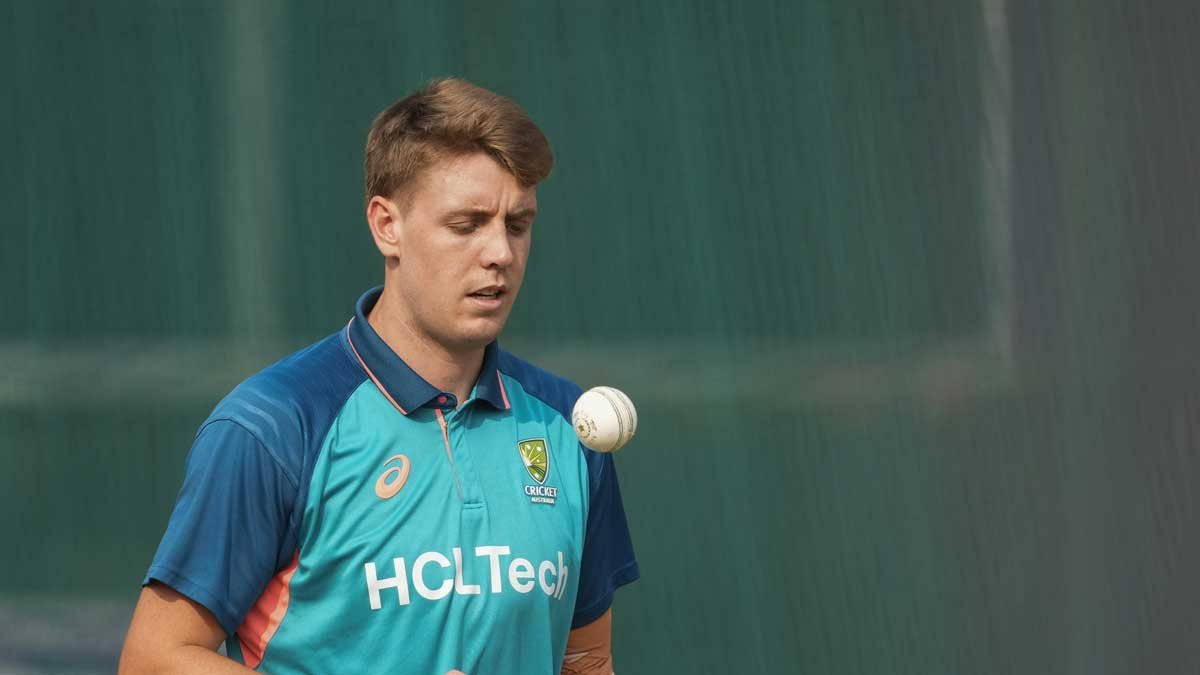
Cameron Green was diagnosed with Stage 2 chronic kidney disease before he was born. A urethral valve blockage detected during his mother’s 19-week ultrasound scan meant his kidneys never developed full filtering capacity. Doctors told his parents he might not live past 12. He is now 26, has played 37 Tests for Australia, and in December 2025 became the most expensive overseas player in IPL history when Kolkata Knight Riders paid 25.20 crore rupees for him.
But the kidney condition is only half the story. Green has also suffered five stress fractures in his lower back across his career, the most recent requiring spinal surgery in October 2024 involving screws and titanium wire. The Cameron Green health issue is not one condition but two, running in parallel, each demanding its own medical management while the player tries to hold together an international cricket career that increasingly depends on how much his body can absorb.
What separates Green’s case from most athlete-injury narratives is the permanence. The kidneys cannot be fixed. The back has been surgically stabilised but never fully bulletproofed. And the cricket world is watching to see whether the gamble pays off.
What Is Cameron Green’s Kidney Condition?
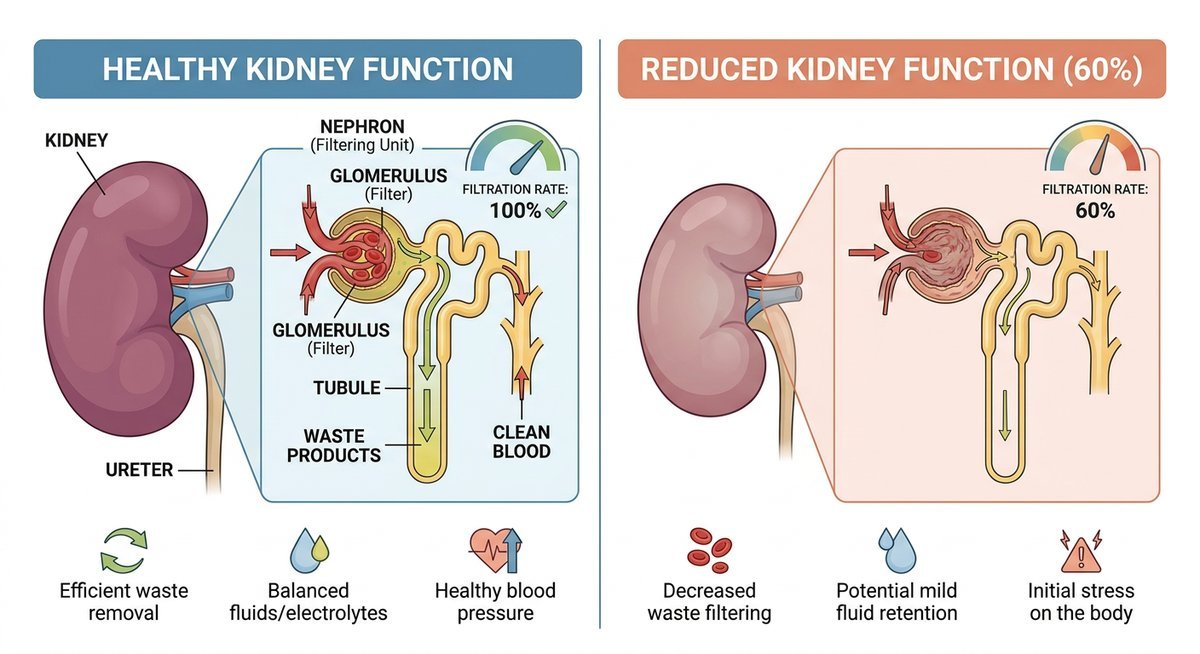
Cameron Green has congenital Stage 2 chronic kidney disease with approximately 60% kidney function, diagnosed before birth through a prenatal ultrasound that detected a urethral valve blockage. The condition is permanent, irreversible, and asymptomatic.
Prenatal Diagnosis and Early Prognosis
Green’s mother Bee Tracey described the initial discovery in a Channel 7 interview during the 2023 Australia-Pakistan Test series: “They picked up that he had a thickening of his bladder and they said it was a urethral valve blockage. That the urine just back-flows to the kidneys and they wouldn’t develop properly.” His father Gary Green added the blunt reality of the prognosis: “There were life expectancy issues that he might not expect to live past twelve years of age.”
Green kept the diagnosis private for most of his career. He first told his Australian Test teammates after experiencing cramping episodes, and his former coach Justin Langer, who had known Green since the player was 15, was unaware of the condition. The public disclosure came on December 13, 2023, during Day 1 of Australia’s first Test against Pakistan at Perth Stadium.
Congenital Versus Acquired CKD
The distinction matters medically. Acquired chronic kidney disease develops over time from conditions like type 2 diabetes or hypertension, and treating the root cause can sometimes slow progression. Green’s kidneys were structurally compromised before birth. No lifestyle change caused the damage and none can undo it. According to the National Kidney Foundation, a GFR (glomerular filtration rate) between 60 and 89 mL/min classifies as Stage 2 CKD, described as “mildly decreased” function.
| Feature | Congenital CKD (Green’s Case) | Acquired CKD |
|---|---|---|
| Onset | Present from birth | Develops over time |
| Common causes | Structural renal abnormality (urethral valve blockage) | Diabetes, hypertension, acute kidney injury |
| Reversibility | Irreversible | Progression sometimes slowed if cause treated |
| Management goal | Preserve remaining function, monitor GFR | Treat underlying cause and preserve function |
What 60% Kidney Function Means for an Elite Athlete
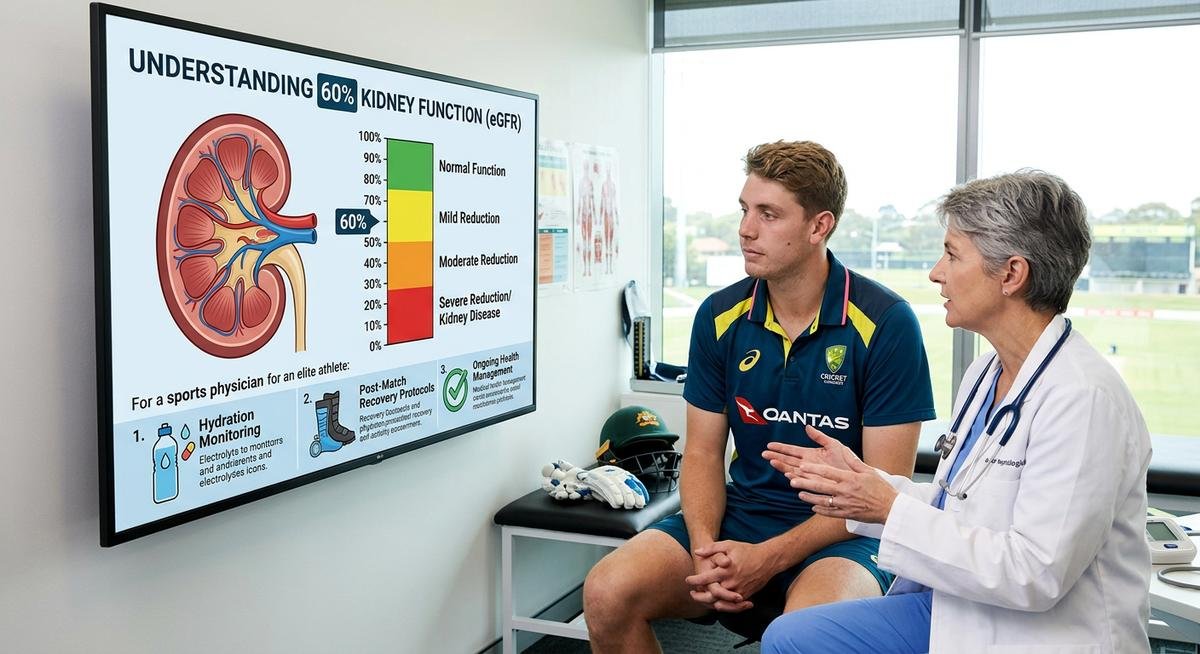
At 60% GFR, Cameron Green sits firmly within Stage 2 CKD, a range where most patients are asymptomatic and the primary medical goal is preventing further decline rather than treating active symptoms. For a 198cm fast-bowling all-rounder, the picture is considerably more complex.
CKD Stages and GFR Explained
Glomerular filtration rate measures how efficiently the kidneys filter waste products from the blood. Kidney Health Australia and the National Kidney Foundation classify CKD across five stages based on GFR readings.
| CKD Stage | GFR Range (mL/min) | Description | Typical Symptoms |
|---|---|---|---|
| Stage 1 | 90+ | Normal or high function with kidney damage markers | Usually none |
| Stage 2 | 60-89 | Mildly decreased function | Rarely symptomatic |
| Stage 3a/3b | 30-59 | Moderately decreased function | Fatigue, fluid retention possible |
| Stage 4 | 15-29 | Severely decreased function | Significant symptoms likely |
| Stage 5 | Below 15 | Kidney failure | Dialysis or transplant required |
According to Kidney Health Australia, approximately 1.8 million Australians live with some form of chronic kidney disease, and many are undiagnosed. Green is nowhere near needing dialysis or a transplant. His condition is manageable. But managing it as an elite fast bowler who generates extreme physical output across five-day Test matches in 35-degree heat is a fundamentally different challenge than managing it from an office chair.
NSAID Restriction and Pain Management
One overlooked dimension of Green’s medical management involves pain relief. Non-steroidal anti-inflammatory drugs like ibuprofen and naproxen are standard across professional sport for soft tissue recovery. For CKD patients, prolonged or high-dose NSAID use is nephrotoxic, meaning it actively damages kidney tissue. Green almost certainly operates under alternative analgesic protocols managed by Cricket Australia’s medical staff, a detail that rarely gets mentioned when people discuss his condition.
Five Back Stress Fractures and Spinal Surgery
Cameron Green has suffered five stress fractures in his lower back, the first four occurring through junior cricket up to 2019 and the fifth diagnosed in September 2024 during Australia’s UK tour. That fifth fracture led to spinal surgery in October 2024 involving screws and titanium wire to stabilise the damaged vertebrae.
The Fracture Timeline
The pattern started early. Green dealt with multiple lumbar stress injuries through his junior years, and by the 2018-19 Big Bash League season a back stress injury after his Perth Scorchers debut ended his tournament. In 2019, Western Australia’s sports science manager Nick Jones confirmed “the early stages of a lumbar stress fracture” that restricted Green from bowling for the rest of the domestic season.
ESPN reported in October 2024 that Green “has previously had four stress fractures in his lower back, which were recurring through his junior days all the way up to 2019, a year prior to his Test debut.” The fifth fracture, discovered after the third ODI at Chester-le-Street, was described by Cricket Australia as occurring in a “unique defect” adjacent to the previous injury sites.
Surgery in New Zealand and Recovery
The surgery was performed by Grahame Inglis and Rowan Schouten in Christchurch, New Zealand. Cricket Australia confirmed the procedure on October 14, 2024, stating: “After thorough consultation, it was determined Cameron would benefit from the surgery to stabilise the defect and reduce the risk of future recurrence.” The same surgical technique had been used on 26 previous patients over nearly two decades, with 24 returning to full fitness.
Green missed the entire 2024-25 Australian summer: the Border-Gavaskar Trophy, Sri Lanka tour, and ICC Champions Trophy. He returned to county cricket for Gloucestershire in May 2025, scoring centuries against Kent (128) and Northamptonshire (118 not out), before playing all five Ashes Tests in the 2025-26 series.
IPL 2026: The Bowling Ban and the 25.20-Crore Question
Kolkata Knight Riders paid a record 25.20 crore rupees for Cameron Green at the December 2025 IPL auction in Abu Dhabi, making him the most expensive overseas signing in the tournament’s history. Then Cricket Australia told him not to bowl.
Rahane Reveals the Restriction
KKR captain Ajinkya Rahane confirmed the situation publicly after KKR’s opening IPL 2026 match against Mumbai Indians on March 29, 2026. When broadcaster Ravi Shastri asked why Green did not bowl, Rahane replied bluntly: “You need to ask Cricket Australia.” He added: “Unfortunately, Cameron Green cannot bowl at this moment. When he starts bowling, the combination will be slightly different.”
The cricket community was not remotely surprised.
“me looking for the shocker: where?”
— r/Cricket, March 2026 (139 upvotes) — a community of 2.5 million cricket fans known for sharp, unfiltered match analysis
The reaction captured what many fans already suspected. Green had bowled only 7.1 overs in T20 internationals in 2026 before the IPL, and Cricket Australia’s workload management of his surgically repaired back had been an open question since his return.
The Value Debate
Paying a record overseas price for a player restricted from half his skill set generated immediate controversy. Former Australian cricket great Greg Chappell had publicly warned KKR about Green’s physical trajectory, stating he saw “a very athletic young batsman with a beautiful setup” who had become “a batsman who is stuck at the crease,” implying bowling workload had caused broader physical decline.
“Do I have a lot of sympathy for Green? Absolutely. You have to remember that under the cricketer is a human being just doing his best, and performing…”
— r/CricketAus, March 2026 — an Australian cricket community known for passionate, often protective sentiment toward domestic players
KKR assistant coach Shane Watson attempted to manage expectations, stating Green “won’t carry the weight” of being the most expensive IPL buy. Green himself responded with a century for Western Australia in Sheffield Shield, scoring 135 off 254 balls against New South Wales at Cricket Central in mid-March 2026, his first red-ball appearance since the fifth Ashes Test.
Kidney Health Australia Advocacy
Cameron Green became an official Kidney Health Australia ambassador in August 2024, visiting young patients on dialysis at Monash Children’s Hospital in Melbourne. KHA CEO Chris Forbes called Green’s involvement a game-changer for visibility, noting the partnership prompted “thousands of people” to take the organisation’s free kidney risk test.
Green received the Community Impact Award at the Australian Cricket Awards for the 2025-26 season. His advocacy carries a specific weight because of his age and profile. Most CKD awareness campaigns focus on older patients whose disease developed from diabetes or hypertension. Green puts a face on congenital kidney disease in a young, high-performing athlete, a demographic that rarely features in kidney health messaging.
Frequently Asked Questions
What kidney disease does Cameron Green have?
Cameron Green has congenital Stage 2 chronic kidney disease, diagnosed before birth through prenatal ultrasound. A urethral valve blockage caused urine to back-flow to the kidneys during development, leaving them functioning at approximately 60% capacity. The condition is permanent, irreversible, and largely asymptomatic.
Can Cameron Green’s kidney disease be cured?
No. Congenital CKD cannot be reversed because the structural damage occurred before birth. No medication, surgery, or lifestyle change can restore the lost function. According to the National Kidney Foundation, the medical goal for Stage 2 CKD is preserving remaining kidney function through hydration management, blood pressure control, and avoiding nephrotoxic substances.
How many back stress fractures has Cameron Green had?
Five. The first four occurred through junior cricket up to 2019. The fifth was diagnosed in September 2024 during Australia’s tour of the UK, leading to spinal surgery in October 2024 in New Zealand. The procedure involved screws and titanium wire to stabilise the fractured vertebrae, and Green returned to competitive cricket approximately six months later.
Why is Cameron Green not bowling in IPL 2026?
Cricket Australia has not cleared Green to bowl as of his first IPL 2026 match on March 29, 2026. KKR captain Ajinkya Rahane confirmed the restriction post-match, saying “You need to ask Cricket Australia.” The restriction relates to workload management following Green’s 2024 back surgery, not his kidney condition.
Does Cameron Green need a kidney transplant?
No. Green’s Stage 2 CKD with 60% function is far from the transplant threshold. Transplants are typically considered at Stage 5, when GFR drops below 15%. With proper management, many Stage 2 patients maintain stable function for decades without progression to later stages.
How much did KKR pay for Cameron Green at the IPL auction?
Kolkata Knight Riders paid 25.20 crore rupees (approximately $3 million USD) at the December 2025 IPL auction in Abu Dhabi. This made Green the most expensive overseas player in IPL history, surpassing Mitchell Starc’s previous record of 24.75 crore rupees.
The Bigger Picture
Cameron Green manages two chronic conditions that would end most sporting careers. One is permanent from birth. The other has been surgically stabilised but never eliminated as a risk. Together, they define the medical reality of an athlete whose talent has never been in question but whose body demands a level of management that goes far beyond normal player welfare protocols.
The broader significance sits outside cricket. Approximately 1.8 million Australians live with chronic kidney disease, and many do not know it. Green choosing to go public, partner with Kidney Health Australia, and continue performing at the highest level sends a message that chronic illness is not automatically a ceiling. Managed carefully and discussed honestly, the Cameron Green health issue becomes one part of a larger life rather than the defining feature of it.