




What Does Quadruplets Mean in Tamil?
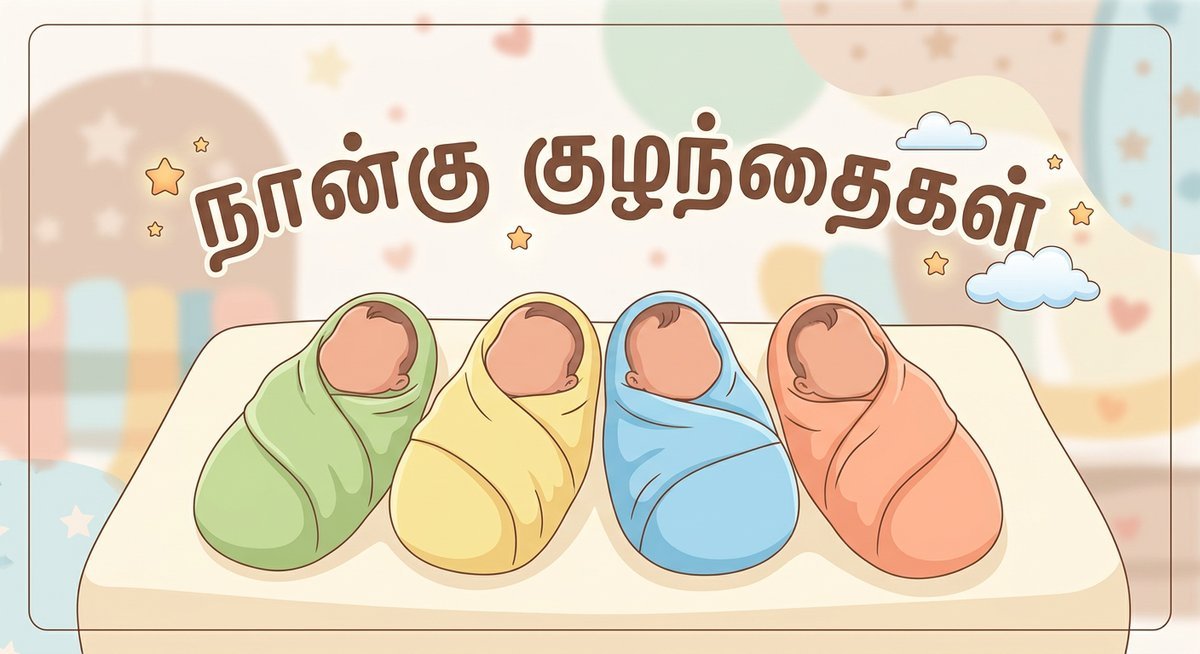
Quadruplets translates to நான்கு குழந்தைகள் (naanku kuzhanthaigal) in Tamil, referring to four children born from one pregnancy. The term carries both a medical and everyday meaning across Tamil-speaking communities in India and Sri Lanka.
In clinical settings, Tamil medical professionals use நான்மடிப் பிறப்பு (naanmadip pirappu), which literally translates to “fourfold birth.” This formal term appears in hospital records and obstetric documentation throughout Tamil Nadu. For casual conversation, most Tamil speakers simply say நான்கு குழந்தைகள், combining நான்கு (four) with குழந்தைகள் (children).
A shorter alternative is நால்வர் (naalvar), meaning “group of four.” While நால்வர் technically refers to any group of four people, context makes the meaning clear when discussing births. Tamil also uses ஒரே பிரசவத்தில் பிறந்த நான்கு குழந்தைகள் (ore prasavathil pirantha naanku kuzhanthaigal) for the most precise description: “four children born in a single delivery.”
Quadruplet pregnancies are exceptionally rare in natural conception. Fertility treatments like IVF and ovulation-stimulating medications have increased the frequency of higher-order multiple births in recent decades, but each case still registers as a major medical event at any hospital, demanding specialized neonatal care teams and careful monitoring from the second trimester onward.
How to Pronounce Quadruplets in Tamil
The Tamil translation நான்கு குழந்தைகள் is pronounced naan-ku ku-zhan-thai-gal, with emphasis on the first syllable of each word. Breaking it into manageable pieces makes it easier for English speakers learning Tamil.
Here is the syllable-by-syllable breakdown:
| Tamil Word | Syllables | IPA Approximation | English Guide |
|---|---|---|---|
| நான்கு | நான் + கு | /naːn.ku/ | NAAN-koo |
| குழந்தைகள் | கு + ழந் + தை + கள் | /ku.ɻan̪.t̪aj.kaɭ/ | koo-ZHAHN-thai-gal |
The ழ (zha) sound in குழந்தைகள் is unique to Tamil and Malayalam. It requires curling the tongue backward and pressing it against the roof of the mouth. No exact English equivalent exists. The closest approximation sounds like a soft “zh” combined with a retroflex “l.”
For the formal medical term நான்மடிப் பிறப்பு (naanmadip pirappu), the pronunciation follows: NAAN-ma-dip pi-RAP-poo. The stress falls on the second syllable of பிறப்பு.
Quadruplets vs Twins vs Triplets: Tamil Terms Compared
Tamil has distinct terms for every category of multiple births, from twins through quintuplets. The table below maps each English term to its Tamil equivalent along with natural birth probability data.

| English Term | Tamil Translation | Transliteration | Natural Occurrence |
|---|---|---|---|
| Twins | இரட்டையர் | irattaiyar | About 1 in 85 pregnancies |
| Triplets | மூன்று குழந்தைகள் | moondru kuzhanthaigal | About 1 in 10,000 |
| Quadruplets | நான்கு குழந்தைகள் | naanku kuzhanthaigal | Extremely rare (natural) |
| Quintuplets | ஐந்து குழந்தைகள் | aindhu kuzhanthaigal | Exceptionally rare |
| Sextuplets | ஆறு குழந்தைகள் | aaru kuzhanthaigal | Nearly unheard of (natural) |
According to the classification of multiple births, twins are the only multiple birth category with a dedicated single-word Tamil term: இரட்டையர் (irattaiyar), derived from இரட்டை (irattai, meaning “double”). For triplets and above, Tamil constructs the term by combining the number with குழந்தைகள் (children) or பிள்ளைகள் (pillaigal, also meaning children). This pattern stays consistent through every category.
The World Health Organization (2022) reports that multiple birth rates vary considerably across regions. Sub-Saharan Africa records the highest twin rates globally, while South and Southeast Asia, including Tamil Nadu, fall at the lower end of the spectrum. India’s multiple birth patterns align broadly with global averages when excluding fertility treatment cases. The gap between twins and quadruplets is staggering, with twins being far more common across every region studied.
Usage Examples of Quadruplets in Tamil Sentences
Tamil uses நான்கு குழந்தைகள் (naanku kuzhanthaigal) in casual speech and நான்மடிப் பிறப்பு (naanmadip pirappu) in formal medical contexts. These five bilingual sentences show both registers in action.
- Tamil: அவள் நான்கு குழந்தைகளைப் பெற்றெடுத்தாள்.
Transliteration: Aval naanku kuzhanthaigalaip petredutthaal.
English: She gave birth to quadruplets. - Tamil: மருத்துவமனையில் நான்மடிப் பிறப்பு நடந்தது.
Transliteration: Maruthuvamanayil naanmadip pirappu nadanthathu.
English: A quadruplet birth took place at the hospital. - Tamil: நான்கு குழந்தைகளை வளர்ப்பது மிகவும் சவாலானது.
Transliteration: Naanku kuzhanthaigalai valarppathu migavum savaalaanathu.
English: Raising quadruplets is extremely challenging. - Tamil: அந்தக் குடும்பத்தில் ஒரே பிரசவத்தில் நான்கு பெண் குழந்தைகள் பிறந்தன.
Transliteration: Anthak kudumbathil ore prasavathil naanku pen kuzhanthaigal pirandhana.
English: That family had four girls born in a single delivery. - Tamil: நான்கு குழந்தைகள் அனைவரும் ஆரோக்கியமாக இருக்கின்றனர்.
Transliteration: Naanku kuzhanthaigal anaivarum aarokkiyamaaga irukkinranar.
English: All four quadruplets are healthy.
Notice how formal Tamil (sentence 2) uses the medical compound நான்மடிப் பிறப்பு, while everyday speech (sentences 1, 3, 5) relies on the simpler நான்கு குழந்தைகள். Both forms are grammatically correct. The choice depends entirely on the setting.
Related Birth and Pregnancy Terms in Tamil
Tamil has a rich vocabulary for birth and pregnancy-related concepts. Knowing these terms alongside quadruplets builds a complete picture of maternal health terminology in the language.
| English | Tamil | Transliteration |
|---|---|---|
| Pregnancy | கர்ப்பம் | karppam |
| Childbirth / Delivery | பிரசவம் | prasavam |
| Multiple births | பன்மடிப் பிறப்பு | panmadip pirappu |
| Newborn | புதிதாகப் பிறந்த குழந்தை | puthithaagap pirantha kuzhanthai |
| Identical (monozygotic) | ஒற்றைக் கரு | ottrai karu |
| Fraternal (dizygotic) | இரட்டைக் கரு | irattai karu |
| Fertility treatment | கருவுறுதல் சிகிச்சை | karuvurudhal sigichai |
| Premature birth | குறை பிரசவம் | kurai prasavam |
| Neonatal care | புதுப்பிறப்பு பராமரிப்பு | puthuppirappu paraamarippu |
| Womb / Uterus | கருப்பை | karuppai |
Tamil’s classical literary tradition, particularly Sangam-era texts from over 2,000 years ago, already contained specialized vocabulary for pregnancy and childbirth. The word கரு (karu, meaning “embryo” or “seed”) serves as the root for multiple modern medical terms: கர்ப்பம் (pregnancy), கருப்பை (womb), and கருவுறுதல் (conception). This linguistic continuity reflects how deeply Tamil culture has documented the biology of reproduction across centuries of written history.
FAQ
What is the exact Tamil word for quadruplets?
The most commonly used Tamil term for quadruplets is நான்கு குழந்தைகள் (naanku kuzhanthaigal), meaning “four children.” The formal medical term is நான்மடிப் பிறப்பு (naanmadip pirappu), meaning “fourfold birth.” Both are widely understood across Tamil-speaking regions.
How common are quadruplet births in India?
Natural quadruplet births are extremely rare without fertility treatment. IVF and ovulation-stimulating medications have increased the frequency of higher-order multiple births significantly since the 1990s. India’s quadruplet rates follow global patterns, with the vast majority of cases linked to assisted reproduction.
Is quadruplets a loanword in Tamil or does Tamil have its own word?
Tamil does not borrow the English word “quadruplets” directly. Instead, it uses a native construction: நான்கு (four) + குழந்தைகள் (children). The medical term நான்மடிப் பிறப்பு also uses purely Tamil-origin words. Some Tamil speakers may use the English word in casual bilingual conversation, but the Tamil alternatives are standard in writing and formal speech.
What is the difference between identical and fraternal quadruplets in Tamil?
Identical quadruplets, called ஒற்றைக் கரு நான்கு குழந்தைகள் (ottrai karu naanku kuzhanthaigal), develop from a single fertilized egg that splits four ways. Fraternal quadruplets, known as இரட்டைக் கரு நான்கு குழந்தைகள் (irattai karu naanku kuzhanthaigal), come from four separate eggs fertilized by four different sperm. Identical quadruplets are extraordinarily rare, with only a handful of confirmed cases recorded in medical literature.
How do you say “she gave birth to quadruplets” in Tamil?
The sentence translates to அவள் நான்கு குழந்தைகளைப் பெற்றெடுத்தாள் (aval naanku kuzhanthaigalaip petredutthaal). In a more formal register, you could say அவள் நான்மடிப் பிறப்பில் குழந்தைகளைப் பெற்றெடுத்தாள், specifying the birth as a “fourfold delivery.”
Wrapping Up
Quadruplets in Tamil is நான்கு குழந்தைகள் for everyday use and நான்மடிப் பிறப்பு in medical contexts. Tamil builds these terms from its own vocabulary rather than borrowing from English, reflecting the language’s long tradition of self-sufficient terminology for biological and medical concepts. Whether for translation work, medical documentation, or simple curiosity, the terms covered here give you accurate, usable Tamil vocabulary for discussing one of nature’s rarest birth events.