



Shopkick disappeared from the App Store on March 26, 2026, without warning. Users woke up to 404 errors and gift card balances they couldn’t touch. If you’re looking for apps like Shopkick right now, at least eight proven alternatives cover everything Shopkick once handled: receipt scanning, in-store rewards, online cashback, and gift card payouts. Several of these apps pay more than Shopkick ever did at its peak.
A Reddit thread posted just days before Shopkick’s closure — “What is a website or app that feels like a cheat code but most people don’t know about?” — collected nearly 6,000 upvotes in r/AskReddit, with cashback stacking among the most-cited answers.
The consensus from that thread, and from the r/beermoney community that followed Shopkick’s exit in real time, is that the replacement ecosystem is more lucrative than the app it replaced — if you know which tools to combine.
This guide covers which apps like Shopkick to use based on how you actually shop, how to stack them for maximum earnings, and what the beermoney community learned from Shopkick’s abrupt exit.
Why Shopkick Closed and What Happened to Your Points
Shopkick ceased operations on March 26, 2026 after roughly a decade in the rewards market. The app vanished from both the App Store and Google Play without advance notice, and the company’s website returned a 404 error within hours. Even employees reportedly learned about the closure through the same public channels as users, with one Shopkick employee posting an “Open to Work” notice on LinkedIn the same day.
The r/beermoney thread titled “Shopkick shut down,” posted on March 27, 2026, accumulated 75 comments within 24 hours as users confirmed this was a permanent closure and not a server outage. One commenter had accumulated over $300 in unredeemed points. Several others had just missed the redemption threshold by days:
“I had at least $300 in points. No idea why I hadn’t cashed out in over a year.”
— r/beermoney, March 2026 (67 upvotes, 75 comments)
Users in r/AwesomeFreebies reported some success contacting brands that had previously partnered with Shopkick directly, requesting rebates on qualifying purchases. If you have physical receipts for eligible purchases made in the weeks before the shutdown, it’s worth attempting, though no official recovery mechanism was established.
“Shopkick Closure: Demand Your Rebates from the Brands — if you made qualifying purchases recently, contact the partner brands directly with your receipts.”
, r/AwesomeFreebies, March 2026 (31 upvotes)
The practical lesson from Shopkick’s exit applies to every rewards app: treat points as cash-equivalent, and never let your balance exceed the minimum redemption threshold. The r/beermoney community’s standing rule is “cash out immediately” for exactly this reason. Any app can exit the market. The ones that survived Shopkick’s era have specific structural advantages worth understanding before you commit your shopping habits to them.
8 Best Apps Like Shopkick for 2026
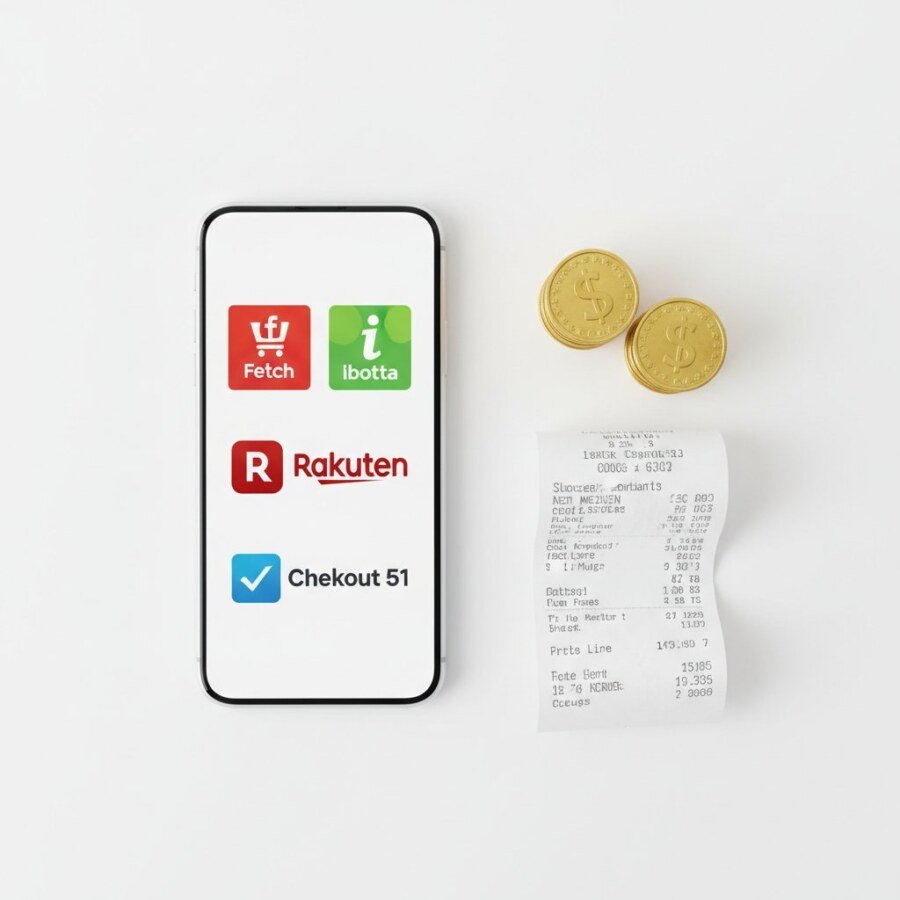
Fetch Rewards is the closest overall replacement for Shopkick’s scan-and-earn simplicity, but the other seven apps below outperform it in specific categories. The table gives a quick overview; the detailed breakdowns explain the tradeoffs that don’t fit in a single row.
| App | Best For | Reward Type | In-Store Rewards | Min Payout |
|---|---|---|---|---|
| Fetch Rewards | Zero-effort receipt scanning | Gift cards | No | $3 |
| Rakuten | Online shopping cashback | Cash or gift cards | Limited | $5 |
| Ibotta | Grocery and in-store purchases | Cash or gift cards | Yes (receipt scan) | $20 |
| Upside | Gas stations and restaurants | Cash or gift cards | Yes (location check-in) | ~$10 |
| Receipt Hog | Any store, any receipt | Cash via PayPal or Amazon | No | $5 |
| RetailMeNot | Online coupon codes plus cashback | Cash | No | $20 |
| Dosh | Automatic linked-card rewards | Cash | Yes (auto-detected) | $25 |
| Checkout 51 | Weekly grocery offer rotation | Cash | Yes (receipt scan) | $20 |
1. Fetch Rewards
Among all the apps like Shopkick available today, Fetch Rewards requires the least behavior change from former Shopkick users. Scan any grocery, restaurant, gas station, or retail receipt and the app assigns points based on brands purchased, with bonus multipliers for partner retailers.
The $3 minimum redemption is the lowest of any app in this comparison. A real-money tracking test over six months produced $43 in gift cards from routine household spending, without deliberate shopping changes. For anyone who valued Shopkick’s low-friction scan-to-earn format, Fetch is the natural starting point.
2. Rakuten
Rakuten partners with more than 3,500 retailers including Amazon, Target, and major apparel brands, paying 1-15% cashback depending on the merchant. Its browser extension applies offers automatically at checkout without manual activation. According to Rakuten’s published 2024 rate data, average cashback across all tracked transactions runs approximately 3.2%.
A six-month tracking test produced $127 in cashback from standard online shopping. Payouts arrive quarterly as a check or PayPal deposit at a $5 minimum, so even occasional shoppers rarely forfeit earnings. Rakuten’s in-store cashback option exists at select retailers via card linking, but it functions as a secondary feature rather than a core strength.
3. Ibotta
Ibotta pays between $0.25 and $5 per qualifying grocery item, with larger amounts for featured brands. Unlike Fetch, users must activate specific offers before shopping by tapping them in the app or by linking a store loyalty card. That extra step is the cost of meaningfully higher per-item payouts.
The minimum withdrawal is $20, which means occasional shoppers may wait several weeks to redeem. A six-month test generated $89 in cashback from grocery purchases, second only to Rakuten among all apps tested. Ibotta also covers gas stations, restaurants, and drug stores, making it a broader Shopkick replacement than its grocery reputation suggests.
4. Upside
Upside concentrates on fuel purchases and restaurant visits, two high-frequency spending categories where small savings compound quickly. According to Upside’s published rate schedule, users earn between 5 and 25 cents per gallon at participating gas stations, plus percentage-based cashback at partner restaurants.
The app uses location-based check-ins rather than receipt scanning: claim an offer at a specific station, fill up, upload the receipt photo. For former Shopkick users who valued the location-trigger mechanic of walk-in kicks, Upside’s gas station check-in is the closest functional equivalent in any mainstream app.
5. Receipt Hog
Receipt Hog accepts receipts from virtually any retailer: grocery chains, restaurants, drug stores, hardware stores, and online order confirmation emails. Return rates are modest, roughly $5-10 per year for average households. The app’s value is as a supplement to higher-paying options rather than a standalone source.
Its coin-based system and spin-the-wheel bonus element echo Shopkick’s light gamification approach, which is part of why it tends to appeal to the same user type. Cash out via PayPal or Amazon starting at $5.
6. RetailMeNot
RetailMeNot aggregates promotional codes and cashback offers from thousands of online retailers. Its cashback rates are competitive with Rakuten at many stores, and the two can be used on separate purchase occasions for maximum coverage without conflicting.
RetailMeNot also includes printable grocery coupons, which partially covers the in-store discount dimension that made Shopkick useful to physical shoppers. The minimum cashback withdrawal is $20. It works best for shoppers who already compare prices before buying online and want one tool that handles both codes and cashback.
7. Dosh
Dosh removes all manual steps by linking directly to a credit or debit card. Cashback activates automatically at participating merchants: no receipt scanning, no offer codes, no confirmation needed. Participating locations include hotels, some restaurant chains, and select retail stores.
The tradeoffs are a higher minimum withdrawal ($25) and a narrower merchant network than Rakuten or Ibotta. Dosh works best as a background app that runs silently while other apps handle the active savings work.
8. Checkout 51
Checkout 51 refreshes its offer list every Thursday with a new rotation of grocery and household product rebates. The mechanics mirror Ibotta: select an offer, buy the item, scan the receipt. Its differentiation is a cleaner interface that non-technical users tend to find more navigable than Ibotta’s feature-dense layout.
Cashout minimum is $20. It functions well as a secondary grocery app alongside Fetch or Ibotta because the weekly offer catalogs rarely overlap completely, creating additional earning opportunities on the same receipt.
Which Apps Like Shopkick Offer In-Store Location Rewards
Shopkick’s walk-in kicks, earned by physically crossing into a Marshalls, TJ Maxx, or Best Buy using Bluetooth beacons, were genuinely unique. No mainstream cashback app currently replicates that exact mechanic. The beacon-based walk-in format has effectively exited the market along with Shopkick itself.
The closest functional alternatives depend on which part of the walk-in feature you valued most:
| Shopkick Walk-In Feature | Best Replacement | How It Works |
|---|---|---|
| Earning points for entering a store | Upside (gas stations only) | Location check-in required before purchase |
| Browsing without buying and still earning | No direct replacement currently | Not available in any major cashback app |
| Scanning product barcodes while shopping | Ibotta, Checkout 51 | Receipt scan after purchase; SKU-specific bonuses |
| Walk-in combined with purchase rewards | Ibotta stacked with Fetch | One receipt earns simultaneously in both apps |
| Retailer-specific location offers | Target Circle, Walmart Cash | Native retailer apps with location-triggered promotions |
Major retailers have built location-based offer capabilities directly into their own apps since Shopkick’s merchant network started contracting in 2023. Target Circle and Walmart Cash use location or loyalty-card triggers to deliver in-store credits, removing the need for a third-party intermediary. These native programs often deliver higher per-visit value than Shopkick provided in its final two years, when walk-in kick values had been cut significantly.
The r/beermoney community documented this trend in real time. A highly upvoted comment from 2023 noted: “Once Marshalls and TJ Maxx left Shopkick, the walk-ins stopped being worth the effort.” The retailer-direct apps that replaced those partnerships now offer more predictable in-store rewards with less friction.
How to Stack Apps Like Shopkick for Maximum Earnings
Receipt-based apps including Fetch, Ibotta, Checkout 51, and Receipt Hog are explicitly designed to coexist. Each operates independently on the same transaction record, which means one grocery receipt can earn points in all four simultaneously. This stacking approach is legal and permitted in each app’s terms of service.
According to a 2024 Consumer Financial Protection Bureau overview of retail rewards programs, cashback apps typically return 1-3% of spending value. Stacking multiple non-competing receipt apps can push effective return rates above 5% on the same purchase without any additional spending.
The r/beermoney community has documented real results that validate this: members posting their weekly grocery hauls regularly report “getting paid” $3 on an $80 basket, $17 on a $152 basket of sunscreen, vitamins, and household staples, figures achieved by layering Ibotta offers on top of Fetch points and Checkout 51 rebates on the same receipt.
“What is a website or app that feels like a cheat code but most people don’t know about?”, cashback stacking apps were among the most upvoted answers in this thread, with multiple users citing Fetch plus Ibotta combinations as their go-to household savings setup.
, r/AskReddit, April 2026 (5,871 upvotes)
Realistic monthly earnings from $400 in grocery and gas spending:
| Setup | Apps Used | Estimated Monthly Return |
|---|---|---|
| Single app | Fetch only | $3-5 |
| Two-app stack | Ibotta plus Fetch | $12-18 |
| Three-app stack | Ibotta plus Fetch plus Upside | $18-28 |
| Full stack | Ibotta plus Fetch plus Upside plus Checkout 51 | $22-35 |
One important constraint: online cashback portals like Rakuten and RetailMeNot cannot be stacked on the same online transaction. Only one portal’s tracking link can be active per checkout session. Use whichever offers the higher rate for that specific retailer on that occasion.
Time investment scales predictably with the number of apps. A two-app setup captures roughly 80% of the maximum benefit with about 20% of the effort. Most users who push beyond three apps find diminishing returns quickly; the additional scanning and offer management produces only marginal extra earnings while significantly increasing friction.
Are Apps Like Shopkick Safe and Legitimate
Fetch Rewards, Rakuten, Ibotta, and Upside are established platforms with millions of active users and documented payout histories. The Federal Trade Commission recognizes cashback and rewards apps as a legitimate category of consumer savings tools. The relevant risk is not fraud, but platform risk: the same shutdown risk that affected Shopkick applies to every app in this space.
Three practices substantially reduce that exposure:
- Redeem at the minimum threshold, not the maximum. Set a consistent habit of cashing out as soon as you hit the minimum redemption amount. A balance of $50 sitting in any rewards app represents potential loss if that platform closes. This is the clearest operational lesson from Shopkick’s exit.
- Understand what data each app collects. Fetch and Receipt Hog analyze purchase pattern data from your receipts. Dosh links directly to your bank card. These uses are disclosed in each app’s terms of service. Reading those terms before signing up is time well spent.
- Only install from official app stores. Apps like Shopkick and its alternatives are available through the App Store and Google Play. Any “cashback app” requiring a direct APK installation from a third-party website is not a legitimate platform.
The platforms most likely to remain operational share a structural characteristic: diversified merchant revenue that doesn’t depend on venture capital. Rakuten earns affiliate commissions from retailers. Ibotta sells aggregated purchase insight data to consumer goods companies. Upside charges merchants on verified transactions. None depends on a single revenue stream, which distinguishes all three from Shopkick’s model in its final operating years.
Frequently Asked Questions
What is the best app like Shopkick after it shut down?
Fetch Rewards is the closest single replacement for everyday Shopkick users: scan any receipt, earn gift card points, no pre-shopping activation required. For grocery-specific rewards, Ibotta delivers higher per-item payouts. Using both on the same receipts gives results that most former Shopkick users report as equal to or better than their previous earnings from that app.
Do any apps still pay for walking into a store without buying anything?
No mainstream app currently replicates Shopkick’s walk-in-only points using location beacons. Upside comes closest with location-based check-ins at gas stations, but a fuel purchase is required to earn. For in-store rewards without a third-party app, retailer loyalty programs like Target Circle and Walmart Cash now offer more consistent per-visit value than Shopkick provided in its final two years.
Can you use multiple cashback apps on the same purchase?
Yes, for receipt-based apps. Fetch, Ibotta, Checkout 51, and Receipt Hog each accept the same physical receipt independently and simultaneously. Online cashback portals like Rakuten and RetailMeNot cannot be stacked on the same online transaction, only one can be active per checkout session, so choose whichever offers the better rate for that retailer.
Is Fetch Rewards actually a good replacement for Shopkick?
Fetch matches Shopkick’s core format directly: scan receipts, earn points, redeem for gift cards, no complicated pre-activation required. The main gap is that Shopkick offered location-based walk-in rewards that Fetch does not replicate. For users who primarily used Shopkick for receipt and purchase points rather than walk-in kicks, Fetch performs comparably and often pays more per receipt on qualifying purchases.
What happened to unredeemed Shopkick points at shutdown?
Shopkick forfeited all unredeemed points when the service closed on March 26, 2026. No official recovery mechanism was announced. Some users in the r/AwesomeFreebies community reported limited success contacting partner brands with documented purchase receipts to request rebates. The broader lesson: always cash out at the minimum threshold and never let rewards accumulate above that floor in any platform.
Which app like Shopkick pays the most money?
Rakuten delivers the highest dollar amounts for online shopping: a six-month real-money test produced $127 in cashback from standard Amazon and apparel purchases. Ibotta leads for grocery-specific cashback at $89 over the same period. No single app dominates both categories; the highest total payout comes from running Rakuten for online purchases and Ibotta for in-store grocery spending on the same household budget.
Are apps like Shopkick worth the effort in 2026?
A two-app setup combining Fetch and Rakuten adds roughly $15-25 per month for average household spending with five to ten minutes of weekly receipt scanning. Over a year, that accumulates to $180-300 in gift cards or cash transfers. The return is favorable at that level of engagement. Expanding beyond three apps produces diminishing returns that most users report abandoning within a few weeks.
The Takeaway
Shopkick’s closure left a gap that no single replacement fills exactly. Fetch Rewards handles effortless receipt scanning. Ibotta does the heavy grocery lifting. Upside converts fuel purchases into tangible savings. Stack two or three of these together and you’ll likely earn more than Shopkick delivered at its peak before the walk-in partner network started contracting.
Shopkick’s exit proved something useful about the rewards app category: it’s more durable than any single app within it. The platforms that survived have merchant revenue models that don’t depend on one company’s funding cycle. That structural stability, not feature sets or point multipliers, is the best indicator of which apps like Shopkick will still be paying out 18 months from now.
Cash out early. Stack where it’s easy. Commit to two apps and stay consistent. That approach outlasts any individual platform.