



Understanding the Causes of Sticky Floor Residue
As Property Management Connection Burbank adds, before reaching for a cleaning product, it is helpful to understand what is causing the stickiness, as this directly informs the best removal strategy. The most common culprits include cleaning product residue, which occurs when floor cleaners are applied in too high a concentration or are not rinsed away properly, leaving a film that attracts and holds dirt. Wax buildup is another frequent cause, particularly on older hardwood floors that have been treated with paste wax over many years. Spilled sugary substances such as juice, soda, and syrup dry into a tacky film that bonds strongly to porous surfaces. Adhesive residue from tape, stickers, and floor mats is among the most stubborn forms of stickiness, as the adhesive is specifically designed to bond to surfaces. Finally, humidity and temperature fluctuations can cause certain flooring materials, particularly older vinyl and linoleum, to off-gas plasticizers that create a permanently tacky surface.
Essential Tools and Supplies for Residue Removal
Having the right tools on hand before you begin will make the removal process significantly more efficient and reduce the risk of damaging your floor. The following table outlines the essential supplies for tackling sticky floor residue:
| Tool / Supply | Best Used For | Notes |
|---|---|---|
| Plastic scraper or putty knife | Lifting thick adhesive deposits | Never use metal on hardwood or LVP |
| Microfiber cloths | Applying and wiping all cleaners | Use separate cloths for applying and buffing |
| Isopropyl alcohol (70%) | LVP, laminate, tile | Safe for most sealed surfaces |
| Mineral spirits | Hardwood, tile | Test in inconspicuous area first |
| Commercial adhesive remover | All surfaces for stubborn adhesive | Choose a product rated for your floor type |
| pH-neutral floor cleaner | Final cleanup on all surfaces | Removes oily residue left by solvents |
| Warm water | Diluting cleaners, rinsing | Use sparingly on hardwood and laminate |
How to Remove Sticky Residue from Hardwood Floors
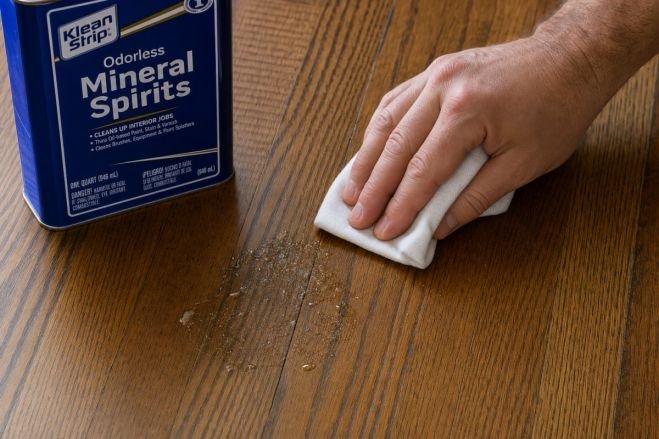
Hardwood floors require the most careful approach to residue removal because the wood is susceptible to moisture damage and the finish can be stripped by harsh solvents. For general stickiness caused by cleaning product buildup or dried spills, start by dampening a microfiber cloth with a small amount of mineral spirits and rubbing the affected area in the direction of the wood grain. Mineral spirits are effective at dissolving many types of residue without harming polyurethane finishes when used sparingly. For wax buildup specifically, a commercial wax remover designed for hardwood floors is the safest option. After removing the residue, clean the area with a pH-neutral hardwood floor cleaner to remove any solvent residue, and buff dry immediately to prevent moisture from penetrating the wood. Never use steam mops, vinegar, or ammonia-based cleaners on hardwood floors, as these can permanently damage the finish and cause the wood to swell.
Cleaning Sticky Messes from Tile and Grout
Ceramic and porcelain tile floors are among the most forgiving surfaces for residue removal because they are non-porous and resistant to most cleaning agents. For general stickiness, a solution of warm water and a few drops of dish soap applied with a microfiber mop is often sufficient. For more stubborn adhesive residue, apply a commercial adhesive remover or a small amount of acetone nail polish remover to the tile surface, allow it to dwell for five minutes, and then scrub with a plastic scraper and a nylon brush. Grout lines require special attention, as they are porous and can absorb adhesive and cleaning products. Use a stiff grout brush with a paste of baking soda and water to scrub grout lines clean, followed by a rinse with clean water. For very stubborn grout staining caused by adhesive, a diluted oxygen bleach solution can be effective without damaging the grout.
Safe Methods for Luxury Vinyl Plank (LVP) and Laminate
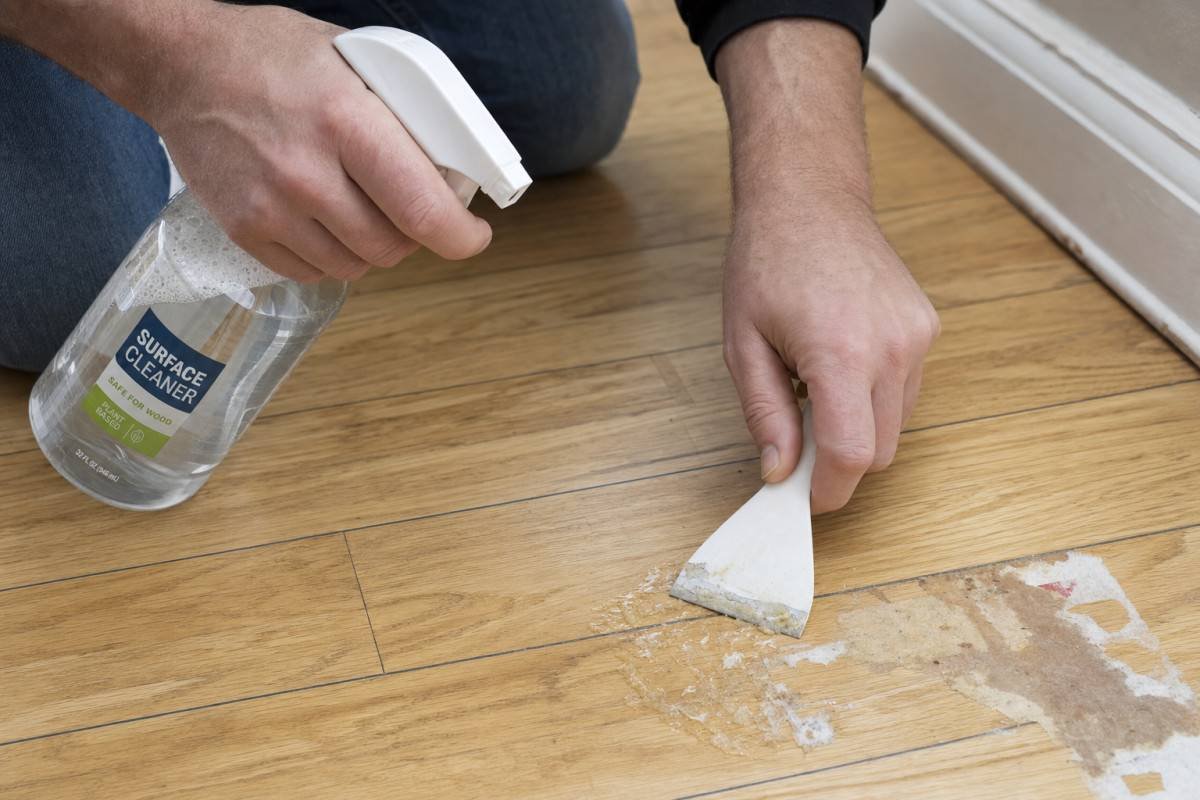
Luxury vinyl plank and laminate floors have a wear layer that can be damaged by abrasive tools and harsh solvents, so a gentle approach is essential. For most sticky residue on LVP, isopropyl alcohol at 70% concentration applied to a microfiber cloth is the safest and most effective solution. Rub gently in a circular motion, then wipe clean with a damp cloth and dry immediately. For laminate floors, which are even more sensitive to moisture, use the alcohol sparingly and ensure the area is dried completely within seconds of application to prevent the core from swelling. Avoid acetone, bleach, and abrasive scrubbers on both LVP and laminate, as these will scratch the wear layer and dull the surface. For adhesive from floor mats or tape, a plastic scraper used at a low angle can lift the bulk of the residue before applying the alcohol treatment.
Tackling Stubborn Adhesive and Tape Residue
Old tape residue and floor mat adhesive are among the most challenging forms of stickiness to remove because the adhesive has often cured and bonded deeply to the surface. The most effective approach is to soften the adhesive before attempting to remove it. For heat-softening, use a hair dryer on a low setting to warm the adhesive for 30 to 60 seconds, which will make it pliable and easier to scrape away with a plastic scraper. Commercial adhesive removers such as Goo Gone are specifically formulated to dissolve a wide range of adhesive types and are safe for most flooring surfaces when used as directed. Apply the remover, allow it to penetrate for the recommended dwell time, and then wipe away with a microfiber cloth. Always follow up with a pH-neutral floor cleaner to remove any oily residue left by the adhesive remover, as this residue can itself become sticky if not fully removed.
Natural vs. Commercial Cleaners: Which is Better?
The debate between natural and commercial cleaning solutions for sticky floor residue is nuanced, and the best choice depends on the type of residue, the flooring material, and personal preferences regarding chemical exposure. Natural solutions such as white vinegar, baking soda, and coconut oil can be effective for mild stickiness caused by cleaning product buildup or light spills. However, vinegar is acidic and should never be used on hardwood, marble, or unsealed grout, as it can etch and damage these surfaces. Baking soda is a gentle abrasive that works well on tile grout but can scratch softer surfaces. Commercial adhesive removers and solvents are generally more effective for stubborn adhesive residue and dried-on messes, but they require careful selection to ensure compatibility with the specific flooring material. For households with children or pets, look for products certified by the EPA Safer Choice Program, which identifies cleaning products that are safer for human health and the environment without sacrificing effectiveness.
Quick Answer: Learn proven methods to safely remove sticky residue, adhesive, and tape marks from hardwood, tile, LVP, and laminate floors without causing damage.
Frequently Asked Questions (FAQ)
What removes sticky residue from hardwood floors?
A small amount of mineral spirits or rubbing alcohol on a soft cloth effectively removes sticky residue from hardwood floors without damaging the finish.
How do I remove old tape residue from tile floors?
Apply a commercial adhesive remover like Goo Gone, let it sit for 5 minutes, then scrub with a plastic scraper. Follow up with a pH-neutral floor cleaner.
Can I use WD-40 to remove sticky residue from floors?
Yes, WD-40 can dissolve many types of adhesive residue. Apply sparingly, let it sit briefly, wipe clean, and then clean the area with a floor-safe cleaner to remove the oily residue.
What removes sticky residue from LVP flooring?
Isopropyl alcohol (70%) on a microfiber cloth is safe and effective for removing sticky residue from luxury vinyl plank flooring without damaging the wear layer.
How do I prevent sticky residue buildup on floors?
Use pH-neutral cleaners, avoid wax-based products on LVP and laminate, and clean spills immediately to prevent residue buildup on all floor types.
Conclusion
Making informed decisions about remove sticky residue floors requires careful consideration of the factors outlined in this guide. By understanding the key principles, evaluating your specific needs, and following the practical steps described above, you can achieve results that are both functional and long-lasting. Whether you are a first-time homeowner or an experienced DIY enthusiast, the information in this guide provides a solid foundation for success. Take the time to plan thoroughly, invest in quality materials, and approach each step with care, and the outcome will reflect that investment for years to come.