



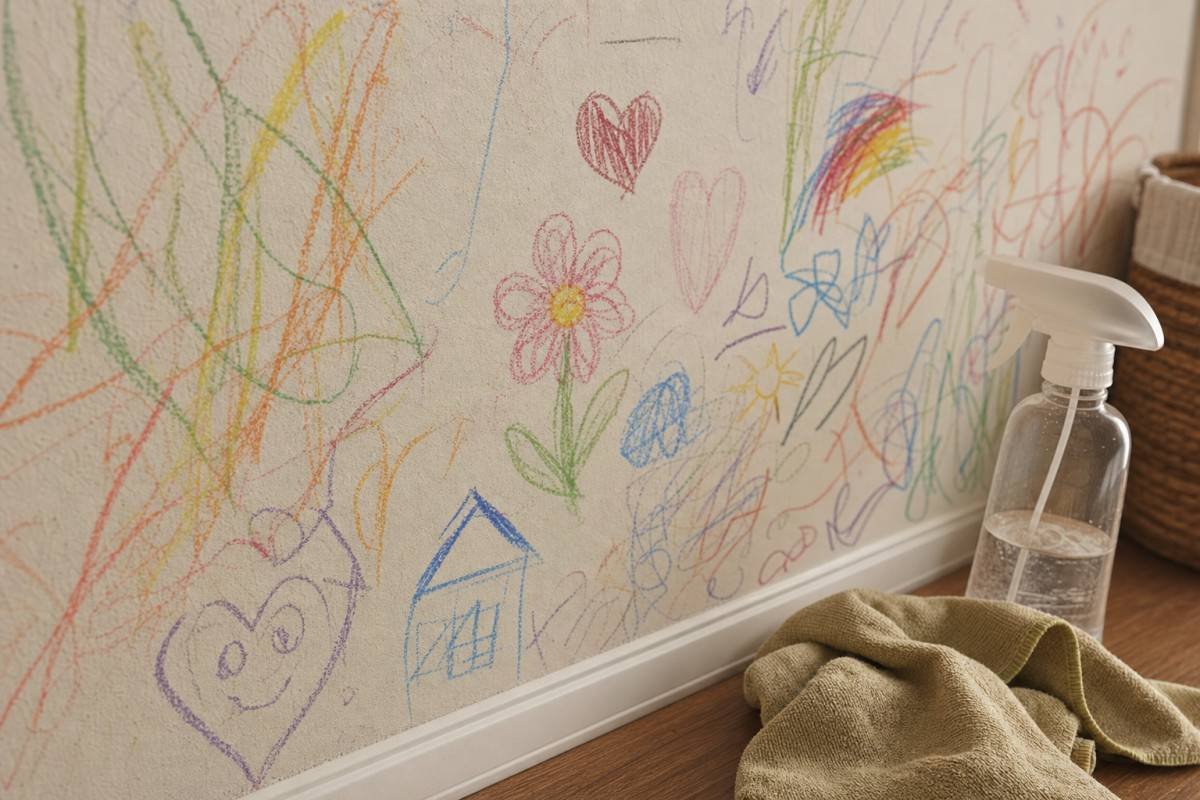
Every parent knows the feeling: you walk into a room only to discover that your toddler has transformed a freshly painted wall into their personal canvas. Crayon marks on walls are a rite of passage in many households, but they don’t have to be a permanent fixture. While the waxy composition of crayons makes them stubborn, removing them is entirely possible with the right techniques and a little patience. This comprehensive guide will explore various methods for removing crayon marks from painted walls, ranging from gentle household items to specialized commercial cleaners, ensuring your walls return to their pristine state without damaging the paint.
Understanding the Enemy: What Makes Crayon So Stubborn?
Before attacking the stain, it helps to understand what you are dealing with, observes Real Property Management Engage Professionals. Crayons are primarily composed of paraffin wax and color pigments. The wax is designed to adhere smoothly to paper, but unfortunately, it adheres just as well to the slightly porous surface of painted walls. The challenge in removing crayon marks lies in breaking down or lifting this waxy binder without simultaneously stripping the paint or altering the wall’s finish.
The type of paint finish on your wall also plays a significant role in how easily the crayon can be removed. Glossy finishes, such as semi-gloss or satin, are smoother and less porous, making it easier to wipe away the wax. Flat or matte finishes, on the other hand, are highly porous and tend to absorb the crayon pigment, making removal much more difficult and increasing the risk of damaging the paint during the cleaning process.
Method 1: The Gentle Approach (Best for Flat/Matte Paint)
When dealing with flat or matte paint, you must proceed with extreme caution. Aggressive scrubbing or harsh chemicals will almost certainly remove the paint along with the crayon. Start with the gentlest methods first.
The Hairdryer and Soap Technique
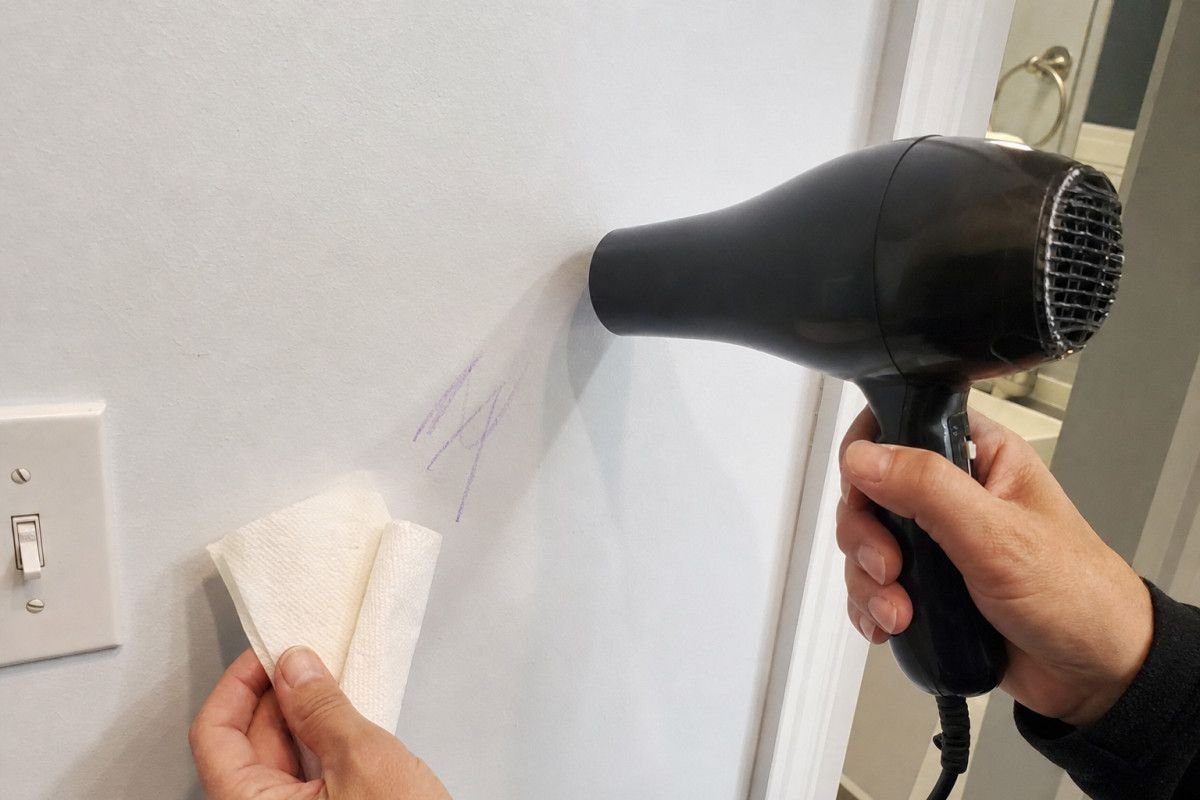
This method uses heat to soften the wax, making it easier to wipe away without excessive scrubbing.
1. Heat the Wax: Turn a hairdryer to a medium or high heat setting. Hold it a few inches away from the crayon mark and move it back and forth until the wax begins to soften and look slightly shiny. Do not hold the dryer in one spot for too long, as excessive heat can blister the paint.
2. Wipe Away: Once the wax is soft, immediately wipe it away with a clean, dry paper towel or a soft microfiber cloth. You may need to repeat the heating and wiping process several times for heavy marks.
3. Wash the Residue: After the bulk of the wax is removed, there may still be a faint color stain left behind. Mix a few drops of mild dish soap (like Dawn) with warm water. Dip a soft sponge into the soapy water, wring it out well, and gently dab at the remaining stain. Avoid rubbing.
4. Rinse and Dry: Wipe the area with a clean, damp cloth to remove any soap residue, then pat dry with a towel.
The Pencil Eraser
For light, superficial crayon marks, a simple pencil eraser can sometimes do the trick. Use a clean, soft eraser (white vinyl erasers work best) and gently rub the mark. The friction helps lift the wax. Be careful not to rub too hard, as this can burnish (create a shiny spot on) flat paint.
Method 2: Household Staples (Best for Eggshell/Satin Paint)
Eggshell and satin finishes offer a bit more durability, allowing you to use slightly more robust household items to tackle the crayon.
Baking Soda Paste
Baking soda is a mild abrasive that can help scrub away the wax without being overly harsh on the paint.
1. Make a Paste: Mix baking soda with a small amount of water to form a thick paste.
2. Apply and Scrub: Apply the paste to the crayon mark using a soft cloth or a sponge. Gently rub the paste over the mark in a circular motion. The mild abrasiveness of the baking soda will help lift the wax.
3. Rinse: Wipe the area clean with a damp cloth to remove the baking soda residue.
Mayonnaise
It might sound strange, but the oils in mayonnaise can help break down the wax in the crayon.
1. Apply: Dab a small amount of full-fat mayonnaise onto the crayon mark.
2. Let it Sit: Allow the mayonnaise to sit on the stain for 5 to 10 minutes.
3. Wipe: Wipe away the mayonnaise and the loosened crayon with a clean, damp cloth. You may need to follow up with a little dish soap and water to remove any greasy residue left by the mayo.
Toothpaste
Non-gel toothpaste contains mild abrasives (similar to baking soda) that can be effective against crayon.
1. Apply: Squeeze a small amount of non-gel white toothpaste onto the mark.
2. Scrub: Use an old, soft-bristled toothbrush or a cloth to gently scrub the area.
3. Rinse: Wipe clean with a damp cloth.
Method 3: Heavy-Duty Solutions (Best for Semi-Gloss/Gloss Paint)
Semi-gloss and high-gloss paints are highly durable and can withstand more aggressive cleaning methods. If the gentle approaches fail, you can escalate to these solutions.
WD-40
WD-40 is a solvent that is incredibly effective at breaking down wax. However, it is also oily and has a strong odor, so use it sparingly and ensure good ventilation.
1. Spray: Spray a small amount of WD-40 directly onto the crayon mark or onto a clean cloth.
2. Wipe: Gently wipe the mark. The crayon should dissolve and lift away easily.
3. Clean the Oil: WD-40 will leave an oily residue on the wall. You must clean the area thoroughly with warm, soapy water (using a grease-cutting dish soap) to remove the oil, otherwise, the spot will attract dirt and dust.
Magic Eraser (Melamine Foam)
Mr. Clean Magic Erasers (or generic melamine foam sponges) are highly effective at removing crayon. However, they work like ultra-fine sandpaper. While they easily remove the crayon, they can also remove the top layer of paint or dull a glossy finish if used too aggressively.
1. Dampen: Wet the Magic Eraser and squeeze out the excess water.
2. Rub Gently: Very gently rub the crayon mark. Let the micro-abrasive foam do the work; do not apply heavy pressure.
3. Check Frequently: Frequently check the wall to ensure you are not removing the paint or altering the sheen. Stop immediately if you notice the paint color transferring to the sponge.
Commercial Citrus Cleaners (e.g., Goo Gone)
Citrus-based adhesive removers like Goo Gone are excellent at dissolving wax.
1. Apply: Apply a small amount of the cleaner to a cloth.
2. Wipe: Gently wipe the crayon mark until it dissolves.
3. Wash: Wash the area with soapy water to remove the cleaner residue.
What NOT to Do
When trying to remove crayon, avoiding certain actions is just as important as choosing the right method.
- Do not use harsh chemical solvents: Avoid acetone, lacquer thinner, or harsh bleach-based cleaners. These will almost certainly strip the paint and potentially damage the drywall underneath.
- Do not use abrasive scouring pads: Steel wool or heavy-duty scouring pads will scratch the paint and ruin the finish.
- Do not scrub aggressively: Regardless of the method you choose, always start with gentle pressure. Aggressive scrubbing is the fastest way to remove paint.
When All Else Fails: Repainting
Sometimes, despite your best efforts, a crayon mark (especially dark colors like red or black on flat paint) may leave a permanent stain that has penetrated the paint layer. In these cases, repainting the affected area is the only solution.
1. Clean the Area: Ensure the wall is completely clean and free of any waxy residue or cleaning products. If wax remains, the new paint will not adhere properly.
2. Prime: Apply a stain-blocking primer (such as KILZ or Zinsser BIN) over the crayon mark. This is a crucial step; if you skip the primer, the crayon oils will eventually bleed through the new paint.
3. Paint: Once the primer is dry, paint over the area with the matching wall color. You may need to paint corner-to-corner to ensure the new paint blends seamlessly with the old.
Summary Table: Crayon Removal Methods
| Paint Finish | Recommended Methods | Methods to Avoid |
|---|---|---|
| Flat / Matte | Hairdryer & Soap, Pencil Eraser | Magic Eraser, WD-40, Heavy Scrubbing |
| Eggshell / Satin | Baking Soda Paste, Mayonnaise, Toothpaste | Harsh Solvents, Abrasive Pads |
| Semi-Gloss / Gloss | WD-40, Magic Eraser (use gently), Citrus Cleaners | Abrasive Pads |
Conclusion
Removing crayon marks from painted walls requires a strategic approach tailored to the specific paint finish. By starting with the gentlest methods, such as heat and mild soap, and only escalating to stronger solvents or abrasives when necessary, you can successfully eliminate the artwork without ruining your walls. Always remember to test any cleaning solution in an inconspicuous area first, and when in doubt, patience and gentle wiping are your best tools.
FAQ
Will a Magic Eraser ruin my wall paint?
It can. Magic Erasers are micro-abrasive. While effective on crayon, they can dull glossy finishes or remove flat paint if rubbed too hard. Always use them with extremely gentle pressure.
Can I use rubbing alcohol to remove crayon?
It is not recommended. Rubbing alcohol is a strong solvent that can soften and remove latex wall paint, causing more damage than the crayon itself.
Why did the crayon mark come back after I painted over it?
Crayons contain wax and oils. If you paint directly over a crayon mark without using a stain-blocking primer first, those oils will eventually bleed through the new layer of paint.
Does vinegar remove crayon from walls?
Vinegar is generally not very effective against the wax in crayons. It is better suited for mineral deposits or water stains.
How do I get crayon off textured walls?
Textured walls are difficult because the wax gets stuck in the crevices. The hairdryer method is often best here, as the heat melts the wax, allowing you to dab it out of the texture with a soft cloth or an old toothbrush.
For additional guidance, see the CPSC guidance on art materials safety.