



Painting the exterior of your home is a significant investment of time, effort, and money. It is not a project you want to repeat every few years. The primary goal of exterior paint is not just to make your house look beautiful, but to serve as the first line of defense against the harsh realities of nature: blistering sun, driving rain, freezing temperatures, and fluctuating humidity. Choosing a cheap or incorrect paint will lead to premature fading, peeling, and blistering, leaving your home’s siding vulnerable to rot and damage. This comprehensive guide will teach you how to choose the most durable exterior paint, ensuring your home remains protected and pristine for a decade or more.
The Anatomy of High-Quality Exterior Paint
Industry insights from Real Capital Property Group specialists indicate that to understand what makes a paint durable, you must understand its ingredients. All paints consist of four main components: pigments, binders (resins), solvents (liquids), and additives. The quality and ratio of these ingredients dictate the paint’s longevity.
1. Binders (Resins): The Glue. This is the most critical component for durability. The binder is the plastic-like substance that holds the pigment to the wall after the solvent evaporates. High-quality exterior paints use 100% acrylic binders. Acrylic resins are highly flexible, allowing the paint to expand and contract with your home’s siding as temperatures change, preventing cracking and peeling.
2. Pigments: The Color and Coverage. Cheap paints use inexpensive pigments (like clay or silica) as fillers. Premium paints use high-quality pigments (like titanium dioxide) which provide superior coverage, hide previous colors better, and resist fading from UV rays.
3. Solvents: The Carrier. This is the liquid (water in latex paint, mineral spirits in oil paint) that keeps the paint wet until applied. It evaporates as the paint dries.
4. Additives: The Enhancers. Premium paints include specific additives to improve performance, such as mildewcides to prevent mold growth, UV protectants to resist fading, and leveling agents for a smoother finish.
The Golden Rule: When shopping for exterior paint, always look for the words “100% Acrylic Latex” on the label. This is the hallmark of a durable, flexible, and long-lasting exterior paint.
Latex (Acrylic) vs. Oil-Based Paint
Historically, oil-based paints were considered the gold standard for exterior durability. However, paint technology has advanced significantly, and today, high-quality 100% acrylic latex paints are almost universally recommended for exterior siding.
Why 100% Acrylic Latex is Superior for Siding:
- Flexibility: Houses shift, settle, and expand/contract with temperature changes. Acrylic latex remains flexible over time, stretching with the wood or siding. Oil paint dries to a hard, brittle shell that will eventually crack and peel as the house moves.
- Breathability: Acrylic latex is breathable. It allows moisture vapor that originates from inside the house to escape through the paint film. Oil paint creates an impermeable vapor barrier; if moisture gets trapped behind it, the paint will blister and peel off in large sheets.
- Color Retention: Acrylic paints resist UV radiation much better than oil paints, meaning they hold their color longer and resist chalking (the powdery residue that forms on old paint).
- Ease of Use: Latex paints dry quickly, have lower VOCs (fumes), and clean up easily with soap and water.
When to Use Oil-Based Paint:
While latex is best for siding, oil-based paint still has a place on the exterior. Because it dries to a hard, smooth, enamel-like finish, it is excellent for high-wear areas like doors, wooden window frames, porch floors, and wrought iron railings. It stands up better to scuffing and physical impact than latex.
Choosing the Right Sheen (Finish)
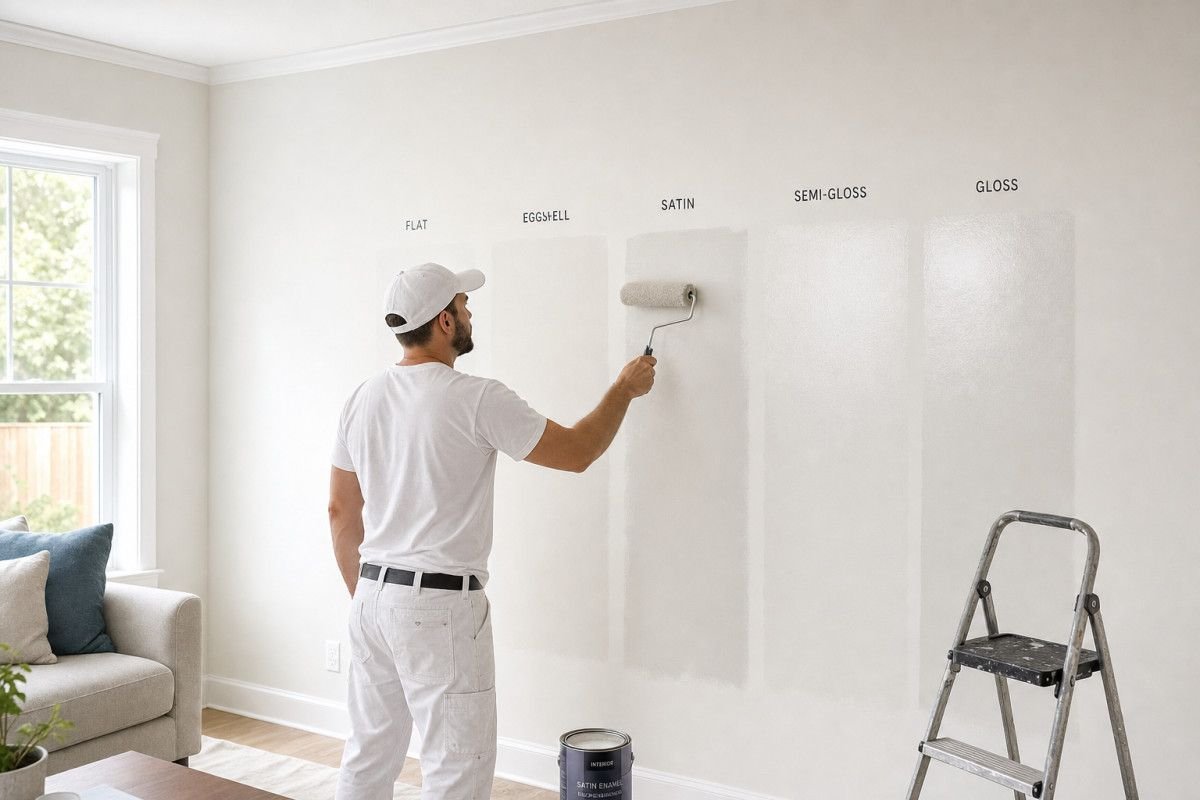
Just like interior paint, exterior paint comes in different sheens. The sheen affects not only the look but also the durability and maintenance of the paint job.
Flat / Matte
- Pros: Excellent at hiding imperfections, bumps, and rough textures on older siding.
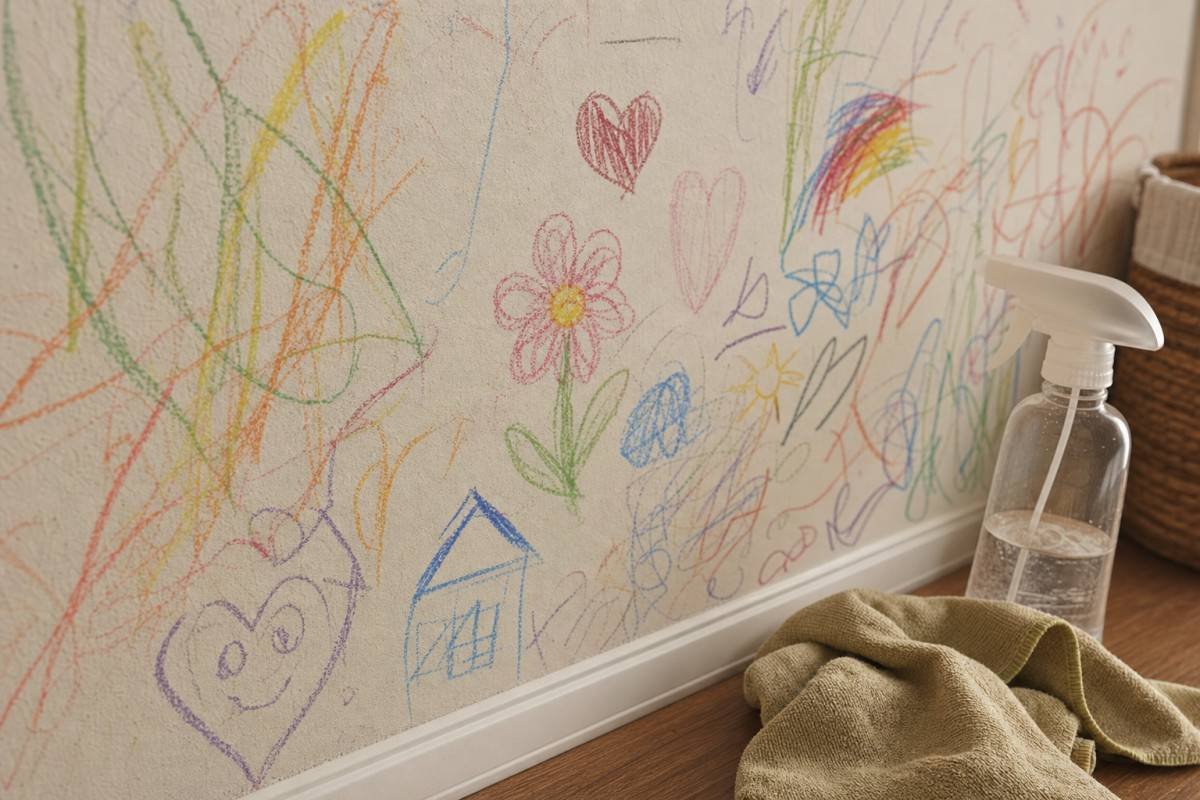
- Cons: Highly porous. It holds onto dirt, is difficult to wash, and is more susceptible to mildew.
- Best For: Older homes with heavily textured or flawed siding where hiding imperfections is the top priority.
Satin / Eggshell
- Pros: The most popular choice for exterior siding. It offers a slight, warm glow, is significantly easier to clean than flat paint, and resists dirt and mildew well. It strikes the perfect balance between hiding minor flaws and providing a durable, washable surface.
- Best For: The vast majority of exterior siding (wood, fiber cement, aluminum).
Semi-Gloss / Gloss
- Pros: Extremely durable, highly moisture-resistant, and very easy to wipe clean.
- Cons: Highly reflective. It will highlight every single dent, crack, and brush stroke on the surface.
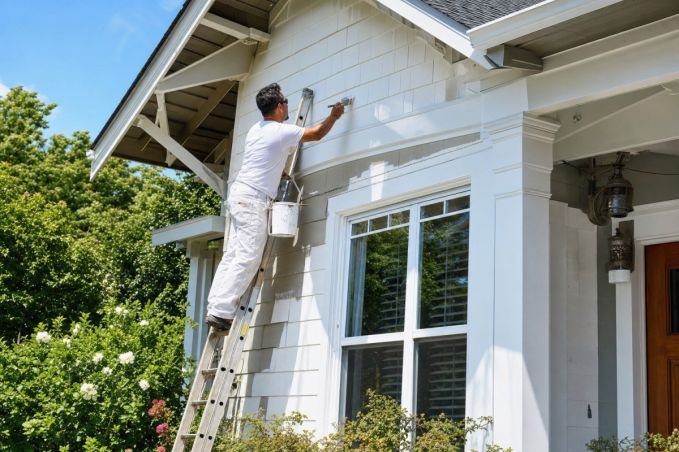
- Best For: Trim, doors, shutters, window frames, and architectural details. The contrast between satin siding and semi-gloss trim provides a classic, crisp look.
The Importance of Climate Considerations
The “best” paint for your home also depends heavily on where you live. Different climates stress paint in different ways.
- High Sun/Desert Climates: UV radiation is the enemy here. Look for premium acrylic paints specifically formulated with advanced UV protectants to prevent rapid fading and chalking. Lighter colors also reflect heat and fade less noticeably than dark colors.
- Humid/Rainy Climates (Pacific Northwest, South): Moisture and mildew are the primary threats. You must choose a paint with robust, built-in mildewcides. A satin or semi-gloss finish is preferable to flat, as it sheds water more effectively and is easier to clean algae off of.
- Extreme Temperature Fluctuations (Midwest, Northeast): The paint must be highly flexible to survive the expansion and contraction caused by freezing winters and hot summers. 100% acrylic latex is absolutely mandatory in these regions.
Don’t Skimp on the Primer
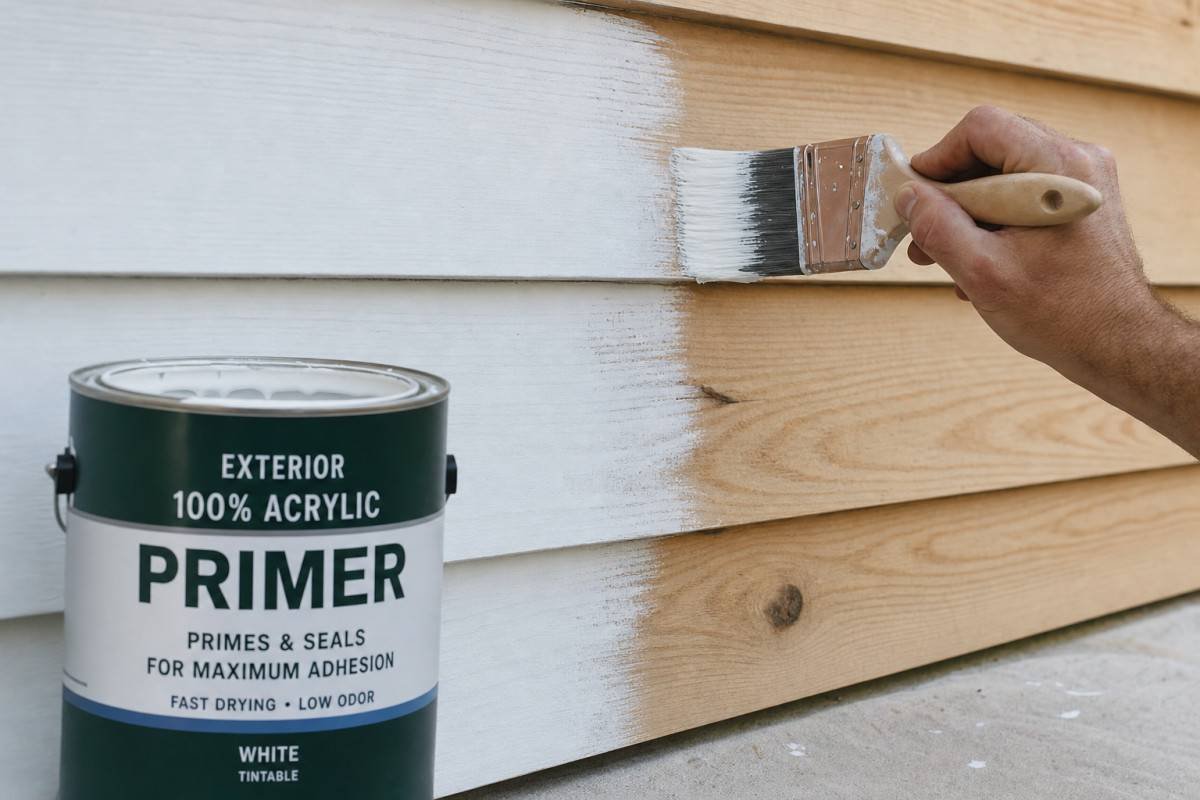
Even the most expensive, durable topcoat will fail if it is not applied to a properly prepared and primed surface. Primer acts as the crucial adhesive bridge between the bare siding and the paint.
- Bare Wood: Always use a high-quality exterior wood primer. If you are painting cedar or redwood, you must use a stain-blocking primer (often oil-based) to prevent the natural tannins in the wood from bleeding through and staining the new paint.
- Chalky or Peeling Surfaces: After scraping and sanding, use a specialized bonding primer designed to adhere to difficult surfaces.
- Masonry/Stucco: Use a masonry conditioner or primer designed to handle the high alkalinity of concrete and stucco.
While many modern paints are marketed as “Paint & Primer in One,” these are generally best for repainting over a similar, well-adhered color. If you are painting bare material, making a drastic color change, or dealing with problem areas, a dedicated coat of high-quality primer is essential for long-term durability.
Summary Table: Exterior Paint Selection Guide
| Component | Recommendation for Maximum Durability | Why it Matters |
|---|---|---|
| Binder Type | 100% Acrylic Latex | Provides flexibility to prevent cracking; allows moisture to escape. |
| Siding Sheen | Satin or Eggshell | Balances dirt resistance and washability with the ability to hide minor flaws. |
| Trim Sheen | Semi-Gloss | Provides a hard, durable surface for high-wear areas; creates visual contrast. |
| Primer | Dedicated Exterior Primer | Ensures adhesion, seals porous surfaces, and blocks wood tannins. |
| Price Point | Premium / Top-Tier Lines | Contains higher volumes of resins and quality pigments, ensuring longevity. |
Conclusion
Choosing durable exterior paint is an exercise in reading labels and understanding your environment. By insisting on 100% acrylic latex formulations, selecting the appropriate sheen for siding versus trim, and never skipping the crucial step of proper priming, you ensure that your home is protected by a resilient shield. Remember, the cost of the paint is only a fraction of the total cost of a painting project (which is mostly labor). Spending an extra $20-$30 per gallon on premium paint can extend the life of your paint job by 5 to 10 years, making it the most cost-effective decision you can make.
FAQ
How long should a high-quality exterior paint job last?
When applied correctly over a properly prepared and primed surface, a premium 100% acrylic latex paint job should last 10 to 15 years on wood siding, and potentially longer on stucco or fiber cement.
Are “Paint and Primer in One” products good for exteriors?
They are acceptable for repainting a surface that is already in good condition. However, for bare wood, peeling areas, or drastic color changes, a separate, dedicated high-quality primer is always recommended for maximum durability.
Why is my exterior paint peeling off in large sheets?
This is usually caused by moisture trapped behind the paint film. It frequently happens when oil-based paint (which doesn’t breathe) is used on siding, or when interior moisture lacks proper ventilation and pushes out through the exterior walls.
Can I paint vinyl siding?
Yes, but you must use a 100% acrylic latex paint formulated specifically for vinyl. Crucially, you must choose a color that is lighter than the original vinyl. Painting vinyl a dark color will cause it to absorb too much heat from the sun, leading the siding to warp and buckle.
Is it worth buying the most expensive paint at the hardware store?
Generally, yes. In the paint industry, you get what you pay for. The most expensive lines from reputable brands contain more solids (resins and pigments) and fewer solvents (water), resulting in a thicker, more durable, and longer-lasting protective coat.
For additional guidance, see the EPA Renovation, Repair and Painting Program.