



Charles Quincy Ascher Einstein — known to those close to him simply as “Charly” — is the youngest great-grandchild of physicist Albert Einstein. Born in 1971 and raised in Switzerland, he has spent his adult life doing what few descendants of global icons manage: building something genuinely his own, far from the spotlight that tends to hunt down anyone bearing that surname.
Who Is Charles Quincy Ascher Einstein?
He is Albert Einstein’s great-grandchild, the youngest of five children born to Bernhard Caesar Einstein and his wife Aude Ascher Einstein. He sits four generations removed from the physicist who reshaped our understanding of space, time, and gravity, and by all accounts, he prefers it that way.
Unlike many descendants of famous figures who trade on the family name, Charly has cultivated a quiet private life in Switzerland. He does not maintain a public social media profile, rarely grants interviews, and has made no attempt to position himself as a brand ambassador for the Einstein legacy. His existence became known to a wider audience largely through a 2008 Discover magazine article by journalist Michele Zackheim, who conducted a rare interview with his mother, Aude Einstein, and gathered biographical details that remain the most reliable public account of his life.
He is not a physicist, not a public intellectual, and not a professional heir to any Einstein-themed foundation. He is, by choice, an ordinary private citizen with an extraordinary last name.
Early Life and Family Background: The Einstein Line
Charles Quincy Ascher Einstein was born in 1971 as the youngest of five children of Bernhard Caesar Einstein (Albert’s grandson) and Aude Ascher Einstein, making him Albert Einstein’s great-grandchild through the Hans Albert branch of the family.
To understand where Charly fits in the Einstein family tree, it helps to trace the line briefly. Albert Einstein had two sons with his first wife, Mileva Marić: Hans Albert Einstein (born 1904) and Eduard Einstein (born 1910). Hans Albert became a hydraulic engineering professor at UC Berkeley. His son Bernhard Caesar Einstein, born in 1930, was Albert’s first grandson.
Bernhard married Doris Aude Ascher, a woman who would later give journalist Michele Zackheim one of the only direct interviews any Einstein descendant has granted. According to Wikipedia’s documented entry on the Einstein family, “Bernhard himself had five children with his wife, Doris Aude Ascher.” Those five, named in Zackheim’s 2008 investigation for Discover magazine (“Children of a Lesser God”), are Thomas, Paul (born 1958), Eduard “Ted” (born 1960), Mira Einstein Yehieli (born 1965), and Charly — born last, in 1971.
Growing up in that household meant living inside the long shadow of one of history’s most celebrated minds while simultaneously watching parents who were, by that point, divorced and navigating a complicated family legacy. Charly grew up in Switzerland, the country that had long served as something of a spiritual home base for the Einstein family.
Career: From Einstein’s World to Hospital Communications
Charly Einstein’s professional path is one of the more vivid examples of an Einstein descendant choosing a life defined by personal interests rather than inherited prestige. As a child, he developed a passion for computer games, an enthusiasm he eventually turned into a small business. At some point in his early adult life, he ran a retail store he called Einstein’s World, which sold computer games. The name was self-aware, perhaps even a little playful, but the venture itself was straightforwardly commercial.
Later, he moved into communications, taking a role as spokesman for a large hospital in Switzerland. The position suited someone with his combination of intelligence, privacy instincts, and presumably some skill at managing how an institution presents itself to the public. Hospital spokesperson work requires careful, precise language, a talent that does not embarrass the family name, even if it has nothing to do with theoretical physics.
Neither career chapter has been documented in detail. No Swiss newspaper has profiled him extensively, no LinkedIn page exists under his name in public searches, and no hospital has ever publicized his presence on staff. He has maintained, in both his work and his personal life, an almost complete separation from the Einstein industry that generates millions of dollars annually through licensing, exhibits, and branded merchandise.

The Einstein Great-Grandchildren: A Generation Apart
Albert Einstein’s five great-grandchildren — Thomas, Paul, Eduard “Ted,” Mira, and Charly — scattered across four countries and five entirely different professions, none of them physicists, each building a life defined by personal choice rather than inherited reputation.
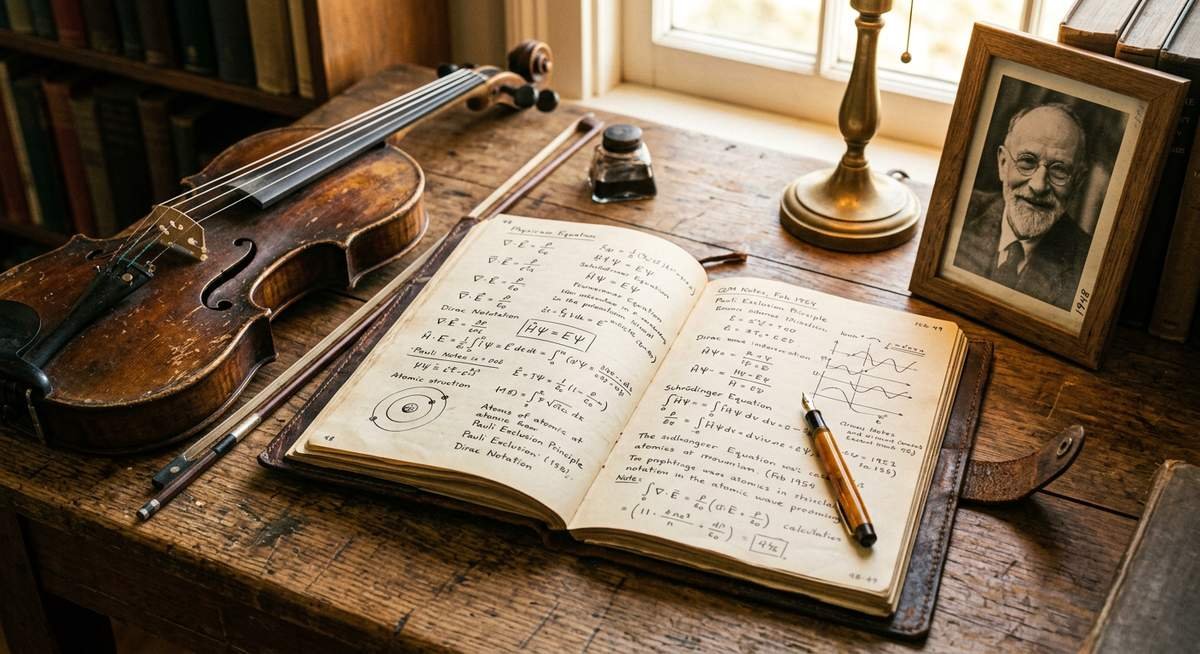
Charly is one of five people who share the distinction of being Albert Einstein’s great-grandchildren, and the contrast among the five siblings is striking. According to Zackheim’s reporting in Discover magazine, Thomas, the oldest, became a physician specializing in emergency medicine and anesthesiology, and has practiced in California. Paul, born in 1958, inherited Albert’s violin and pursued music; he is a composer and violinist living in the south of France, and in 2004 performed Mozart’s Sonata in E Minor at the German Physical Society’s celebration of Einstein’s 125th birthday in Ulm, the city where Albert was born. Eduard “Ted,” born in 1960, bypassed higher education entirely, learned masonry and construction, and eventually owned several furniture warehouses and a retail furniture store in the Los Angeles area. Mira Einstein Yehieli, born in 1965, lives in Israel with her husband, a musician.
And then there is Charly, the youngest, living in Switzerland, career in communications, once a game store owner. Together, these five represent a generation that scattered across three continents and found five entirely different ways to answer the same unanswerable question: what do you do when your great-grandfather is Albert Einstein?
| Name | Birth Year | Location | Profession |
|---|---|---|---|
| Thomas Einstein | c. 1950s | California, USA | Physician (emergency medicine / anesthesiology) |
| Paul Einstein | 1958 | South of France | Composer and violinist |
| Eduard “Ted” Einstein | 1960 | Los Angeles, USA | Furniture warehouse owner |
| Mira Einstein Yehieli | 1965 | Israel | Private life (husband is a musician) |
| Charly (Charles Quincy Ascher) Einstein | 1971 | Switzerland | Former game store owner; hospital spokesman |
None of the five became physicists. None of them tried to position themselves as custodians of Albert’s scientific legacy. The most academically prominent of the group, Thomas, chose medicine over physics. Paul came closest to honoring the old man’s personal passions, Einstein was a dedicated amateur violinist, who played Mozart for himself as much as for anyone else, but even Paul’s path was artistic, not scientific.
What unites them is, paradoxically, the thing they have each resisted: the name itself. Paul Einstein’s 2004 performance in Ulm was covered in press precisely because of who he was, not just what he played. Ted Einstein appeared in an Oldsmobile commercial that leaned directly into the joke, declaring “You don’t have to be an Einstein to figure that out.” Even these acts of self-expression were filtered through public awareness of that last name.
What Charles Quincy Ascher Einstein Has Said About His Famous Name
In his only known public statement, Charly Einstein described bearing the surname as “an extremely weird and alien feeling,” noting that people treat him as though he were “a great-grandson of God” simply because of his name.
Charly Einstein has spoken publicly about the family name exactly once in any documented form. In an online posting, the only known direct statement from him, he wrote: “Sometimes it appears to me that people think that he is some kind of God. Therefore it feels like many look upon me as if I was a great-grandson of God. To be honest, that is an extremely weird and alien feeling to me.”
There is something clarifying about that statement. It does not romanticize the connection. It does not capitalize on it. It simply names the experience with the kind of flat honesty that suggests someone who has sat with this particular strangeness long enough to stop pretending it is comfortable.
He has also said: “We Einsteins do not believe in authority. We solve problems in highly unconventional ways, in our own way.” Whether or not that is accurate as a description of all five siblings, it reads as a genuine piece of self-understanding, a way of holding onto a family identity that is his own rather than the world’s.
His mother Aude captured the family’s collective stance better than anyone else. After briefly speaking with Zackheim for the 2008 article, she followed up in writing to withdraw consent for further quotes. “My family and I myself do not want you or anybody to write about our family,” she wrote. “Sorry, but it would hurt and be destructive for the already precarious, fragile situation of our family.” The request was honored. The Einstein great-grandchildren have been nearly invisible in public ever since, and apparently, that is precisely what they want.
Frequently Asked Questions
Who is Charles Quincy Ascher Einstein?
Charles Quincy Ascher Einstein, nicknamed “Charly,” is the youngest great-grandchild of physicist Albert Einstein. Born in 1971 in Switzerland, he is the son of Bernhard Caesar Einstein (Albert’s grandson) and Aude Ascher Einstein. He has worked as a hospital spokesman in Switzerland and previously owned a computer game retail store called “Einstein’s World.”
How is Charles Quincy Ascher Einstein related to Albert Einstein?
Charles is Albert Einstein’s great-grandchild. The lineage runs: Albert Einstein → Hans Albert Einstein (son) → Bernhard Caesar Einstein (grandson) → Charly (great-grandchild). He is four generations removed from Albert Einstein.
Where does Charles Quincy Ascher Einstein live?
He lives in Switzerland with his family. Switzerland has remained a consistent home base for the Einstein family across generations, Albert Einstein himself studied and worked in Switzerland, and Bernhard Caesar Einstein divided his time between Switzerland and California.
What does Charles Quincy Ascher Einstein do for a living?
According to reporting by journalist Michele Zackheim in Discover magazine (2008), Charly Einstein worked as a spokesman for a large hospital in Switzerland. Earlier in his life, he also owned a retail store called “Einstein’s World” that sold computer games.
How many great-grandchildren did Albert Einstein have?
Albert Einstein had five known great-grandchildren, all children of his grandson Bernhard Caesar Einstein and Bernhard’s wife Aude Ascher Einstein: Thomas, Paul, Eduard “Ted,” Mira Einstein Yehieli, and Charles “Charly” Quincy Ascher Einstein. Eduard Einstein (Albert’s second son) had no children, so all great-grandchildren descend from the Hans Albert branch of the family.
Are any of Albert Einstein’s descendants physicists or scientists?
None of Albert Einstein’s five great-grandchildren became physicists. Thomas Einstein became a physician (emergency medicine and anesthesiology). Paul Einstein is a violinist and composer. Eduard “Ted” Einstein owns furniture warehouses. Mira Einstein Yehieli lives privately in Israel. Charly worked in hospital communications. Hans Albert Einstein, Albert’s son, was a hydraulic engineering professor at UC Berkeley, which is the closest any descendant came to a major scientific career.
What did Charles Quincy Ascher Einstein say about Albert Einstein?
In a rare online statement, Charly wrote: “Sometimes it appears to me that people think that he is some kind of God. Therefore it feels like many look upon me as if I was a great-grandson of God. To be honest, that is an extremely weird and alien feeling to me.” He has also said: “We Einsteins do not believe in authority. We solve problems in highly unconventional ways, in our own way.”
The Quiet Life of an Einstein
Charles Quincy Ascher Einstein built a private, ordinary life in Switzerland, working first as a game store owner and later as a hospital spokesman, while all five of Albert Einstein’s great-grandchildren collectively chose obscurity over the inherited fame that came with their surname.
Charly is not famous by any conventional measure. No Wikipedia entry carries his name, no speaker’s page profiles him, no speaker’s page, no published research, no public profile. He sold computer games in Switzerland. He helped a hospital communicate. He lives, by all indications, as a private man with a family of his own, and that appears to be exactly the point.
That is, in its own way, a more interesting outcome than anyone would have predicted for a great-grandchild of the most recognizable scientist in history. The world creates a kind of gravity around certain names, pulling descendants toward the expectation of inherited greatness. All five of Albert Einstein’s great-grandchildren escaped that pull, scattered to California, France, Israel, and Switzerland, each building lives defined by their own choices rather than his equations. Charly, the youngest, chose Switzerland and silence. Given what his mother wrote to Zackheim, it seems clear the whole family would prefer to keep it that way.