



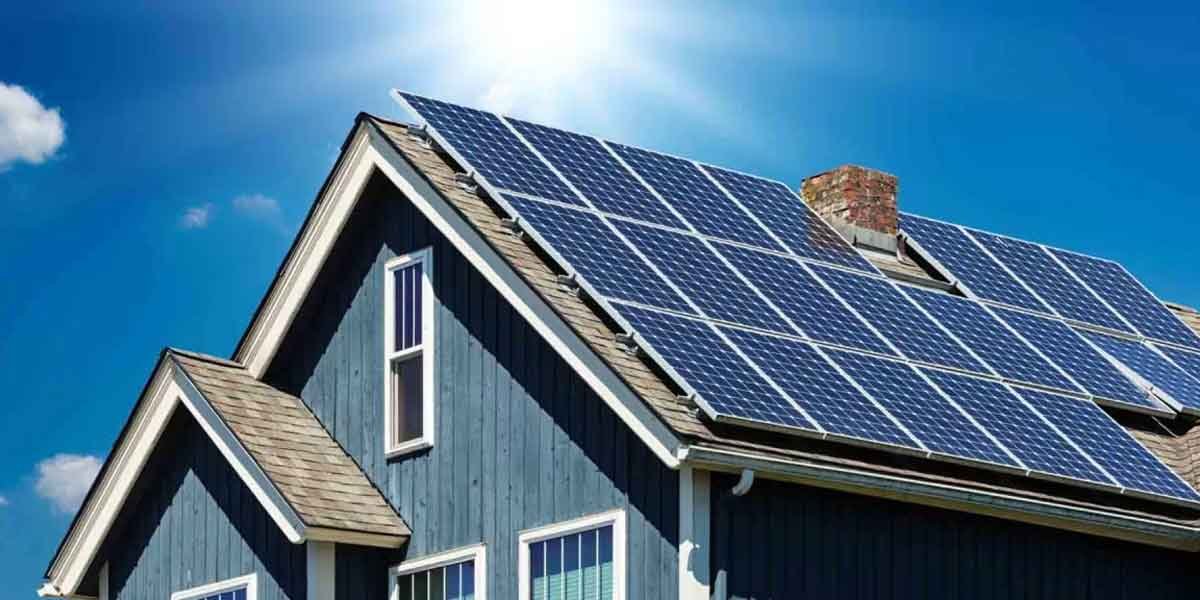
The average cost of solar panels in Pennsylvania in 2026 is $2.70 to $3.20 per watt before incentives, which translates to roughly $16,200 to $19,200 for a typical 6kW residential system. After the 30% federal solar tax credit, that drops to approximately $11,340 to $13,440. But that single number hides a lot of important detail that most articles skip over entirely, notes WSR Property Management solutions.
What actually determines your final cost is not just your state — it is your system size, your utility company, whether you pay cash or finance, and whether you know how to stack Pennsylvania’s specific incentives. This guide walks through all of it using real installer quotes shared by PA homeowners and up-to-date data on the state’s SREC market and net metering rules.
The Real Cost of Solar Panels in PA (By System Size)
One of the most confusing things about solar pricing is that the cost per watt changes significantly based on how large your system is. A small 5kW system almost always costs more per watt than a 12kW system, even from the same installer. The reason is straightforward: permits, system design, and the labor of showing up to a job site are largely fixed costs. Once the crew is on your roof, adding another row of panels costs a fraction of what the first row costs.
| System Size | Avg. Cost Before Incentives | After 30% ITC | Typical Homes Served |
|---|---|---|---|
| 5 kW | $15,000 – $17,500 | $10,500 – $12,250 | Small home, low usage |
| 7–8 kW | $19,000 – $24,000 | $13,300 – $16,800 | Average PA household |
| 10 kW | $27,000 – $32,000 | $18,900 – $22,400 | Larger home or EV owner |
| 12–15 kW | $32,000 – $42,000 | $22,400 – $29,400 | High-usage home or farm |
Why Smaller Systems Cost More Per Watt: The Economy of Scale
This is exactly why comparing quotes on a “per watt” basis only makes sense when you are comparing systems of similar size. A homeowner in Pittsburgh recently shared this experience on Reddit’s r/solar community after getting a confusing array of quotes:
“Economy of scale is a big factor. Once the job is all set up, adding another row of panels is, what, an extra hour of work for the install crew and $1,000 of additional materials? So a small roof job is going to seem expensive.”
— u/BK-Jon, r/solar
That same thread produced a real-world data point that is more useful than any industry average: a homeowner in central Pennsylvania reported paying $2.58 per watt for a 11.4kW system — 30 Silfab Elite 380 panels with IQ7+ microinverters on a difficult roof, installed by Bright Eye Solar out of Lancaster. That is $29,400 total, or $20,580 after the federal tax credit. If you are getting quotes significantly above $3.50/W for a system larger than 8kW, it is worth getting at least two more quotes.
PA Solar Incentives That Actually Lower Your Cost in 2026
Pennsylvania does not have a state-level solar tax credit, which puts it behind states like Maryland and New York. But it does have a combination of federal and state-level programs that, when stacked correctly, can reduce your net cost by 35 to 45 percent.
The 30% Federal Solar Tax Credit (ITC)
The Investment Tax Credit (ITC) allows you to deduct 30% of your total solar system cost from your federal income tax liability. This is not a rebate — it is a credit against taxes you owe. If your system costs $24,000, the credit is $7,200. If you do not owe that much in taxes in a single year, the credit carries forward to subsequent years. You must own the system outright (not lease it) to claim this credit.
PA SRECs (Solar Renewable Energy Certificates) Explained
Pennsylvania has a Solar Renewable Energy Certificate (SREC) program. For every 1,000 kWh (1 MWh) your system produces, you earn one SREC that you can sell to utilities that need to meet the state’s renewable portfolio standard (RPS). As of mid-2026, PA SREC prices are trading in the $35 to $50 per SREC range.
For a typical 10kW system in PA, which produces approximately 11,000 to 12,000 kWh per year, you can expect to earn roughly 11 to 12 SRECs annually. At $40 per SREC, that is an additional $440 to $480 per year in income — not transformative, but it is real money that most homeowners do not factor into their payback calculations. Over a 10-year period, that adds up to $4,400 to $4,800 in additional savings.
Net Metering in PA (PECO, PPL, Met-Ed)
Pennsylvania has a statewide net metering law that requires utilities to credit you at the full retail rate for excess electricity you send back to the grid. This is one of the most valuable incentives available to PA homeowners. When your panels produce more than you use during the day, that surplus is credited to your account and applied against your bill in months when you produce less (like winter).
The key detail that varies by utility is how unused credits are handled at the end of the year. Under PECO and PPL’s current policies, any remaining credit balance at the end of your annual cycle is paid out at the utility’s avoided-cost rate, which is significantly lower than the retail rate. This means you want to size your system to produce close to — but not significantly more than — your annual consumption, rather than oversizing it.
Does Solar Make Sense in PA’s Cloudy Climate?
Pennsylvania averages about 4.0 to 4.5 peak sun hours per day, which is lower than states like Arizona (5.5+) but comparable to Germany, which is one of the world’s leading solar markets. The concern about clouds is real but often overstated, and there is a scientific reason why.
“While maximum solar light intensity around noon on an overcast day is significantly diminished to about 30–40% of the power of a perfectly clear day, the light rays are refracted in the clouds and the radiation becomes less directional and more diffuse, meaning the effect of the angle between the light source and your solar panel is lessened on cloudy days. You actually get more power conversion in the high angle of incidence hours (early daytime and hours before sunset) on a cloudy day compared to a sunny day.”
— u/crunrun (graduate engineer), r/Pennsylvania
In practical terms, a 10kW system in Philadelphia will produce roughly 12,000 kWh per year, while the same system in Pittsburgh (cloudier) will produce closer to 10,500 kWh. That difference affects your payback period, but it does not change the fundamental math of whether solar is worth it — it just shifts the break-even point by one to two years.
Winter Production vs. Summer Production
The seasonal variation in PA is significant. A system that produces 1,200 kWh in July may produce only 500 to 600 kWh in December. This is why net metering’s credit carryover is so important: your summer surplus essentially pre-pays your winter bills. One PA homeowner described it this way: “They advised they don’t generate enough power in the winter months to cover 100% of the monthly bill… maybe half. Credits are applied until fully used. Then the annual cycle starts over again going into spring.” This is the normal, expected behavior of a properly sized PA solar system.
The Payback Period: When Do You Break Even in PA?
The payback period for solar in Pennsylvania is typically 7 to 10 years, depending on your system cost, your utility’s electricity rate, and how much of your production you consume directly versus export. Here is a concrete example using real numbers.
| Variable | Value Used |
|---|---|
| System size | 7.6 kW |
| Total system cost (cash) | $24,000 |
| Federal ITC (30%) | -$7,200 |
| Net cost after ITC | $16,800 |
| Annual production (Philadelphia area) | ~9,500 kWh |
| PECO electricity rate | $0.165/kWh |
| Annual savings (electricity) | ~$1,568 |
| Annual SREC income (9–10 SRECs × $40) | ~$380 |
| Total annual benefit | ~$1,948 |
| Simple payback period | ~8.6 years |
One PA homeowner who went through this process summed up the outcome in a way that resonates with most solar owners:
“I’m not really making money on the system. I’m just not paying anything to the electric company. Which is fine by me.”
— u/dfizzle927, r/Pennsylvania
With a 25-year panel warranty and a system that has already paid for itself by year 9, the remaining 16 years represent pure savings — roughly $31,000 in avoided electricity costs at today’s rates, before accounting for the 2 to 4% annual rate increases that PECO and PPL have historically passed on to customers.
How to Pay for Solar in Pennsylvania (Watch Out for This Trap)
Most PA solar companies offer three payment options: cash, solar loan, or a Power Purchase Agreement (PPA)/lease. Each has a very different financial profile, and the middle option — the solar loan — contains a trap that most homeowners do not discover until after they sign.
Cash vs. Solar Loans: The Dealer Fee Warning
Solar loans are marketed with attractive terms: “0% APR for 18 months” or “2.99% APR for 25 years.” What is not advertised is the dealer fee — a markup of 20 to 30% that the solar company charges the lender, which the lender then bakes into the loan principal. A system quoted at $24,000 cash may be quoted at $32,000 or even $36,000 under a low-APR loan, because the installer is recovering the dealer fee through the higher principal.
What to do: Always ask your installer for the “cash price” and the “loan price” separately. If the loan price is more than 15% higher than the cash price, the dealer fee is excessive. You can often get a better deal by taking out a home equity loan or HELOC at your bank and paying the installer the cash price.
PPAs and Solar Leases
A Power Purchase Agreement (PPA) or solar lease lets you install solar with no upfront cost. You pay a fixed rate per kWh to the solar company for the electricity the panels produce. The downside: you do not own the system, so you cannot claim the federal tax credit, and the panels may complicate the sale of your home. PPAs can make sense if you cannot use the tax credit (for example, if your tax liability is very low), but for most PA homeowners who can claim the ITC, cash or a home equity loan will produce a better long-term outcome.
5 Questions to Ask Your PA Solar Installer Before Signing
- What is the cash price versus the financed price? If the financed price is more than 15% higher, ask why and negotiate.
- Is your company NABCEP-certified or do you use NABCEP-certified installers? The North American Board of Certified Energy Practitioners certification is the industry’s gold standard for installation quality.
- What production guarantee do you offer? Reputable installers will guarantee a minimum annual kWh output and compensate you if the system underperforms.
- Who handles the interconnection application with my utility? Delays in getting Permission to Operate (PTO) from PECO or PPL can delay your system going live by weeks. Ask who is responsible and what the typical timeline is.
- What is your workmanship warranty? Panel manufacturers offer 25-year product warranties, but the installer’s workmanship warranty (covering roof penetrations, wiring, and racking) is typically 5 to 10 years. Get this in writing.
Frequently Asked Questions
How much does a 10kW solar system cost in PA?
A 10kW solar system in Pennsylvania typically costs between $27,000 and $32,000 before incentives. After the 30% federal tax credit, the net cost drops to approximately $18,900 to $22,400. At current PECO and PPL electricity rates, a 10kW system in the Philadelphia or Pittsburgh area can expect a payback period of 8 to 10 years.
Are there free solar panels in Pennsylvania?
There are no programs in Pennsylvania that provide free solar panels. Advertisements claiming “free solar” typically refer to solar leases or PPAs, where a third-party company installs panels at no upfront cost but retains ownership and charges you for the electricity. You do not own the system and cannot claim the federal tax credit under these arrangements.
Do I need a solar battery in PA?
Most PA homeowners do not need a battery if they are connected to the grid. Pennsylvania’s net metering policy effectively uses the grid as a free battery — you export surplus during the day and draw it back at night. A battery makes sense if you experience frequent outages, live in a rural area with unreliable grid service, or want backup power for critical loads. Expect to add $10,000 to $15,000 for a single Tesla Powerwall or Enphase IQ Battery installation.
Will solar panels increase my PA property taxes?
Pennsylvania does not have a statewide solar property tax exemption, which means solar panels can increase your assessed property value and therefore your property tax bill. However, the actual impact varies significantly by county and municipality. Some local assessors do not revalue properties for solar additions; others do. Before installing, it is worth contacting your county assessor’s office to understand the local policy.