




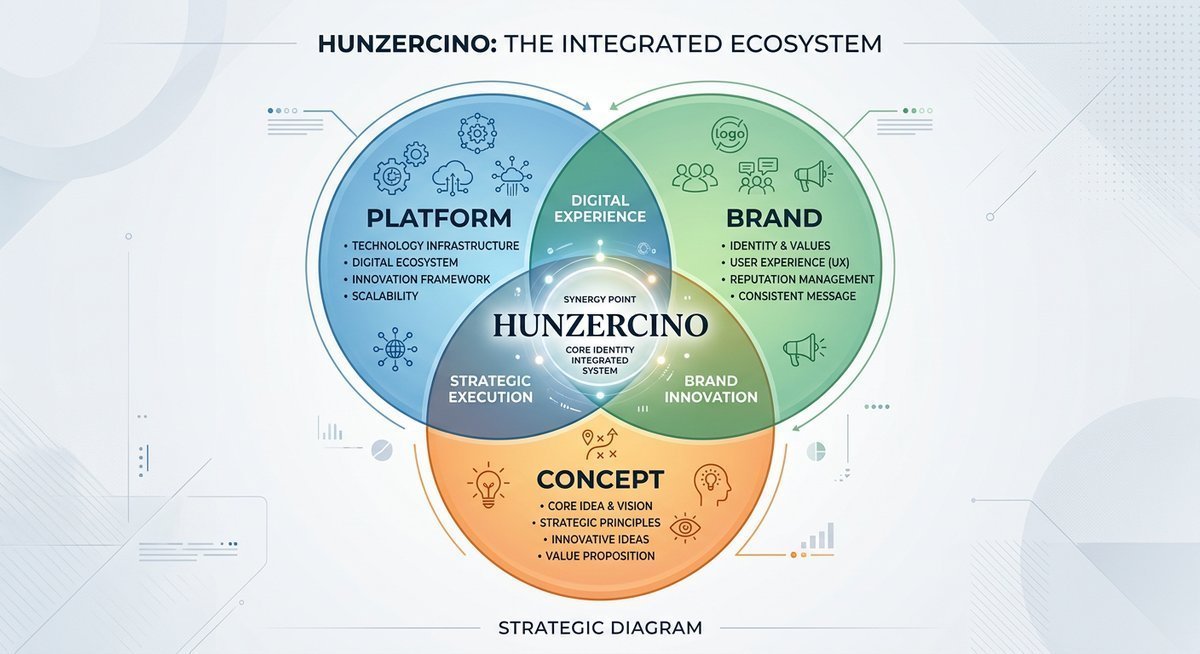
Hunzercino started showing up across design forums, lifestyle blogs, and branding conversations sometime around 2024 — a coined word with no Wikipedia entry, no official trademark filing, and no single agreed-upon definition. That ambiguity is part of the appeal. Depending on who uses it, the term refers to a creative philosophy, a digital identity framework, or a shorthand label for building an online presence that actually lasts.
The term has gained enough traction to generate its own search traffic, yet most existing coverage barely scratches the surface. Kea Home describes it as a “lifestyle concept transforming modern digital art.” Vents Magazine frames it as “shorthand for a durable, human-centered approach to building and operating in the digital world.” A Malaysian tech blog positions it as an emerging platform altogether. Three sources, three different angles — and none of them wrong, exactly.
What follows pulls from those existing references, cross-referenced with established research on digital branding and creator economics, to map out what this concept actually means in practice.
What Is Hunzercino?
Hunzercino is a coined digital term that functions as a creative philosophy centered on intentional identity, originality over imitation, and platform-independent audience building. The word itself has no dictionary entry — it was engineered to feel distinctive, borrowing the Italian diminutive suffix -cino (the same morphological pattern behind cappuccino and maraschino) grafted onto a proper-noun-style root.
That construction is deliberate. According to research published in the Journal of Applied Linguistics, coined brand names that blend familiar phonetic elements with novel roots generate stronger recall than purely invented words. Hunzercino follows that pattern precisely — foreign enough to stand out, familiar enough to feel intentional.
The term resists a single clean category. Early adopters use it in at least three distinct ways:
| Usage Context | How Hunzercino Functions | Who Uses It This Way |
|---|---|---|
| Creative Philosophy | A set of principles for building authentic digital identity — originality first, trend-chasing last | Digital artists, illustrators, independent designers |
| Content Framework | An operational model for durable online presence: consistent output, owned channels, transferable skills | Content strategists, brand consultants, marketing teams |
| Platform Label | A branded name applied to specific digital spaces or channels operating under these principles | Creators in Southeast Asia, lifestyle bloggers, niche community builders |
That flexibility is a feature, not a bug. Kea Home’s coverage emphasizes the creative philosophy angle, noting it is “about building a creative identity that belongs entirely to you.” The Vents Magazine framing leans harder into the operational framework: “pragmatic product thinking, content that compounds over time, and resilient systems.” Both descriptions are accurate — they just describe different facets of the same underlying idea.
Origins and Etymology of Hunzercino
No single origin story exists for the term, and claiming one would be dishonest. The term appears to have emerged organically from niche online communities — possibly beginning as a username, a project title, or an aesthetic label that gained independent momentum through social sharing.
The linguistic architecture tells part of the story. Italian diminutive suffixes like -cino, -ino, and -etto rank among the most productive word-formation tools in Romance languages, according to the Enciclopedia Treccani. Attaching -cino to a root word creates warmth, intimacy, and a sense of crafted smallness — qualities that translate remarkably well to digital branding, where approachability matters as much as distinctiveness.
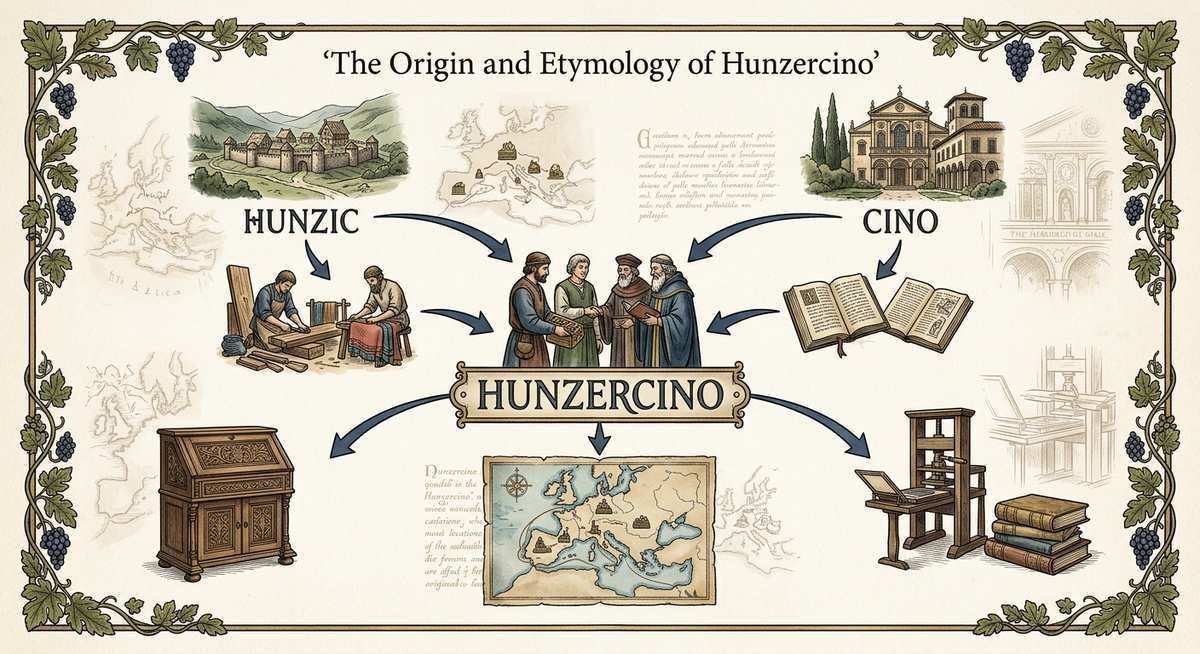
| Component | Linguistic Origin | Role in the Coined Word |
|---|---|---|
| Hunzer- | Probable proper noun or phonetic neologism | Provides uniqueness and a personal identity anchor |
| -cino | Italian diminutive suffix (same family as cappuccino, bambino) | Adds warmth, artisanal tone, and cross-cultural phonetic appeal |
Coined terms in the creator economy typically follow a traceable trajectory: obscure origin in a niche community, adoption by a small cluster of influential creators, then a tipping point where search volume spikes. The Pew Research Center has documented how internet subcultures generate and spread neologisms at an accelerating rate, with platforms like TikTok and Discord compressing the adoption cycle from years to weeks. Hunzercino fits that pattern — accumulating enough organic curiosity to register as a standalone search query without any centralized marketing push behind it. Similarly structured identifiers like YCBZPB00005102 follow a comparable pattern of emerging through niche contexts before attracting broader search interest.
Core Principles Behind the Hunzercino Framework
Three interlocking ideas form the operational backbone of this framework: intentional identity construction, creative consistency over viral chasing, and structural independence from any single platform. These are not abstract ideals. Each one maps to specific, repeatable behaviors that separate creators who build durable audiences from those who burn out chasing algorithmic trends.
Intentional Identity Construction
Creators aligned with this philosophy treat their digital presence as designed architecture rather than accumulated accident. Every visual choice, content category, and tonal decision traces back to a deliberate identity framework — who they are, who they serve, and what they refuse to compromise on.
Research from the Nielsen Norman Group on digital trust signals confirms that users form credibility judgments within seconds of encountering a new creator’s profile. Front-loading identity work — establishing a recognizable aesthetic, voice, and value proposition before scaling distribution — turns those snap judgments into lasting impressions rather than forgettable scroll-past moments.
Creative Consistency Over Viral Spikes
Trend-chasing produces traffic in bursts and loyalty almost never. This model inverts that equation: each piece of content is a deposit into a long-term reputation account, not a lottery ticket. Sustainable publishing cadence — reliable, predictable, and quality-filtered — outperforms reactive volume over any meaningful time horizon.
The Content Marketing Institute’s 2024 B2C Content Marketing Report found that organizations with documented content strategies were 3x more likely to report success than those operating reactively. The framework applies that same principle at the individual creator level: define the rhythm, protect the standard, let compounding do the work.
Platform Agnosticism and Portable Audiences
No platform is permanent. Vine died. MySpace collapsed. Twitter became X and lost significant creator trust in the process. This thinking treats platform dependency as a structural risk, not a growth strategy.
The practical move: maintain a primary owned channel (newsletter, portfolio site, podcast RSS) while using social platforms as discovery layers rather than foundations. Audience portability — an email list, a recognizable aesthetic, a documented body of work that transfers — is the real asset. Follower counts on any single platform are one metric among many, and not the most important one.
| Hunzercino Principle | Core Behavior | What It Replaces |
|---|---|---|
| Intentional Identity | Cohesive voice, aesthetic, and niche from day one | Posting whatever performs this week |
| Creative Consistency | Sustainable cadence, depth over volume | Reactive bursts tied to trending audio or hashtags |
| Platform Agnosticism | Owned channels plus multi-platform discovery | Single-platform algorithm dependency |
Hunzercino in Practice: How Creators and Strategists Apply It
These principles land hardest when treated as a working system rather than motivational advice. Two domains show the clearest adoption patterns: independent digital creators and brand strategy teams.
For Digital Creators
A visual artist operating across Instagram, Behance, and Substack can use this thinking to unify three disconnected presences under a single aesthetic signature. Consistent color palette. Recurring subject matter. A recognizable editorial voice that sounds the same whether it appears in a caption or a long-form essay. The focus stays on producing work that feels unmistakably theirs regardless of where it surfaces.
Kea Home’s coverage highlights this exact dynamic: creators “choose originality over imitation and give your unique creative energy” a coherent container. Early adopters reportedly favor “balanced compositions blending geometric and organic elements, warm earthy or bold color palettes, and distinctive typography mixing handwritten and clean fonts.”
For Brand Strategists
Marketing teams apply this framework by anchoring campaigns to a durable brand narrative rather than reactive content cycles. Vents Magazine’s coverage details the operational version: “design for reversibility using feature flags and staged rollouts,” “prioritize evergreen content over timely posts,” and “measure topic clusters and build internal linking structures.”
The strategic translation is straightforward: define three to five core identity pillars — values, visual tone, audience relationship style — and stress-test every content decision against them. Channels come and go. Identity pillars, if chosen well, compound.
Frequently Asked Questions
What does hunzercino mean?
Hunzercino is a coined term describing a creative philosophy and digital identity framework that emphasizes originality, consistent output, and platform-independent audience building. The word combines a proper-noun root with the Italian diminutive suffix -cino.
Is hunzercino a platform or a concept?
It functions primarily as a concept and operational framework. Some communities use it as a platform label for specific digital spaces, but most adoption centers on its principles rather than any single product or service.
Where did hunzercino come from?
The term emerged organically from niche online creator communities, likely originating as a username or project title that gained independent traction. No single founder or launch date has been documented.
Who uses hunzercino?
Digital artists, content creators, lifestyle bloggers, and brand strategists adopt these principles. Adoption has been particularly visible in Southeast Asian digital communities and English-language design forums.
How is hunzercino different from personal branding?
Personal branding typically focuses on self-promotion across channels. The framework adds two structural elements: a commitment to platform independence (building portable audiences) and prioritizing creative consistency over trend-reactive content production.
Can businesses use hunzercino principles?
Yes. Brand teams apply this thinking by anchoring content strategy to durable identity pillars rather than channel-specific optimization. The framework translates directly to editorial planning, cross-platform brand voice consistency, and evergreen content investment.
The Bigger Picture
The term occupies an interesting position in the digital creator vocabulary — specific enough to mean something actionable, flexible enough to adapt across disciplines. Whether it endures as a lasting term or gets absorbed into broader personal branding language remains an open question.
What is already clear: the principles behind hunzercino — intentional identity, creative consistency, platform portability — reflect a genuine shift in how serious creators think about building online. The algorithmic lottery model is losing credibility. Architectural thinking is replacing it. This concept just happens to be one of the more distinctive labels attached to that shift.