




General Warranty Deed: Maximum Buyer Protection
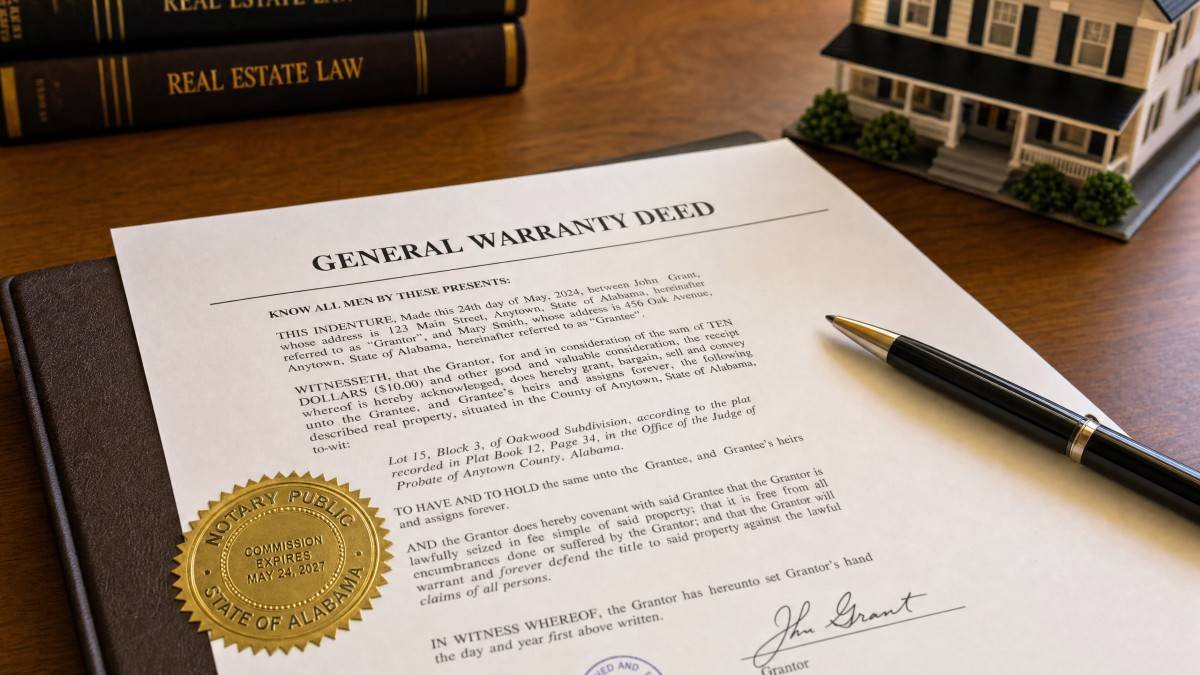
The general warranty deed is the most protective form of deed for buyers and is the standard instrument used in most arms-length residential real estate transactions in the United States. A general warranty deed contains a set of covenants – legally binding promises – in which the grantor (seller) warrants the title against all defects, claims, and encumbrances, not only those that arose during the grantor’s period of ownership, but throughout the entire chain of title going back to the original conveyance of the property.
The covenants typically included in a general warranty deed are: the covenant of seisin (the grantor warrants that they own the property and have the right to convey it), the covenant against encumbrances (the grantor warrants that there are no undisclosed liens or encumbrances on the property), the covenant of quiet enjoyment (the grantor warrants that the buyer’s possession will not be disturbed by a third party claiming a superior title), and the covenant of warranty (the grantor agrees to defend the buyer’s title against all claims). If any of these warranties are breached, the buyer has a legal claim against the grantor for damages.
Special Warranty Deed: Limited Protection
A special warranty deed – also called a limited warranty deed in some states – contains the same general covenants as a general warranty deed, but limits the grantor’s warranties to defects that arose only during the grantor’s period of ownership. The grantor makes no warranties regarding defects that may have existed before they acquired the property. This type of deed is commonly used in commercial real estate transactions, in sales by corporate entities, and in certain residential transactions such as REO (bank-owned) sales and estate sales.
From a buyer’s perspective, a special warranty deed provides less protection than a general warranty deed because it does not protect against title defects that predate the seller’s ownership. Buyers receiving a special warranty deed should ensure that they obtain a comprehensive owner’s title insurance policy, which provides protection against title defects regardless of when they arose – including those that predate the seller’s ownership and would not be covered by the special warranty deed’s covenants.
Quitclaim Deed: No Warranties

A quitclaim deed conveys whatever interest the grantor has in the property – if any – without making any warranties whatsoever regarding the quality or extent of that interest. The grantor is essentially saying: “I am transferring to you whatever ownership interest I may have in this property, but I make no promises about what that interest is or whether it is free of defects.” If the grantor has no ownership interest in the property, the quitclaim deed conveys nothing.
Quitclaim deeds are appropriate in specific, limited circumstances: transfers between family members (such as adding a spouse to the title or transferring property to a trust), removing a co-owner in a divorce settlement, and clearing a potential cloud on title by obtaining a quitclaim deed from a party who may have a claim to the property. A quitclaim deed is entirely inappropriate for a standard arms-length real estate sale, as it provides the buyer with no legal recourse against the seller if a title defect is later discovered. Buyers who are offered a quitclaim deed in a standard sale transaction should be extremely cautious and should consult a real estate attorney before proceeding.
| Deed Type | Warranties Provided | Common Use |
|---|---|---|
| General Warranty Deed | Full – entire chain of title | Standard residential sales |
| Special Warranty Deed | Limited – grantor’s ownership period only | Commercial, REO, estate sales |
| Quitclaim Deed | None | Family transfers, divorce, title clearing |
| Bargain and Sale Deed | Implied seisin only | Tax sales, foreclosures |
| Deed of Trust | Security instrument (not a conveyance deed) | Mortgage alternative in many states |
Deed of Trust: A Security Instrument
A deed of trust is not a conveyance deed in the traditional sense – it does not transfer ownership of the property from seller to buyer. Rather, it is a security instrument used in many states as an alternative to a traditional mortgage. In a deed of trust arrangement, the borrower (trustor) conveys the property to a neutral third party (trustee) to hold as security for the lender (beneficiary). If the borrower defaults on the loan, the trustee can conduct a non-judicial foreclosure sale without court involvement, which is typically faster and less expensive than the judicial foreclosure process required under a traditional mortgage.
Deeds of trust are used in approximately 30 states, including California, Texas, Virginia, and North Carolina. In these states, buyers will typically sign both a promissory note (the promise to repay the loan) and a deed of trust (the security instrument) at closing. The deed of trust is recorded in the public land records and creates a lien on the property that is released when the loan is paid in full.
The Importance of Title Insurance
Regardless of the type of deed received, buyers should always obtain an owner’s title insurance policy at closing. Title insurance protects the buyer against financial loss resulting from title defects that were not discovered during the title search – including forged deeds in the chain of title, undisclosed heirs, errors in the public records, and other issues that can cloud the buyer’s ownership rights. The one-time premium for an owner’s title insurance policy is typically a small fraction of the purchase price and provides protection for as long as the buyer or their heirs own the property.
Frequently Asked Questions
What is the difference between a deed and a title?
A deed is a physical legal document that transfers ownership of real property. Title is a legal concept representing the bundle of ownership rights associated with a property.
Which type of deed offers the most buyer protection?
The general warranty deed offers the most protection for buyers, including covenants warranting the title against all defects throughout the entire chain of title.
What is a quitclaim deed used for?
A quitclaim deed is most commonly used for transfers between family members, removing a co-owner in a divorce, or clearing a potential cloud on title. It is not appropriate for standard arms-length real estate sales.
What is a deed of trust?
A deed of trust is a security instrument used in many states as an alternative to a traditional mortgage, involving three parties: the borrower, the lender, and a neutral trustee.
How do I find out what type of deed I have?
You can find your recorded deed in the public land records maintained by your county recorder or register of deeds, searchable by property address or grantor name.
Conclusion
Understanding the type of deed you receive in a real estate transaction is not a technicality – it is a fundamental aspect of understanding the quality and extent of the ownership rights you are acquiring. A general warranty deed provides the broadest legal protections; a special warranty deed provides more limited protection; and a quitclaim deed provides none. Regardless of the deed type, an owner’s title insurance policy provides an essential additional layer of protection against title defects that were not discovered during the closing process. Buyers who understand these distinctions are better equipped to ask the right questions, evaluate the risks of any given transaction, and protect their investment in one of the most significant assets they will ever own.