



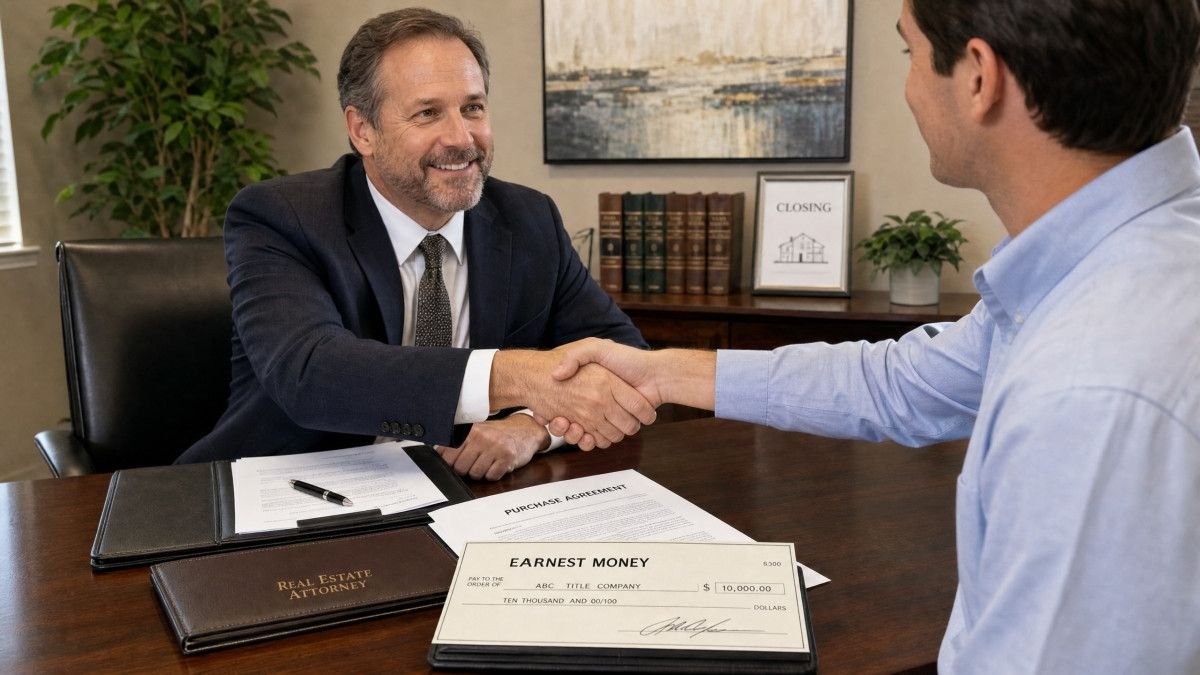
Earnest money is a deposit made by the buyer shortly after a purchase offer is accepted by the seller. It is typically paid by personal check, cashier’s check, or wire transfer and is held in an escrow account managed by a neutral third party – usually a title company, escrow company, or real estate brokerage – until the transaction closes or is terminated. The earnest money is not paid directly to the seller; it is held in trust until the conditions of the purchase contract are satisfied.
How Much Earnest Money Should You Offer?
The appropriate amount of earnest money depends on local market norms, the competitiveness of the market, and the purchase price of the property. In most U.S. markets, the standard earnest money deposit is 1 to 3 percent of the purchase price. On a $400,000 home, this translates to $4,000 to $12,000. In highly competitive seller’s markets, buyers often offer 3 to 5 percent or more to signal stronger commitment and differentiate their offer from competing bids.
From the seller’s perspective, a larger earnest money deposit is more reassuring because it represents a greater financial stake for the buyer in completing the transaction. A buyer who has deposited $20,000 in earnest money has a stronger financial incentive to close than one who has deposited $4,000. In a multiple-offer situation, a larger earnest money deposit can be a meaningful differentiating factor when two offers are otherwise similar in price and terms.
Where Is Earnest Money Held?

Earnest money is held in an escrow account by a neutral third party until the transaction is completed or terminated. The escrow holder – typically a title company, escrow company, or in some states, a real estate attorney – is legally obligated to disburse the funds only in accordance with the terms of the purchase contract and applicable law. The escrow holder does not take sides in any dispute over the earnest money; their role is to hold the funds impartially and release them only when both parties agree or a court orders disbursement.
In some states and transactions, the earnest money is held by the listing brokerage in their trust account rather than by a title or escrow company. Regardless of who holds the funds, buyers should always verify that the escrow holder is a licensed, reputable entity and should obtain a written receipt confirming the deposit. Never pay earnest money directly to the seller or to an individual rather than a licensed escrow holder.
When Is Earnest Money Refundable?
The refundability of earnest money is determined by the contingencies included in the purchase contract. Contingencies are conditions that must be satisfied for the transaction to proceed; if a contingency is not satisfied and the buyer elects to terminate the contract pursuant to that contingency, the earnest money is typically returned in full. The most common contingencies that protect the buyer’s earnest money are the financing contingency, the inspection contingency, and the appraisal contingency.
The financing contingency protects the buyer if their mortgage application is denied. If the buyer is unable to obtain financing despite good-faith efforts, they can terminate the contract and receive a full refund of their earnest money. The inspection contingency allows the buyer to terminate the contract or negotiate repairs based on the findings of a professional home inspection. The appraisal contingency protects the buyer if the property appraises below the contract price, allowing them to renegotiate or exit the contract without losing their deposit.
| Scenario | Earnest Money Outcome |
|---|---|
| Transaction closes successfully | Applied to down payment or closing costs |
| Buyer terminates within a valid contingency | Refunded to buyer in full |
| Buyer defaults without a valid contingency | Forfeited to seller |
| Seller defaults or cannot perform | Returned to buyer; buyer may also sue for damages |
| Mutual agreement to cancel | Disbursed per written cancellation agreement |
When Is Earnest Money at Risk?
Earnest money is at risk of forfeiture when the buyer terminates the contract without a valid contingency reason. Common situations in which buyers lose their earnest money include: deciding not to purchase the property after all contingency periods have expired, failing to close on time due to circumstances within the buyer’s control, and failing to secure financing due to actions taken by the buyer after the contract was signed (such as taking on new debt or changing employment).
Buyers can protect their earnest money by ensuring that all contingency periods are clearly defined in the contract, tracking contingency deadlines carefully, and communicating promptly with their agent and lender if any issue arises that might affect their ability to close. Never waive a contingency without fully understanding the financial risk of doing so, and never allow a contingency deadline to pass without either satisfying the contingency or formally extending it in writing.
Earnest Money vs. Down Payment
A common point of confusion for first-time buyers is the relationship between earnest money and the down payment. These are not the same thing, though they are related. The down payment is the portion of the purchase price that the buyer pays in cash at closing; the remainder is financed through the mortgage. The earnest money deposit is a preliminary payment made when the offer is accepted, which is subsequently credited toward the down payment or closing costs at closing.
For example, if a buyer is purchasing a $400,000 home with a 10 percent down payment ($40,000) and has paid $8,000 in earnest money, the buyer will bring $32,000 in additional funds to closing (the $40,000 down payment minus the $8,000 earnest money credit, plus closing costs). The earnest money does not reduce the total amount the buyer must pay; it simply represents an advance payment of a portion of those funds.
Frequently Asked Questions
What is earnest money?
Earnest money is a good-faith deposit paid by a buyer when submitting a purchase offer on a home, demonstrating serious intent to complete the transaction.
Is earnest money refundable?
Earnest money is refundable when the buyer terminates the contract pursuant to a valid contingency. It is generally not refundable if the buyer backs out without a valid contingency reason.
Can I back out after giving earnest money?
You can back out, but whether you get your deposit back depends on the circumstances. If you are within a valid contingency period, you should receive a full refund.
What happens to earnest money at closing?
At closing, the earnest money held in escrow is applied as a credit toward the buyer’s down payment or closing costs.
How much earnest money is typically required?
The standard earnest money deposit is 1 to 3 percent of the purchase price in most U.S. markets. In competitive seller’s markets, buyers often offer 3 to 5 percent or more.
Conclusion
Earnest money is a fundamental element of the home purchase process that serves the interests of both buyers and sellers. For sellers, it provides financial assurance that the buyer is committed to completing the transaction. For buyers, understanding how earnest money works – and how to protect it through properly structured contingencies – is essential to navigating the purchase process with confidence. By offering an appropriate deposit, ensuring all contingencies are clearly documented, and tracking deadlines carefully, buyers can demonstrate their seriousness to sellers while maintaining the financial protections they need to make a sound and informed purchase decision.