




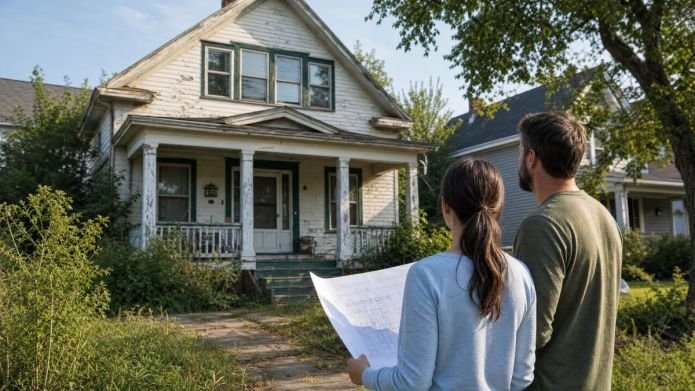
Thorough Inspection is Non-Negotiable
A comprehensive inspection by qualified professionals is the single most crucial step when considering a fixer-upper, as it uncovers hidden defects and provides a realistic scope of necessary repairs. Unlike move-in ready homes, fixer-uppers often harbor significant structural, mechanical, or environmental issues that are not immediately apparent, and failing to identify these early can lead to substantial unexpected costs and project delays. Engaging specialists for each major system ensures a detailed assessment of the property’s true condition.
Beyond a general home inspection, it is highly advisable to engage specialized inspectors for critical components such as the foundation, roof, electrical system, plumbing, and HVAC. For instance, an outdated electrical system might require a complete rewire, a cost that can easily exceed $15,000 to $20,000 depending on the home’s size and local labor rates [1]. Similarly, issues like mold, asbestos, or lead paint require professional remediation, adding considerable expense and complexity to the renovation budget.
A structural engineer can assess the integrity of the building’s frame, foundation, and load-bearing walls, identifying potential hazards or costly repairs. According to Sarah Johnson, a veteran real estate investor and contractor, “Many aspiring fixer-upper buyers get caught up in cosmetic appeal and overlook the bones of the house. The true cost lies in what you can’t see, and a detailed inspection report is your most valuable tool for negotiation and planning.”
Accurate Renovation Cost Estimation
Accurately estimating renovation costs is paramount for a fixer-upper, as underbudgeting can quickly derail a project and lead to financial strain. This process involves obtaining detailed quotes from multiple contractors for each planned repair and improvement, accounting for both materials and labor, and crucially, allocating a substantial contingency fund for unforeseen expenses. A realistic budget ensures the project remains financially viable and prevents overcapitalization.
Begin by creating a detailed scope of work, listing every repair and upgrade you intend to make. Obtain at least three bids from licensed and insured contractors for each major job. These bids should be itemized, providing clarity on material costs, labor, and project timelines. Remember that renovation costs can fluctuate based on market demand, material availability, and the complexity of the work. For example, a full kitchen remodel can range from $25,000 to $75,000 or more, while a bathroom remodel might cost between $10,000 and $30,000.
A critical component of any renovation budget is a contingency fund, typically 10% to 20% of the total estimated renovation cost. This fund is essential for covering unexpected issues that inevitably arise once walls are opened or demolition begins. Without a robust contingency, a project can quickly go over budget, forcing compromises on quality or leaving essential repairs unfinished. Always budget for more than you anticipate, as it is better to have extra funds than to run short mid-project.
Understanding Market Value and ROI
Evaluating the potential market value of a renovated fixer-upper and its projected return on investment (ROI) is essential to ensure the project is a sound financial decision. This involves analyzing comparable sales in the neighborhood, understanding the local housing market trends, and assessing the “after-repair value” (ARV) to determine if the investment will yield a profitable outcome. A property’s location significantly influences its appreciation potential and the ultimate value of renovations.
The location of a fixer-upper plays a significant role in its potential for appreciation and its ultimate value. Consider the neighborhood’s current market conditions and future development plans. A fixer-upper in a rapidly appreciating area with good schools and amenities holds more potential for a strong return on investment than one in a declining market. Look at recent sales of renovated homes in the vicinity to establish a realistic after-repair value (ARV).
The “ceiling” of home values in a particular neighborhood is a critical consideration. If your planned renovations will push the home’s value significantly above that of comparable properties, you risk not recouping your investment. This concept, known as overcapitalization, means you’ve spent more on the home than it can realistically sell for in its location. A good real estate agent can provide invaluable insights into local market dynamics and ARV estimates.
Understanding Your Skill Level and Time Commitment
Successfully renovating a fixer-upper demands a realistic assessment of your personal skill set, available time, and willingness to manage a complex project. Undertaking extensive DIY projects without adequate experience can lead to costly mistakes, delays, and compromised quality, while hiring professionals for every task can quickly inflate expenses. Balancing these factors is crucial for a smooth and successful renovation journey.
Many buyers are drawn to fixer-uppers with the intention of saving money through DIY projects. While some tasks, like painting or minor landscaping, are suitable for beginners, complex renovations involving electrical, plumbing, or structural work require professional expertise. Attempting these without proper skills can be dangerous and may not meet local building codes, leading to further expenses and potential legal issues.
Consider the time commitment involved. Renovations, especially significant ones, can take months or even years to complete. If you plan to live in the home during renovations, be prepared for disruption and inconvenience. If you plan to hire contractors, be ready to manage the project, coordinate schedules, and make timely decisions. A realistic self-assessment of your capabilities and available time is vital for avoiding burnout and ensuring the project’s successful completion.
Financing Options for Fixer-Uppers
Securing appropriate financing is a critical step for purchasing a fixer-upper, as traditional mortgages may not cover the extensive renovation costs required for these properties. Specialized loan products, such as FHA 203(k) loans or Fannie Mae HomeStyle Renovation mortgages, are designed to bundle both the purchase price and renovation expenses into a single loan. Understanding these options can make an otherwise daunting project financially feasible.
Traditional mortgages are typically based on the current appraised value of a home, which can be low for a fixer-upper in poor condition. This often leaves buyers needing separate financing for renovations, such as personal loans or credit cards, which usually come with higher interest rates. Specialized renovation loans offer a more integrated solution, allowing buyers to finance both the acquisition and the improvements with one mortgage.
For example, an FHA 203(k) loan is government-backed and allows buyers to finance up to $35,000 for non-structural repairs, or more for structural work, into their mortgage. Fannie Mae HomeStyle Renovation loans offer similar flexibility for a wider range of properties and renovation types. These loans often require detailed renovation plans and contractor bids as part of the application process, emphasizing the need for thorough pre-purchase planning.
Comparing Fixer-Upper vs. Move-in Ready
Deciding between a fixer-upper and a move-in ready home involves weighing potential cost savings and customization against convenience and immediate occupancy. While fixer-uppers offer the allure of sweat equity and personalized design, they demand significant time, effort, and financial reserves. Move-in ready homes, conversely, provide immediate comfort but often come at a premium price with limited customization opportunities.
| Feature | Fixer-Upper | Move-in Ready |
|---|---|---|
| Initial Cost | Lower | Higher |
| Renovation Effort | High (time, money, stress) | Low to None |
| Customization | High (design to taste) | Limited (minor cosmetic changes) |
| Time to Occupancy | Delayed (after renovations) | Immediate |
| Potential Equity Gain | High (sweat equity) | Lower (market appreciation) |
| Risk of Unexpected Costs | High | Low |
The choice between these two types of properties depends heavily on a buyer’s financial situation, risk tolerance, and lifestyle. A fixer-upper is ideal for those with a clear vision, a strong renovation budget, and the patience to oversee a project. It offers the reward of a custom home and potentially significant equity growth.
Conversely, a move-in ready home suits buyers who prioritize convenience, immediate occupancy, and a predictable budget. While it may cost more upfront, it eliminates the stress and uncertainty associated with renovations. Ultimately, the best choice aligns with individual priorities and long-term housing goals.
Frequently Asked Questions
What are the most critical inspections for a fixer-upper?
The most critical inspections for a fixer-upper include structural integrity, foundation, roof, electrical systems, plumbing, and HVAC. These components are often the most expensive to repair or replace, and identifying major issues early can prevent significant financial burdens. A thorough inspection by qualified professionals is essential before committing to a purchase.
How much should I budget for renovations on a fixer-upper?
Budgeting for renovations on a fixer-upper should include a detailed estimate for each project, plus a contingency fund of at least 10-20% for unexpected issues. Costs can vary widely based on the scope of work, materials chosen, and local labor rates. It is advisable to get multiple quotes from contractors and prioritize essential repairs first.
When does buying a fixer-upper make financial sense?
Buying a fixer-upper makes financial sense when the purchase price plus renovation costs are significantly less than the after-repair value (ARV) of comparable homes in the area. This ensures there is enough equity to justify the investment and potential risks. A careful market analysis and realistic renovation estimates are crucial for this calculation.
What are common pitfalls to avoid with fixer-uppers?
Common pitfalls include underestimating renovation costs, overlooking hidden structural problems, and failing to secure proper permits. Additionally, emotional attachment to a property can lead to overspending. It is important to remain objective, rely on professional advice, and have a clear understanding of your budget and timeline.
Buying a fixer-upper can be a rewarding endeavor, offering the chance to create a dream home and build substantial equity. However, success hinges on meticulous planning, realistic budgeting, thorough inspections, and a clear understanding of market values and personal capabilities. Approaching the process with caution, seeking expert advice, and preparing for the unexpected will significantly increase the likelihood of a positive outcome, transforming a neglected property into a valuable asset.
References
- HomeAdvisor. “How Much Does HVAC Installation Cost?”