




Maintaining a residential roofing system is one of the most critical responsibilities for any homeowner, as it serves as the primary defense against environmental elements. A comprehensive roof maintenance checklist ensures that minor issues, such as loose shingles or clogged gutters, do not escalate into catastrophic structural failures or costly interior water damage. Regular inspections and proactive care not only preserve the aesthetic appeal of a property but also play a vital role in extending the overall lifespan of the roofing materials and ensuring that manufacturer warranties remain valid over several decades, according to Portland tenant and leasing services.
Essential Seasonal Roof Care and Inspection Steps
A complete roof maintenance checklist should be executed at least twice a year, ideally during the spring and fall, to prepare for and recover from extreme weather conditions. Homeowners must prioritize inspecting shingles for signs of curling, cracking, or granule loss, while simultaneously verifying that all flashing and seals around penetrations remain watertight to prevent moisture infiltration into the home’s structure.
According to Owens Corning (2026), seasonal roof care is essential for identifying weathering and natural aging that can affect even the most durable designs over time [1]. During the spring, the focus should shift toward repairing any damage caused by winter ice or heavy snow loads. Conversely, the autumn inspection is primarily dedicated to clearing organic debris and ensuring the system is ready for the upcoming freeze-thaw cycles.
Homeowners should utilize a high-powered pair of binoculars to perform a ground-level assessment before considering the use of a ladder. Key indicators of distress include missing shingles, which expose the underlying roof deck, and “balding” shingles where the protective mineral granules have washed away. These granules are crucial for UV protection, and their absence significantly accelerates the degradation of the asphalt layer.
| Maintenance Task | Recommended Frequency | Primary Objective |
|---|---|---|
| Visual Shingle Inspection | Bi-Annually (Spring/Fall) | Identify cracks, curling, or missing components. |
| Flashing & Sealant Check | Annually | Prevent leaks around chimneys, vents, and skylights. |
| Debris Removal | Quarterly | Prevent moisture retention and organic growth. |
| Professional Inspection | Every 2-3 Years | Detect hidden structural or ventilation issues. |
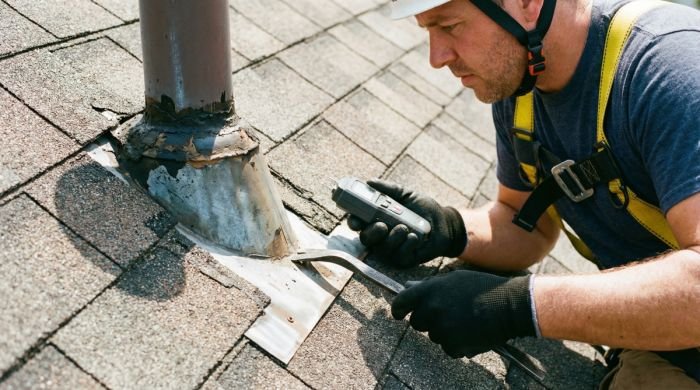
The integrity of the flashing—the metal pieces installed at joints and penetrations—is equally important. If flashing is rusted, dented, or missing fasteners, the risk of a leak increases exponentially. Ensuring these areas are tightly sealed against the elements is a fundamental step in any residential maintenance program, as previous repairs are often the first points of failure during severe storms.
Advanced Protection: Gutters, Drainage, and Attic Health
Maintaining a roof maintenance checklist requires a comprehensive approach that includes both the external drainage systems and the internal attic environment. Clogged gutters and poor ventilation are leading causes of premature roof failure, as they allow moisture to accumulate and damage the structural decking through rot or ice dam formation.
According to Budget Dumpster (2025), homeowners should clean their gutters at least twice a year—once in late spring and again in early fall—to prevent water from seeping under the roof structure [3]. When gutters are filled with leaves and organic debris, runoff water can back up underneath shingles, potentially overflowing onto the home’s siding and foundation. This prolonged exposure can lead to cracked siding or even serious foundation instability over time.
Beyond the gutters, the attic’s health is a critical indicator of roof performance. A balanced attic ventilation system permits moisture-rich warm air to exit through exhaust vents while allowing cooler, dry air to enter through intake vents. Without proper airflow, heat can build up in the summer, effectively “cooking” the shingles from the underside, while in the winter, it can cause snow to melt and refreeze into dangerous ice dams at the eaves.
Documentation and Warranty Compliance Strategies
A professional roof maintenance checklist is not merely a tool for home repair; it is a vital legal and financial document for insurance claims and manufacturer warranty compliance. Homeowners must systematically record every inspection and minor repair, as many manufacturers require proof of regular maintenance to honor their long-term material guarantees.
According to PHP Systems (2026), failing to conduct and document regular roof inspections can, in some cases, void the entire roof warranty [4]. To maintain compliance, homeowners should keep a dedicated logbook or digital folder containing dated photographs of the roof surface, receipts for professional gutter cleaning, and a signed checklist for each seasonal review. This documentation serves as undeniable proof of proper maintenance should a claim arise following a severe weather event.
| Documentation Requirement | Purpose | Recommended Format |
|---|---|---|
| Seasonal Inspection Log | Warranty Compliance | Signed and Dated Checklist |
| High-Resolution Photos | Proof of Condition | Digital Album (Spring/Fall) |
| Maintenance Receipts | Insurance Claims | Scanned PDF of Invoices |
| Repair History | Tracking Failures | List of Previous Patchwork |
The distinction between DIY maintenance and professional repairs is also crucial for warranty preservation. While a homeowner can safely perform gutter cleaning and ground-level visual checks, structural repairs or flashing replacements should typically be handled by certified contractors. Unauthorized DIY repairs on a warranted roof can lead to the immediate cancellation of coverage, leaving the homeowner fully responsible for future replacement costs.
Frequently Asked Questions
A comprehensive roof maintenance checklist often raises several questions regarding best practices and industry standards. Homeowners should understand the functional requirements of their roofing system to make informed decisions about its upkeep and long-term care.
What maintenance should be done on a roof?
Regular maintenance should include a biannual visual inspection of shingles, cleaning gutters twice a year, and ensuring that all attic ventilation remains unobstructed. Additionally, homeowners should trim overhanging tree branches to prevent physical damage and remove organic debris to avoid moisture retention.
What is the 25% rule in roofing?
The 25% rule states that if more than 25% of a roof’s surface area is damaged, the entire roof must be replaced to meet current building codes. This rule ensures that structural integrity is maintained and that partial repairs do not compromise the overall performance of the roofing system.
What are the 5 functional requirements of a roof?
A roof’s primary functional requirements include weather protection, thermal insulation, structural stability, fire resistance, and sound insulation. These five elements work together to ensure that the home remains safe, comfortable, and durable throughout its intended lifespan.
How long do 50 year shingles really last?
While labeled as “50-year” shingles, most high-quality asphalt shingle roofs typically last between 25 and 35 years in real-world conditions. Factors such as local climate, attic ventilation, and the consistency of the roof maintenance checklist significantly influence the actual longevity of the materials.
Does DIY maintenance void my roof warranty?
Routine DIY tasks like gutter cleaning and visual inspections generally do not void a warranty, but structural repairs or shingle replacements should be performed by certified professionals. Homeowners should consult their specific warranty documentation to understand the limitations on self-performed repairs.
Conclusion
A consistent and well-documented roof maintenance checklist is the most effective way for any homeowner to protect their investment and ensure long-term peace of mind. By performing seasonal inspections, maintaining clear drainage systems, and understanding the nuances of warranty compliance, individuals can significantly extend the life of their roofing materials. While minor tasks can be handled personally, the value of a professional inspection every few years cannot be overstated, as it provides a level of detail that is essential for preventing catastrophic failure.
References
1. Owens Corning (2026). Roof Maintenance Checklist: 11 Chores to Help Maintain Your Roof. https://www.owenscorning.com/en-us/roofing/blog/roof-maintenance
2. GAF (2025). Annual Maintenance and Roofing Tips for Every Homeowner. https://www.gaf.com/en-ca/blog/your-home/annual-maintenance-and-roofing-tips-for-every-homeowner-281474980327005
3. Budget Dumpster (2025). 8 Smart & Simple Roof Maintenance Tips. https://www.budgetdumpster.com/blog/roof-maintenance-inspections
4. PHP Systems (2026). 11 Step Roof Maintenance Checklist. https://www.phpsd.com/blog/11-step-roof-maintenance-checklist