



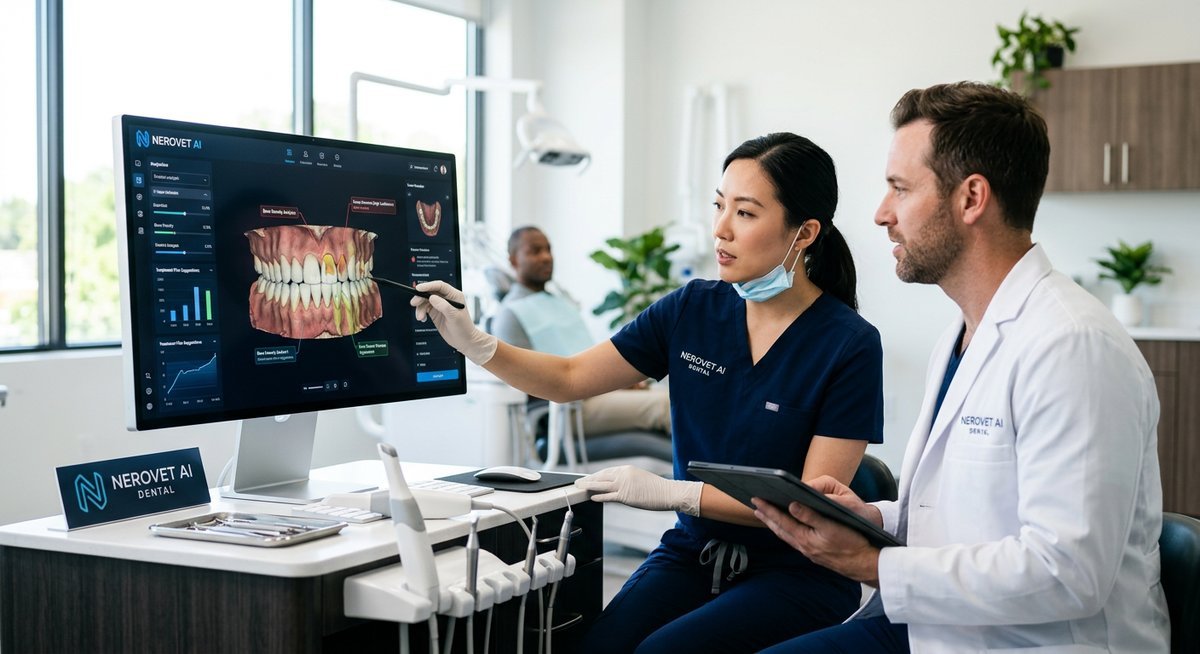
Nerovet is an AI-powered pet dental screening platform that lets veterinary clinics and pet owners upload photos of a dog or cat’s teeth for automated disease detection. The company operates at nerovet.com and uses computer vision to flag visible oral health issues like tartar buildup, gum inflammation, and early signs of periodontal disease.
Most competing “dental AI” companies target human dentistry. Nerovet carved a different path. Nerovet focuses exclusively on companion animals, filling a gap in a market where over 80% of dogs and 70% of cats develop dental disease by age three, according to the American Veterinary Dental College (AVDC). Pet dental problems remain one of the most underdiagnosed conditions in veterinary medicine, and Nerovet bets that accessible AI screening can change that.
What follows covers how Nerovet’s technology actually works, what it costs, where it fits in the broader dental AI market, and what the platform can and cannot do.
What Is Nerovet AI Dental Company?
Nerovet is a veterinary dental AI startup that offers photo-based dental health screening for cats and dogs through its web platform at nerovet.com. Pet owners upload JPEG, PNG, or WebP images (up to 10 MB each), and the AI analyzes visible dental conditions within seconds.
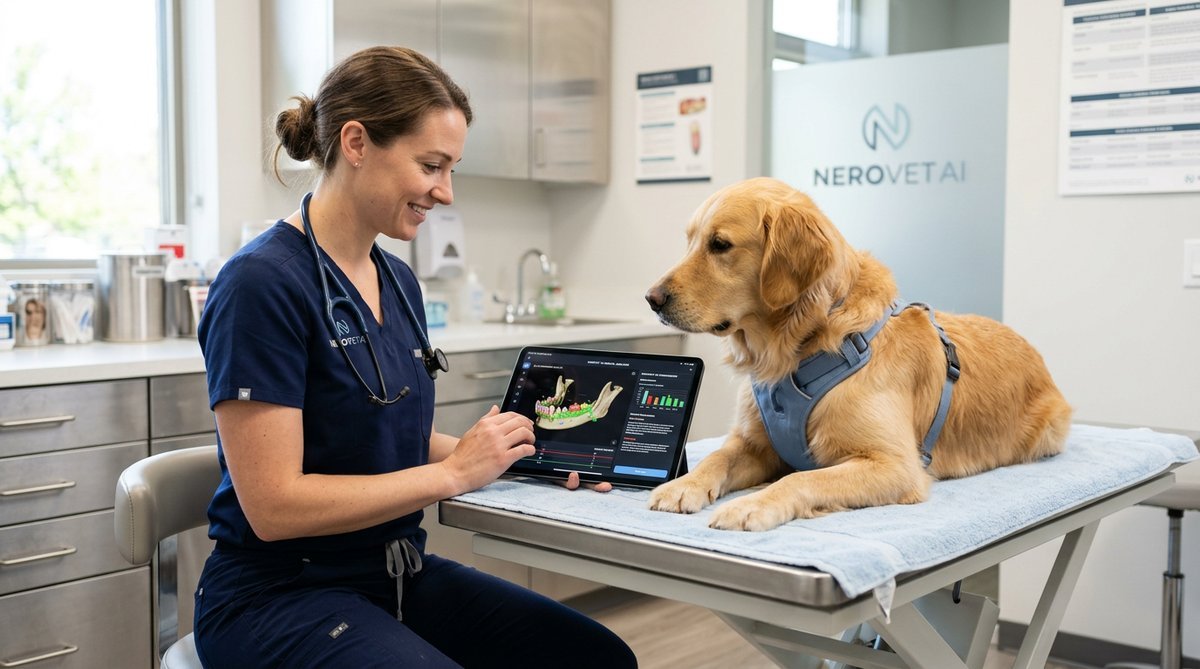
Consumer and clinic-facing platform
Nerovet serves two audiences. Individual pet owners can use the free tier to get a quick AI assessment of their pet’s dental health from home. Veterinary clinics integrate the platform into their workflow for faster preliminary screening before anesthesia-based dental procedures.
The company’s homepage tagline makes the positioning clear: “Get professional AI dental analysis to protect your pet’s health.” As of late 2025, Nerovet reported over 10,000 pet owners served and 10,000 total detections completed.
Core technology stack
Nerovet’s AI relies on machine learning, computer vision, and deep learning to process uploaded dental images. Nerovet’s AI scans for surface-level indicators of periodontal disease, tartar accumulation, gum redness (gingivitis), and visible signs of tooth resorption. The models are trained on veterinary-specific dental anatomy rather than repurposed from human dental imaging tools.
One important distinction: Nerovet analyzes photographs, not radiographs. This means the platform detects visible surface conditions but cannot identify subsurface pathology like bone loss or root resorption that requires dental X-rays taken under anesthesia. The company explicitly states: “This detection result is for reference only and does not serve as a medical diagnosis.”
| Feature | Details |
|---|---|
| Input format | JPEG, PNG, WebP (max 10 MB per file) |
| Species supported | Dogs and cats |
| Conditions detected | Tartar, gingivitis, periodontal disease indicators, tooth resorption signs |
| Detection type | Photo-based surface screening (not radiographic analysis) |
| Claimed accuracy | 95%+ (self-reported; no independent peer-reviewed validation published) |
| Processing speed | Results within seconds |
How Nerovet AI Dental Screening Works
The screening workflow takes three steps: upload a photo, receive AI analysis, and review the findings with a veterinarian for any necessary follow-up. The entire process completes in under a minute for pet owners using the platform from home.
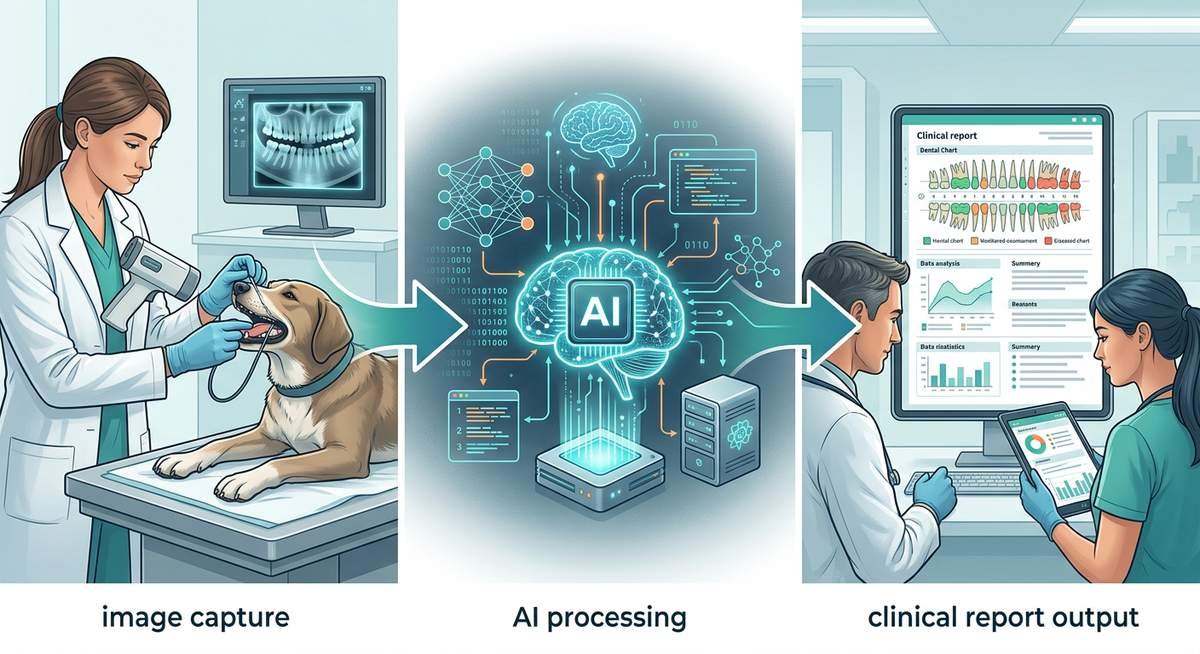
Photo upload and image processing
Pet owners or clinic staff capture clear photos of the animal’s teeth and gums, then upload them through nerovet.com/scan. It accepts standard image formats and runs them through its trained computer vision models. No specialized dental imaging equipment is required.
AI-driven condition flagging
The machine learning engine analyzes each image for visual markers of common dental conditions. The system flags areas of concern, marking tartar deposits, gum inflammation, and potential periodontal indicators. According to a 2024 meta-analysis published in Nature Evidence-Based Dentistry, AI diagnostic accuracy in dental applications ranges from 82% to 95% across multiple specialties, though that research focused on human dental X-ray analysis rather than pet photo screening.
Nerovet claims its own detection accuracy exceeds 95% for identifying common visible oral problems. That figure comes from the company’s internal data and has not been independently validated through published peer-reviewed studies.
Results and veterinary follow-up
Nerovet generates a report highlighting detected issues with visual annotations on the uploaded image. Nerovet recommends consulting a veterinarian for any flagged concerns, particularly since the photo-based analysis cannot detect problems beneath the gum line. Subsurface conditions like root resorption, periapical abscesses, and alveolar bone loss still require radiographic examination under anesthesia.
For veterinary clinics, the AI report works as a conversation tool during owner consultations, making abstract dental problems visible and concrete. Practices using AI diagnostic support tools in both human and veterinary settings have reported measurably higher treatment acceptance rates when owners can see annotated evidence of disease.
Nerovet Pricing and Access Tiers
Nerovet offers a freemium model with three access levels, making the platform accessible to individual pet owners while scaling for clinic use. Pricing is straightforward and publicly available.
| Plan | Price | Scans Per Day | Best For |
|---|---|---|---|
| Free (unregistered) | $0 | 1 | Quick one-time screening |
| Free (registered) | $0 | 3 | Regular pet owners |
| Pro | $9.90/month | Unlimited | Active pet owners, breeders |
| Lifetime | $199 one-time | Unlimited | Long-term users, multi-pet households |
Clinic-level pricing for veterinary practices reportedly ranges from $200 to $800 per month depending on case volume and features, though Nerovet’s public website does not confirm specific practice-tier pricing. Clinics interested in integration should contact Nerovet directly for current rates.
Data privacy consideration
Nerovet’s terms of service grant the company a “worldwide, non-exclusive, royalty-free license” to use, reproduce, and modify user-uploaded images. Pet owners and clinics uploading patient photos should factor this into their assessment, particularly clinics handling client-owned diagnostic images.
Nerovet in the Dental AI Market
Nerovet occupies a niche position in a rapidly expanding market. The global AI in dental market reached an estimated $559 million in 2025 and is projected to grow to $3.26 billion by 2034 at a compound annual growth rate of 21.78%, according to Towards Healthcare market research (2025). Most of that growth is concentrated in human dentistry, but veterinary dental AI is carving out its own territory.
Human dental AI leaders
The largest dental AI companies focus on human clinical imaging. Overjet, backed by $133 million in total funding, serves over 113 million Americans with FDA-cleared radiographic analysis. Pearl holds multiple FDA 510(k) clearances, including a December 2025 clearance for panoramic radiograph analysis. As of December 2025, 44 dental AI devices have received FDA clearance, with 18 new clearances granted in 2025 alone.
These platforms work with dental X-rays, not photographs. They detect subsurface pathology that photo-based tools cannot reach.
Where Nerovet differs
Nerovet operates in a fundamentally different category. Rather than competing with radiographic analysis platforms, it offers a lower-barrier entry point: photo-based screening accessible from a smartphone. The trade-off is clear. Photo analysis catches surface-level conditions but misses everything below the gum line.
| Factor | Nerovet | Human Dental AI (Overjet, Pearl) |
|---|---|---|
| Target patients | Dogs and cats | Human patients |
| Input type | Smartphone/camera photos | Dental radiographs (X-rays) |
| Detection scope | Visible surface conditions | Surface + subsurface pathology |
| FDA clearance | None confirmed | Multiple 510(k) clearances |
| Equipment needed | Camera or smartphone | Dental imaging hardware |
| Price entry point | Free (1 scan/day) | Enterprise/clinic pricing |
Regulatory status
Nerovet does not appear on any public FDA cleared device list. The company states it follows “global clinical standards” but has not disclosed specific regulatory approvals. This matters for veterinary clinics evaluating whether to integrate the platform into clinical decision-making workflows. For context, established human dental AI companies like Pearl and Overjet have invested heavily in FDA 510(k) clearance processes, and the regulatory gap is one of the clearest distinctions between Nerovet and its human-side counterparts.
Pet Dental Disease: Why Early Screening Matters
Periodontal disease is the most common clinical condition in adult dogs and cats, and it is overwhelmingly underdiagnosed. The American Veterinary Dental College reports that roughly 80% of dogs and 70% of cats show signs of dental disease by age three. Pet dental services account for just 6.4% of total veterinary practice revenue, according to industry reports, suggesting a massive gap between disease prevalence and treatment rates.
The pet dental health market reflects this unmet need. Grand View Research valued the global pet dental care market at $8.3 billion in 2024, projecting growth to $16.8 billion by 2034 at a 7.3% CAGR.
Cats face unique risks
Tooth resorption affects an estimated 28% to 67% of domestic cats, depending on the study and detection method used. This condition is painful, progressive, and nearly impossible to spot without dental imaging. Feline patients also develop stomatitis and gingivitis at rates that make regular screening particularly valuable for multi-cat households and breeders.
The case for AI-assisted screening
Traditional veterinary dental exams depend entirely on visual inspection during anesthesia-based procedures. Between regular checkups, dental conditions progress silently. Photo-based AI screening tools like Nerovet offer a way to catch visible warning signs between clinic visits, giving pet owners an early indicator that a professional examination is needed.
The technology is not a replacement for clinical exams. It is a triage layer that can prompt earlier intervention, particularly for owners who might otherwise wait until symptoms become obvious.
Limitations and What Nerovet Cannot Do
Nerovet’s photo-based approach introduces inherent limitations that pet owners and veterinary professionals should understand before relying on its results.
Surface-only detection
Nerovet analyzes photographs, not radiographs. Any pathology below the gum line falls outside the detection window. Bone loss, root resorption, periapical abscesses, and early-stage furcation involvement all require dental X-rays taken under anesthesia. A clean Nerovet scan does not mean a clean bill of dental health.
No independent accuracy validation
Nerovet claims 95%+ accuracy for detecting common visible oral problems. That number is self-reported. No independent, peer-reviewed study has validated this figure against controlled datasets with veterinary dental specialist assessment as the reference standard. Clinics should request Nerovet’s internal validation methodology and data before treating the platform’s outputs as clinically reliable.
Photo quality dependency
AI screening accuracy depends heavily on image quality. Blurry photos, poor lighting, or incomplete coverage of the dental arcade will degrade results. Getting a clear photo of a pet’s teeth without anesthesia is not always straightforward, particularly with cats or anxious dogs.
- Cannot detect subsurface pathology (bone loss, root resorption, abscesses)
- Accuracy claims lack independent peer-reviewed verification
- Photo quality directly impacts screening reliability
- Not a substitute for professional dental examination under anesthesia
- Terms of service grant Nerovet rights to use uploaded images
Frequently Asked Questions
What is Nerovet AI dental company?
Nerovet is an AI-powered pet dental screening platform at nerovet.com that uses computer vision to analyze uploaded photos of dogs’ and cats’ teeth, flagging visible signs of dental disease like tartar, gingivitis, and periodontal indicators. The platform serves both individual pet owners through a freemium model and veterinary clinics through subscription plans.
Is Nerovet for human or pet dentistry?
Nerovet is built exclusively for pet dentistry, specifically dogs and cats. Despite numerous online articles describing it as a human dental AI company, the platform’s official website (nerovet.com) and product functionality confirm it is a veterinary dental screening tool for companion animals.
How much does Nerovet cost?
Nerovet offers free access with 1 scan per day (unregistered) or 3 scans per day (registered). The Pro plan costs $9.90 per month with unlimited scans. A Lifetime plan is available for a one-time payment of $199. Veterinary clinic pricing reportedly ranges from $200 to $800 per month depending on volume.
How accurate is Nerovet AI screening?
Nerovet claims detection accuracy exceeding 95% for common visible oral conditions. This figure is based on the company’s internal data and has not been independently validated through peer-reviewed research. The platform analyzes photos rather than X-rays, so it cannot detect subsurface dental problems.
Does Nerovet have FDA clearance?
Nerovet does not appear on any public FDA cleared device list as of March 2026. The company states it follows “global clinical standards” but has not publicly confirmed specific regulatory approvals. By comparison, human dental AI platforms like Pearl and Overjet hold multiple FDA 510(k) clearances.
Can Nerovet replace a veterinary dental exam?
No. Nerovet is a screening and triage tool, not a diagnostic replacement. The platform explicitly states its results are “for reference only” and recommends consulting a professional veterinarian for any flagged concerns. Full dental examinations under anesthesia remain the clinical standard for complete oral health assessment.
What species does Nerovet support?
Nerovet currently supports dental screening for dogs and cats. The platform’s AI models are trained on species-specific dental anatomy for these two companion animal types. Support for additional species has not been publicly announced.
Conclusion
Nerovet has built something genuinely different in the dental AI space: a photo-based screening tool designed specifically for pets, accessible from a smartphone, with a free tier that removes the cost barrier for initial use. In a market dominated by radiograph-focused human dental AI platforms backed by FDA clearances and enterprise pricing, Nerovet’s approach trades diagnostic depth for accessibility.
Nerovet works best as an early warning system. It catches visible surface conditions that might otherwise go unnoticed between veterinary visits, prompting owners to seek professional care sooner. It does not replace X-rays, clinical exams, or veterinary expertise.
For pet owners, the free tier is worth trying. For veterinary clinics evaluating integration, the key questions are accuracy validation, regulatory status, and data privacy terms. A live demo through nerovet.com is the most direct way to assess whether the platform fits a specific practice’s needs.