




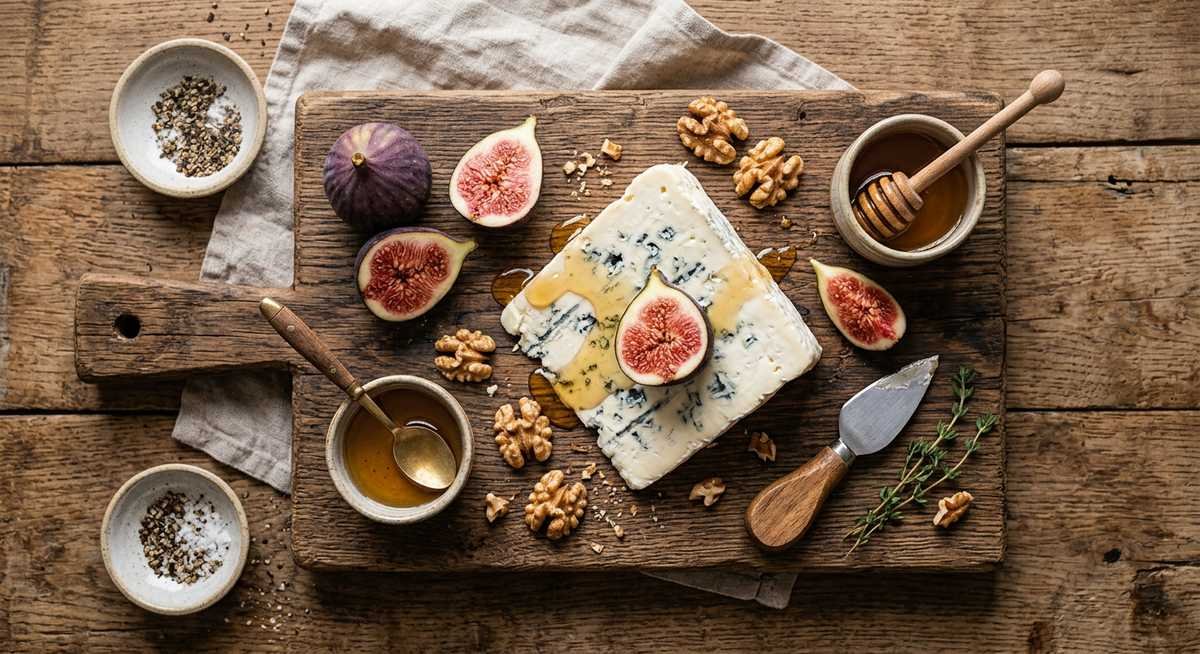
Masgonzola is a layered Italian cheese that combines fresh mascarpone with Gorgonzola Dolce, producing a spreadable, blue-veined delicacy that delivers the tang of blue cheese at roughly half the intensity. Artisan producers in Lombardy, Northern Italy created it to give gorgonzola lovers a softer on-ramp — and cheese skeptics a reason to reconsider.
What Is Masgonzola?
Masgonzola is a soft, semi-spreadable Italian fusion cheese created by layering or blending two classics — mascarpone and Gorgonzola Dolce — producing a blue-veined, ivory-colored cheese that is noticeably milder and creamier than any straight blue cheese. The name is a portmanteau: “Mas” from mascarpone, “gonzola” from gorgonzola.
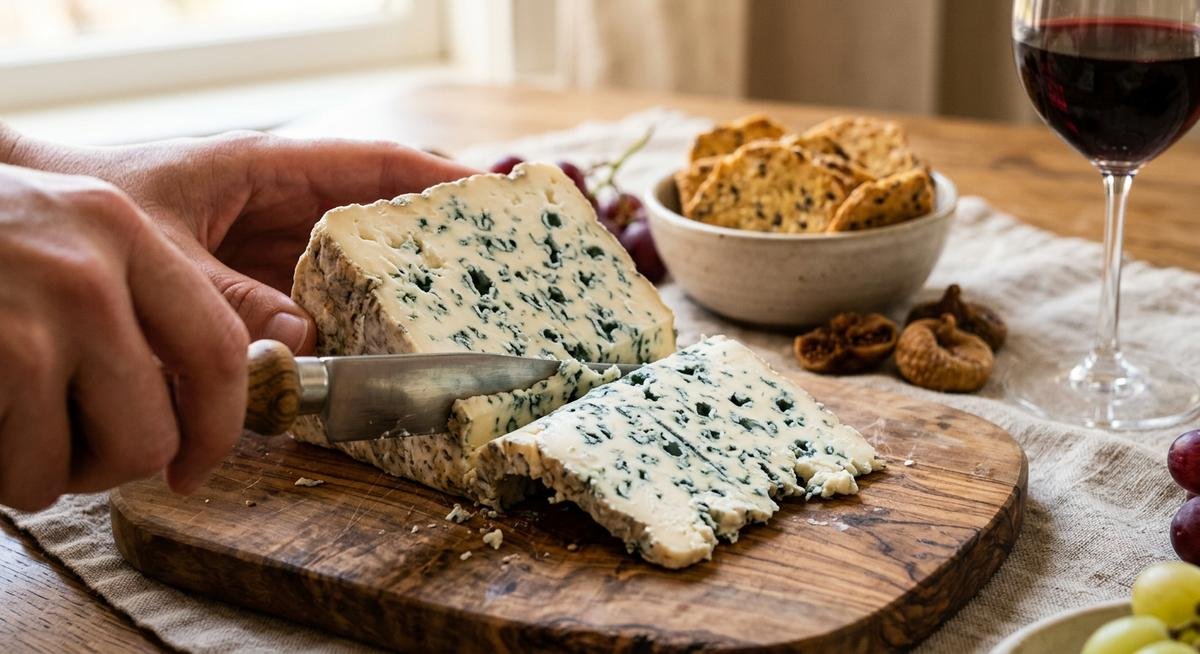
Its construction matters. Producers don’t simply stir the two together. The traditional method layers fresh cloud-like mascarpone between slabs of young Gorgonzola Dolce aged only about 50 days, then briefly presses the composite to let the two characters meld without either disappearing into the other. Each slice reveals the layering — a visual promise of what’s coming on the palate.
That contrast is what makes it stand out on a cheese board: bold blue cheese tradition in the same bite as a dessert-quality creaminess. Gorgonzola has been produced in Italy for over a thousand years; mascarpone has been a staple in tiramisu and pastas for centuries. Masgonzola is the conversation those two never had until relatively recently.
The Lombardy Origins of Masgonzola
Masgonzola comes from Gorgonzola’s home region in Northern Italy, where the Po Valley’s rich dairy farming has driven cheese innovation for more than a millennium. Artisan producers in Lombardy and neighboring Piedmont — already operating within the DOP-protected gorgonzola tradition, began experimenting with the fusion specifically to address one persistent market problem: gorgonzola’s intensity turns away a significant share of casual cheese eaters.
By folding in mascarpone, a cheese technically made from cream rather than milk, cheesemakers could keep gorgonzola’s defining blue veins and earthy bite while reducing the overall sharpness dramatically. The result proved commercially interesting enough that the concept spread beyond single artisan dairies, appearing in gourmet shops in Milan and eventually international specialty retailers.
Unlike Gorgonzola Naturale (the aged, crumbly variety), the gorgonzola component in masgonzola is always the Dolce type, young, soft, and relatively mild. That choice isn’t accidental. Dolce ages for roughly 50 days versus 6 to 12 months for the Naturale, keeping fat content high and pungency low enough to harmonize with mascarpone’s sweetness rather than overwhelm it.
Flavor Profile and Texture of Masgonzola
Masgonzola’s flavor opens with mascarpone’s rich, buttery sweetness, then transitions into Gorgonzola Dolce’s mild earthiness and gentle tang, finishing clean and savory. In texture, it’s mousse-like and spreadable, closer in consistency to a compound butter than a traditional blue cheese.
The first bite is almost disorienting if you arrive expecting a standard blue cheese experience. Mascarpone hits first: rich, buttery, faintly sweet, coating the tongue with something closer to whipped cream than traditional cheese. About two seconds later, the gorgonzola asserts itself, a gentle earthiness, a mild tang, a whisper of the characteristic sharpness that blue cheese fans recognize. Then both fade together into a clean, savory finish.
Texture-wise, masgonzola is exceptionally spreadable straight from the fridge (though it reaches peak creaminess at room temperature after about 30 minutes). It doesn’t crumble like aged blues. It doesn’t have the rubbery resistance of younger mozzarella. It sits closer to a premium compound butter in consistency, which is part of why it melts so usefully into hot dishes.
For context: on a rough scale where mascarpone scores 0 for pungency and Gorgonzola Naturale scores 10, Gorgonzola Dolce sits around 4, and masgonzola typically lands between 2 and 3. That positioning is deliberate, accessible enough for people who’ve always found blue cheese “too much,” while retaining enough personality to satisfy those who love it.
How to Use Masgonzola in the Kitchen
Masgonzola works in pasta, risotto, pizza, stuffed pasta, and cheese boards. Its mascarpone base melts cleanly without breaking, making it one of the most forgiving cheeses for hot applications. In every case, less is more, its concentrated richness amplifies a dish well beyond what the quantity suggests.
It melts cleanly and without separation in heat, which makes it one of the more forgiving cheese additions in hot applications. Stir a few tablespoons into just-cooked risotto off the heat, and it produces a silky, faintly tangy sauce without any of the grainy separation you’d get from a sharper blue. The same logic applies to gnocchi and fresh pasta, it becomes the sauce rather than a topping struggling to integrate.
Pasta and risotto: Add 60-80g of masgonzola per serving of risotto just after removing from heat. Fold gently to melt without cooking the cheese further. Works particularly well with butternut squash, mushroom, or radicchio bases where a mild blue note complements bitterness.
Pizza and flatbreads: Dot masgonzola on pizza dough after baking (or in the final two minutes of cooking to prevent overcooking). Classic pairings: caramelized onion and prosciutto, or pear and arugula. The cheese won’t brown aggressively, it pools into creamy spots rather than forming a crust.
Cheese boards: Position masgonzola as the “gateway blue” on a board designed for mixed audiences. Slice to reveal the layering, and pair with honeycomb and fresh figs on one side, walnuts and dried apricots on the other. It bridges the board between mild fresh cheeses and sharper aged varieties.
Stuffed pasta: Used as a filling for ravioli or tortellini, masgonzola delivers a sophisticated, creamy interior far milder than a pure gorgonzola filling, suitable even for guests who typically avoid blue cheese dishes.
Masgonzola vs. Gorgonzola vs. Mascarpone: Key Differences
The three cheeses share Italian origins and dairy DNA, but they occupy completely different positions in the kitchen. The comparison table below uses verified characteristics from Italian cheese tradition and standard dairy industry data.
| Feature | Masgonzola | Gorgonzola Dolce | Mascarpone |
|---|---|---|---|
| Base ingredients | Mascarpone + Gorgonzola Dolce | Full-fat cow’s milk | Heavy cream + acid (citric/tartaric) |
| Pungency (0-10) | 2-3 | 4-5 | 0 |
| Texture | Semi-soft, spreadable, mousse-like | Soft to semi-soft, slightly crumbly | Thick, silky, dense cream |
| Color | Ivory with blue-green veining | White/cream with blue veins | Pure ivory/cream white |
| Best uses | Pasta, risotto, cheese boards, pizza | Salads, pasta, polenta, pizza | Tiramisu, cheesecakes, cream sauces |
| Shelf life (opened) | 5-7 days refrigerated | 7-10 days refrigerated | 3-5 days refrigerated |
| Approx. fat content | 30-35% (blended) | ~28-31% | ~40-47% |
| Entry-level appeal | High (softened blue experience) | Medium | Very high (no blue) |
According to data from the Italian cheese production tradition documented by food scientists, mascarpone contains roughly 40-47% fat, higher than most cheeses, which is why it contributes such pronounced richness to the masgonzola blend. The Gorgonzola DOP consortium tracks production standards that specify Dolce must be aged no fewer than 45 days and no more than about 60 before it qualifies as “young” for blending purposes.
Serving, Pairing, and Storage
Serve masgonzola at room temperature after a 25-30 minute rest from the fridge. Pair it with full-bodied Italian reds or sweet dessert wines, fresh figs, walnuts, and honey. Stored in an airtight container at 2-3°C, it keeps 5-7 days after opening.
Masgonzola performs best at room temperature: removing it from the fridge 25-30 minutes before serving lets the mascarpone layer soften fully. Cold masgonzola is denser and less expressive, serviceable in cooked dishes, but underperforming on a board.
Wine pairings:
- Barolo or Chianti Classico: Full-bodied Italian reds match the cheese’s richness without competing with its mild tang. The tannins clean the palate between bites.
- Late-harvest Riesling or Sauternes: Sweet dessert wines mirror the mascarpone’s sweetness and amplify the honey notes when served with figs.
- Prosecco or Franciacorta: The effervescence cuts through the fat, making it feel lighter on the palate, a good choice for a cocktail-hour cheese board.
Food pairings that work:
- Fresh figs and pears (sweetness contrasts the tang beautifully)
- Toasted walnuts and hazelnuts (texture and a complementary earthiness)
- Acacia or wildflower honey (enhances mascarpone’s natural sweetness)
- Crusty sourdough or olive oil crackers (neutral base that doesn’t compete)
- Prosciutto crudo or bresaola (salty, cured meat plays perfectly against creamy cheese)
Storage: Wrap cut masgonzola tightly in wax paper, then store in an airtight container in the coldest part of the fridge (ideally 2-3°C / 35-38°F). Consume within 5-7 days of opening. Avoid plastic wrap directly on the cut surface, it can trap moisture and accelerate spoilage. Don’t freeze masgonzola: the emulsion breaks on thawing, leaving a watery, grainy texture that destroys the mousse-like quality the cheese is known for.
A wheel of masgonzola placed at the center of a dinner board, surrounded by honey, figs, and a handful of hazelnuts, consistently disappears before sharper cheeses alongside it. That’s not coincidence, it’s the accessibility factor working exactly as the Lombard artisans designed it.
Where to Find and Buy Masgonzola
Outside Italy, masgonzola is most reliably found at specialty Italian delicatessens, gourmet grocery chains with curated cheese counters, and online artisan cheese retailers that ship with cold-chain packaging. Availability is expanding but still concentrated in urban markets and specialty food networks.
- Specialty Italian delicatessens, Look for Italian delis stocking DOP cheeses. Any shop carrying Gorgonzola Naturale will often carry the Dolce variety, and many now stock or can order masgonzola on request.
- Gourmet grocery chains, Larger stores with curated cheese counters (think Whole Foods, Eataly, independent fine food retailers) increasingly stock masgonzola, particularly in urban markets.
- Online specialty retailers, Artisan cheese subscription services and Italian food importers ship masgonzola with proper cold-chain packaging. Expect a 2-3 day maximum delivery window for fresh cheese shipments.
- Direct from Italy, Several Lombard producers now ship directly to European and North American customers through their own e-commerce platforms, typically in 150g to 200g portions.
If masgonzola proves genuinely unavailable, the closest approximation is a half-and-half mixture of whipped mascarpone and softened Gorgonzola Dolce by hand, it won’t have the same layered texture, but hits a comparable flavor profile for cooking purposes.
Frequently Asked Questions About Masgonzola
What does masgonzola taste like?
Masgonzola tastes creamy and mildly sweet on first contact, followed by a gentle earthy tang from the gorgonzola component, finishing with a savory richness. It’s notably milder than any standalone blue cheese, closer to a flavored cream cheese than a traditional blue, with just enough character to stay interesting.
Can people who dislike blue cheese enjoy masgonzola?
Often yes. The mascarpone component reduces gorgonzola’s intensity by roughly half, and the resulting profile sits well outside what most people identify as “blue cheese taste.” Many self-described blue cheese avoiders find masgonzola enjoyable, particularly when paired with honey or sweet fruit to offset the tang further.
How long does masgonzola keep once opened?
Masgonzola stays fresh for 5-7 days after opening when stored in an airtight container in the coldest part of the refrigerator (2-3°C / 35-38°F). Signs of spoilage include off odors, visible pink or black mold (distinct from the intentional blue-green veins), or a slimy surface texture.
Can masgonzola substitute for gorgonzola in recipes?
Masgonzola works as a gorgonzola substitute in dishes where a milder, creamier result is acceptable or preferred, risotto, pasta sauces, pizza, and cheese boards all adapt well. In recipes where bold blue flavor is the point, such as gorgonzola polenta or sharp salad dressings, the substitution will noticeably reduce intensity. Adjust by using slightly more masgonzola by volume to compensate.
Is masgonzola a traditional or modern cheese?
Masgonzola is a modern artisan creation drawing on traditional Italian ingredients. Unlike Gorgonzola, which holds a DOP designation tracing back to the 9th century, masgonzola has no protected status and emerged relatively recently from Lombard artisan dairies as an innovation on existing forms rather than a centuries-old recipe. Both component cheeses, mascarpone and gorgonzola, carry deep Italian heritage; the fusion itself is the contemporary element.
What is the approximate nutritional content of masgonzola?
Masgonzola is a high-fat, calorie-dense cheese, as expected from a mascarpone-based product. A typical 30g serving contains approximately 100-120 calories, 9-11g of fat, 3-4g of protein, and under 1g of carbohydrate. These are estimates based on the blended composition of mascarpone (approx. 40-47% fat) and Gorgonzola Dolce (approx. 28-31% fat). Actual values vary by producer and blending ratio.
A small serving goes a long way, both on the palate and on the plate. That concentration of flavor and fat is precisely what makes masgonzola so effective in cooking. A single generous tablespoon transforms a plain risotto into something that tastes considerably more complex than it is.