




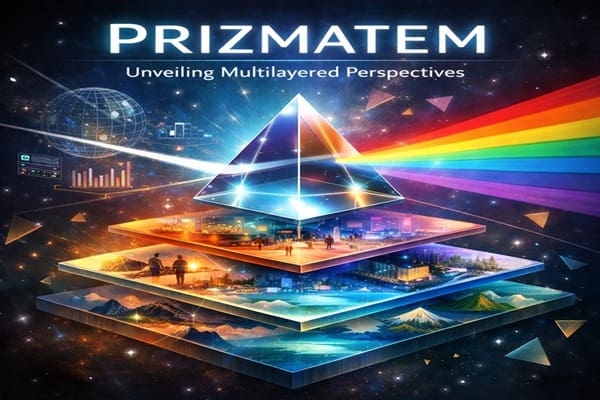
Ever stumbled across prizmatem and thought, “Okay… is this tech, philosophy, art, or some internet fever dream?” You’re not alone. I had the same reaction the first time I dug into it. And honestly? That confusion is part of the point.
Prizmatem isn’t a single app, product, or gadget you download and forget about. It’s more like a way of thinking one that blends creativity, perception, technology, and human experience into something layered and flexible. Think of it as a prism for ideas. One input. Multiple interpretations. Endless angles.
Let’s break it down together, friend-to-friend, without the jargon overload or academic snoozefest.
What Is Prizmatem, Really?
At its core, prizmatem is a conceptual framework that focuses on multiple perspectives, layered interpretation, and adaptive systems.
The name itself gives it away:
“Prizma” hints at a prism something that splits light into many colors.
“Tem” feels like system, element, or template, depending on who you ask.
Put them together and you get a mindset where one idea can reveal many meanings, depending on how you look at it.
IMO, that’s exactly why it resonates right now. We live in a world where single answers rarely cut it anymore.
Why Prizmatem Is Getting So Much Attention
Here’s the thing: modern life feels overwhelming.
We juggle data, opinions, visuals, emotions, and algorithms all day. Traditional linear thinking struggles to keep up. Prizmatem steps in and says, “Why force one perspective when you can explore several?”
That idea clicks across cultures, industries, and platforms, which explains its global appeal from the US and UK to India, Australia, and beyond.
People love prizmatem because it:
Embraces complexity without chaos
Encourages creativity without rigid rules
Adapts instead of dictating
Makes sense in both digital and human contexts
And let’s be honest anything that helps us make sense of modern madness feels like a win.
The Core Principles Behind Prizmatem
1. Layered Thinking Beats Linear Thinking
Prizmatem treats information like stacked layers, not straight lines.
Instead of asking:
“What does this mean?”
You ask:
“What could this mean from different angles?”
This approach shows up in:
Design systems
Storytelling
Data visualization
Problem-solving models
FYI, this layered mindset often leads to better decisions because you see blind spots before they trip you up.
2. Perspective Shapes Reality
Prizmatem leans heavily on one idea: perception matters as much as facts.
Two people can see the same data and walk away with totally different conclusions. Prizmatem doesn’t fight that it embraces it.
That’s powerful in:
Education
Mental health frameworks
User experience design
Collaboration tools
Ever notice how a small shift in perspective changes everything? Yeah, prizmatem builds entire systems around that idea.
3. Adaptability Is Non-Negotiable
Rigid systems break. Flexible ones survive.
Prizmatem favors modular, adaptable structures that evolve with context, users, or environment.
That’s why many people associate prizmatem with:
AI-driven personalization
Interactive platforms
Creative technology
Immersive digital experiences
Static outputs feel outdated. Prizmatem thrives on motion.
Prizmatem in Real Life (Yes, It’s Not Just Theory)
Let’s make this practical.
Digital Creativity & Design
Designers love prizmatem-style thinking because it allows:
Interfaces that change based on user behavior
Visual layers that reveal deeper meaning
Interactive storytelling instead of flat narratives
Ever used an app that just gets you after a while? That adaptive feel aligns closely with prizmatem principles.
Education and Learning Models
Traditional education often pushes one “right answer.” Prizmatem challenges that.
Educators use similar thinking to:
Encourage critical thinking
Show multiple interpretations of the same concept
Improve engagement and memory
Students don’t just memorize they explore. Big difference.
Data Visualization and Decision-Making
Raw data overwhelms people fast. Prizmatem-inspired systems break data into:
Visual layers
Contextual insights
Interactive elements
This approach helps teams:
Spot patterns faster
Understand cause-and-effect relationships
Make confident decisions
Numbers feel less scary when they tell a story.
Is Prizmatem a Technology or a Philosophy?
Short answer: both.
Longer answer: prizmatem works like a bridge.
On one side, you have technology AI, interfaces, immersive tools. On the other, you have human thinking perception, creativity, emotion.
Prizmatem connects them.
That’s why it shows up in conversations about:
Creative tech
Cognitive frameworks
Future design thinking
Digital culture
It doesn’t replace tools. It changes how tools behave.
How Prizmatem Compares to Traditional Systems
| Traditional Thinking | Prizmatem Thinking |
|---|---|
| Linear workflows | Multi-layered systems |
| One correct answer | Multiple valid interpretations |
| Static outputs | Adaptive experiences |
| User adapts to system | System adapts to user |
Which one sounds more future-ready? Exactly.
The Psychology Behind Prizmatem
Here’s a fun angle people don’t talk about enough.
Prizmatem aligns closely with how the human brain actually works:
We process information in layers
Context changes meaning
Emotion affects interpretation
When systems reflect natural cognition, users feel less friction and more flow.
That’s why prizmatem-style platforms often feel intuitive even when they’re complex.
Global Relevance: Why Prizmatem Works Worldwide
Prizmatem avoids culture-specific assumptions.
Instead of pushing one worldview, it allows:
Local interpretation
Cultural flexibility
Context-based customization
That makes it appealing across:
Western analytical cultures
Eastern holistic traditions
Hybrid digital-first societies
One framework. Many lenses.
Common Misunderstandings About Prizmatem
Let’s clear a few things up.
Prizmatem is NOT:
A single software product
A buzzword without substance
A rigid methodology
A replacement for logic
Prizmatem IS:
A flexible conceptual framework
A way to handle complexity
A creativity amplifier
A perspective-driven system
Big difference.
Why Prizmatem Matters More Than Ever
We live in an era of:
Information overload
Rapid tech shifts
Conflicting narratives
Prizmatem doesn’t promise certainty. It promises clarity through exploration.
That mindset helps individuals and organizations:
Stay adaptable
Think critically
Design responsibly
Communicate better
And honestly? That feels refreshing :/
Also Read : Coyyn Explained: Features, Benefits, and How It Works
How to Apply Prizmatem Thinking Today
You don’t need fancy tools to start.
Try this:
Look at a problem from at least three perspectives
Ask how context changes interpretation
Break information into layers instead of summaries
Stay open to evolving conclusions
Congrats you’re already thinking in prizmatem terms.
FAQs About Prizmatem
What does prizmatem mean?
Prizmatem refers to a layered, perspective-driven framework that explores how meaning, data, and experiences change based on context and interpretation.
Is prizmatem a real technology?
Prizmatem isn’t a single technology. It’s a conceptual approach often applied within digital platforms, creative tools, and adaptive systems.
Who uses prizmatem concepts?
Designers, educators, developers, strategists, and creatives often use prizmatem-style thinking to handle complexity and improve engagement.
Is prizmatem related to AI?
Indirectly, yes. Many AI systems reflect prizmatem principles by adapting outputs based on user behavior and context.
Can prizmatem help with problem-solving?
Absolutely. It encourages multi-angle thinking, which leads to deeper understanding and better decisions.
Is prizmatem beginner-friendly?
Yes. While the idea sounds abstract, anyone can apply its principles by practicing layered thinking and perspective shifts.
Why is prizmatem trending online?
People crave frameworks that match real-world complexity. Prizmatem feels relevant, flexible, and human-centered.
Final Thoughts on Prizmatem
If I had to sum up prizmatem in one sentence, it’d be this: It helps us see more without forcing us to choose just one view.
Obsessed with quick answers, prizmatem invites curiosity. It rewards nuance. It respects complexity without drowning you in it.
So next time you face a messy problem or overloaded system, ask yourself what would this look like through another lens? That question alone puts you ahead of the curve.