




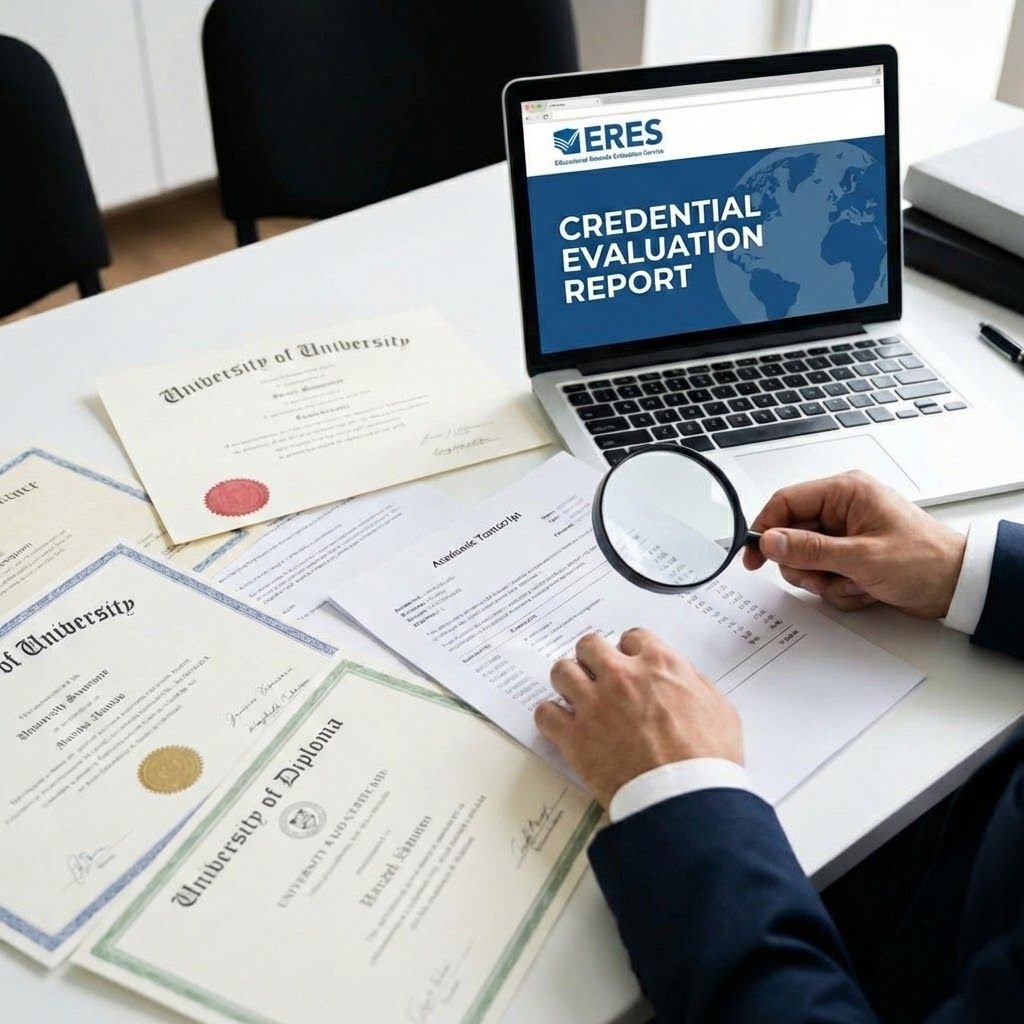
When individuals pursue education or employment opportunities across borders, their academic credentials often need to be assessed within a new system. At first glance, this process may appear to involve little more than reviewing transcripts and certificates. However, credential evaluation is a far more complex and analytical process. It goes beyond document verification to interpret academic history, validate institutional quality, and establish meaningful equivalency.
Understanding why this process is more comprehensive can help applicants, employers, and institutions make better-informed decisions when working with Credential Evaluation Services USA.
Beyond Verifying Authenticity
One of the most basic functions of credential evaluation is confirming that documents are authentic. This includes verifying transcripts, diplomas, and certificates to ensure they have not been altered or falsified. While this step is essential, it represents only the starting point.
Evaluation professionals must also determine whether the issuing institution is officially recognized within its home country. This requires familiarity with global education systems, including accreditation frameworks and government oversight. Without this layer of validation, even genuine documents may not carry meaningful academic or professional value.
Understanding Education Systems in Context
Education systems vary widely in structure, duration, and academic standards. A degree earned in one country may not directly align with the expectations of another. Credential evaluation involves analyzing these differences to determine how a qualification fits within a new educational framework.
For example, evaluators consider how many years of study were required, what level of education the credential represents, and how it compares to local standards. This contextual analysis ensures that qualifications are interpreted accurately rather than judged solely by their titles.
Professionals working in credential evaluation services in the USA often rely on extensive databases and comparative frameworks to assess these differences. Their expertise allows them to bridge gaps between education systems that may appear incompatible at first glance.
Analyzing Curriculum and Academic Rigor
A key component of credential evaluation is reviewing the content and rigor of an academic program. Two degrees with the same name may differ significantly in terms of coursework, specialization, and depth of study.
Evaluators examine course descriptions, credit hours, and learning outcomes to understand what the applicant has actually studied. This is particularly important in fields that require specific competencies, such as engineering, healthcare, or education.
By analyzing curriculum details, evaluators can determine whether a credential meets the academic standards expected in the United States. This level of analysis goes far beyond simply confirming that a degree exists.
Converting Grades and Academic Performance
Another critical aspect of credential evaluation is interpreting academic performance. Grading systems differ across countries, making it difficult to assess achievement without a standardized reference.
Evaluators convert grades into a format that aligns with U.S. grading scales, often translating them into a Grade Point Average (GPA). This process requires an understanding of grading distributions, passing thresholds, and honors distinctions in the original system.
Rather than applying a universal formula, evaluators consider the context of each grading system. This ensures that the converted results accurately reflect the applicant’s academic standing.
Supporting Academic and Professional Decisions
Credential evaluation plays a vital role in decision-making for universities, employers, and licensing boards. These stakeholders rely on evaluation reports to determine whether applicants meet specific requirements.
For academic institutions, evaluations help assess eligibility for admission or transfer credits. Employers use them to verify qualifications and ensure candidates possess the necessary educational background. Licensing bodies depend on evaluations to confirm that applicants meet professional standards.
Because these decisions can have long-term consequences, the evaluation process must be thorough, consistent, and evidence-based. This is why credential evaluation services usa emphasize accuracy and detailed analysis.
Addressing Complex and Non-Standard Cases
Not all academic pathways follow a traditional structure. Some applicants may have incomplete records, alternative credentials, or education from institutions that no longer exist. Others may come from countries with evolving education systems or limited documentation.
In such cases, credential evaluation requires investigative research and professional judgment. Evaluators may consult multiple sources, compare historical data, or assess partial information to reach a well-supported conclusion.
This ability to handle complex scenarios highlights the analytical nature of credential evaluation. It is not a mechanical process but one that requires critical thinking and expertise.
Ensuring Fairness and Consistency
A core objective of credential evaluation is to promote fairness. By applying standardized methodologies, evaluators help ensure that applicants from different educational backgrounds are assessed on an equal footing.
This consistency is particularly important in globalized environments where institutions and employers receive applications from around the world. Without a structured evaluation process, comparing qualifications would be highly subjective and potentially biased.
Credential evaluation services USA contribute to this fairness by providing clear, transparent reports that explain how equivalency decisions are made.
Conclusion
Credential evaluation is far more than a simple review of academic documents. It is a detailed process that involves verifying authenticity, analyzing education systems, assessing curriculum, and interpreting academic performance. Each step is designed to provide a clear and accurate understanding of an individual’s qualifications.
For anyone navigating international education or employment, recognizing the depth of this process is essential. By relying on professional evaluation methods, stakeholders can make informed decisions that reflect both the quality and context of global academic achievements.