





Realitykubgs looks more like an emerging concept label than a formal product category. The safest reading is that it describes a spatial digital experience that feels interactive, layered, and tied to the real world.
That matters because unclear keywords can easily trigger overconfident explanations. A better article separates likely meaning from verified standards, then shows how the term fits inside the broader AR, mixed reality, and spatial computing landscape.
What Is Realitykubgs? Definition and Meaning
Short answer: realitykubgs is best treated as a descriptive label for adaptive spatial content, not as a confirmed technical standard.
The word suggests a digital layer that does more than sit on top of a camera view. It points toward content that feels anchored to place, reacts to context, and supports richer interaction than a simple overlay.
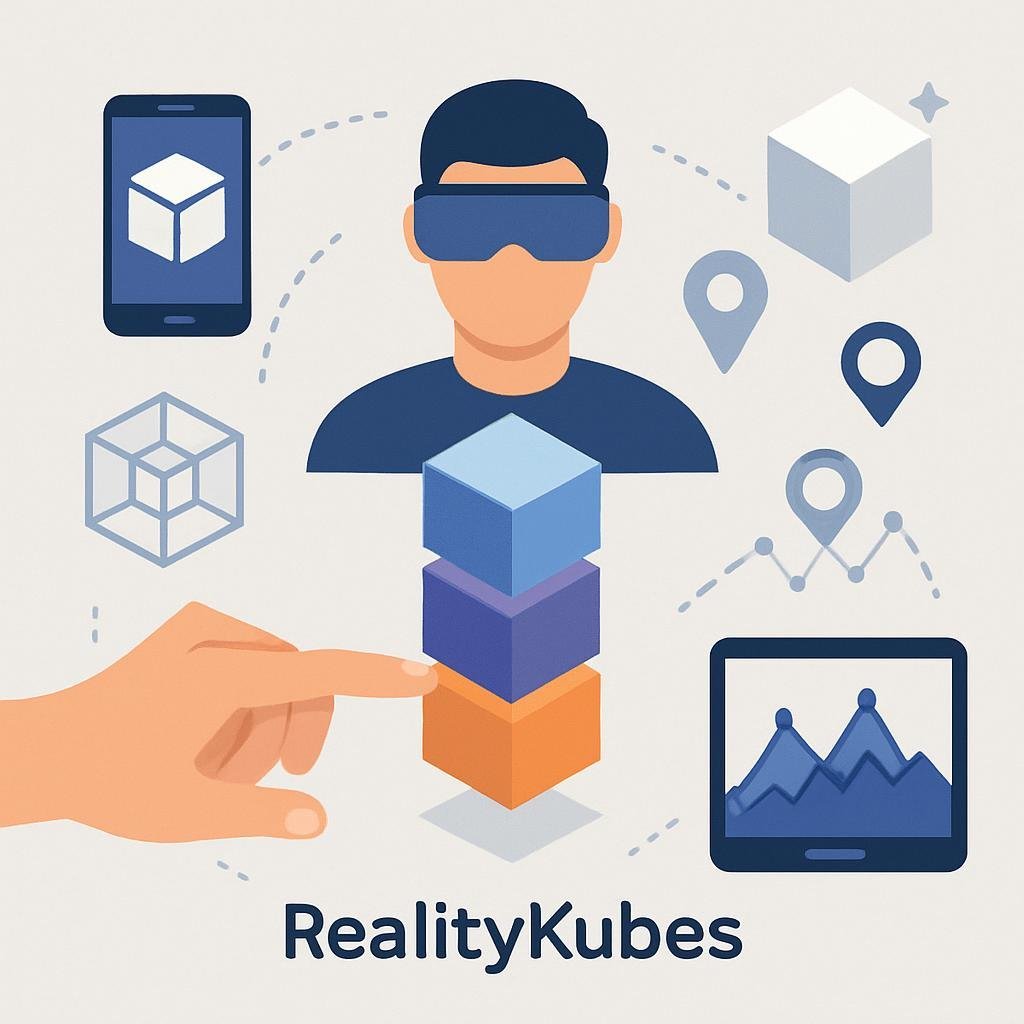
That does not automatically make realitykubgs a separate platform. It is more useful to read it as a positioning term for immersive experiences that are modular, responsive, and closely tied to the user’s environment.
Realitykubgs Meaning
The unusual wording implies a coined label rather than a widely adopted industry term. In practice, that means the keyword is strongest when used to describe how an experience behaves rather than to claim a new official category.
Readers should think of it as a shorthand for content that feels placed, persistent, and aware of the surrounding space. That interpretation is conservative, but it is also the most useful one.
Relation to Augmented Reality and Virtual Experiences
Realitykubgs sits closest to augmented reality, mixed reality, and spatial computing. It feels more grounded than virtual reality because the real environment still matters, yet more interactive than lightweight AR overlays.
That middle ground matches how major platforms describe anchored digital experiences. Microsoft’s spatial mapping guidance explains how real surfaces are understood inside a scene, while Apple’s WorldAnchor documentation describes persistent reference points for stable placement.
| Technology | Main Character | Typical Feel |
|---|---|---|
| Augmented Reality | Digital overlays on a live view | Helpful but often lightweight |
| Virtual Reality | Fully synthetic environment | Deep immersion with less real-world context |
| Realitykubgs | Adaptive spatial layer | Interactive, anchored, and context-driven |
How Does Realitykubgs Work? Features and Technology
Short answer: experiences described this way usually depend on mapping, anchoring, rendering, and input systems working together.
The goal is simple. Digital content should stay aligned with the scene, respond to movement, and remain useful as the user changes position, task, or device orientation.
Core Features of Realitykubgs
Core features often include environment scanning, persistent object placement, gesture or voice input, and real-time updates. Shared sessions may also appear when the same digital scene needs to work for more than one person.
That direction lines up with mainstream AR tooling. Google’s ARCore overview explains how anchors keep content stable, and Google’s Cloud Anchors guide shows how shared placement can work across users and devices.
| Feature | Purpose | User Benefit |
|---|---|---|
| Spatial Mapping | Reads the room or object layout | Better placement and stability |
| Persistent Anchoring | Keeps digital elements tied to a location | More believable interaction |
| Contextual Input | Accepts taps, gestures, or voice | Lower friction and clearer control |
| Real-Time Updates | Adjusts content as conditions change | Experience feels relevant and current |
User Experience and Interaction
Users would normally engage through a phone, tablet, headset, or another sensor-aware device. The best experiences make digital objects easy to read, easy to reposition, and stable across changes in angle, distance, and lighting.
Good interaction design is as important as visual polish. If the scene looks advanced but feels confusing, the value of the immersive layer drops fast.
Where to Find and Use Realitykubgs
Short answer: you are more likely to find realitykubgs as a feature label, prototype concept, or marketing phrase than as a formal storefront category.
That means discovery usually starts with product demos, developer documentation, feature pages, and experimental app descriptions. It is less likely to appear as a single official ecosystem with fixed rules.
Availability and Platforms
Phone-based AR can support lighter versions of this concept. Headsets and depth-aware devices are better when the goal is persistent objects, room-scale interaction, or shared viewing.
That split also matches official platform guidance. Google’s ARCore documentation focuses on mobile AR features, while Microsoft’s spatial anchors guidance puts more emphasis on mapped spaces and world-locked content.
Use Cases and Applications
Strong use cases include guided learning, product visualization, museum storytelling, remote review sessions, and task-based training. In each case, the benefit comes from content that stays tied to place rather than floating as a disconnected visual effect.
| Industry | Likely Use | Why It Fits |
|---|---|---|
| Education | Interactive learning scenes | Links explanations to real space |
| Retail | Product previews or guided demos | Makes size, fit, and placement easier to judge |
| Training | Task guidance and simulation | Places instruction in context |
| Entertainment | Story-led spatial interaction | Creates stronger engagement through movement |
Benefits of Realitykubgs
Short answer: the value is not in the label itself but in the promise of clearer, more anchored, and more responsive digital guidance.
A strong spatial experience reduces context switching. Instead of looking away from the task, users can interact with guidance where it matters.
Enhanced Immersive Experiences
Compared with simpler overlays, the biggest improvement is continuity. Objects stay aligned, instructions feel more relevant, and the interface reacts in ways that feel connected to the scene.
That is why anchored placement matters so much. Microsoft’s spatial anchors overview, Apple’s WorldAnchor documentation, and Google’s ARCore resources all frame stable anchors as essential to believable interaction.
Practical Benefits for Businesses and Consumers
For businesses, the appeal is clearer demonstrations, stronger training support, and better communication. For users, the appeal is simpler guidance, richer previews, and less guesswork in physical settings.
| Benefit | Business Impact | User Impact |
|---|---|---|
| Spatial Guidance | Clearer demonstrations and handoffs | Faster understanding |
| Persistent Objects | More stable product and training views | Less confusion during interaction |
| Adaptive Interface | Experience scales across scenarios | More natural control and navigation |
Realitykubgs vs. Other Immersive Technologies
Short answer: the term suggests a hybrid experience that feels more adaptive than simple AR and more grounded than VR.
That makes realitykubgs useful as a positioning term. It highlights context, interaction depth, and modularity without claiming the experience belongs entirely to one existing bucket.
Seen through official platform language, that middle ground is familiar. Microsoft focuses on world-locked holograms and mapped surfaces, while Google highlights anchors and scene understanding.
| Technology | Key Strength | Main Limitation | Best Fit |
|---|---|---|---|
| Realitykubgs | Adaptive, contextual spatial layer | Definition may vary by source | Hybrid, interaction-heavy experiences |
| Augmented Reality | Easy overlay of helpful information | Can feel shallow if not interactive | Navigation, labels, simple guidance |
| Virtual Reality | Deep immersion and focus | Less tied to the physical environment | Simulation, training, immersive media |
Frequently Asked Questions
Short answer: realitykubgs is best understood as a practical concept label for richer spatial experiences.
What is realitykubgs?
It is best treated as a descriptive label for adaptive spatial content that feels more layered and interactive than a basic AR overlay.
How does realitykubgs work?
Most examples would rely on mapping, anchors, sensors, and real-time rendering so digital objects stay aligned with the user’s environment.
Where can I find realitykubgs?
You are more likely to find it inside broader AR, mixed reality, or spatial computing products than as a standalone destination.
Is realitykubgs a brand or a product?
Based on the wording alone, it reads more like a concept or category label than a confirmed standalone brand.
What are the benefits of realitykubgs?
The likely benefits are clearer spatial context, better interaction flow, and more useful digital guidance inside real environments.
Conclusion
Realitykubgs is most useful as shorthand for modular, context-aware immersive content. It signals a digital layer that should feel stable, responsive, and genuinely tied to the user’s surroundings.
Until the term gains clearer industry adoption, the safest explanation stays practical. Realitykubgs likely describes a richer spatial experience, not a fully standardized category.
SEO Title & Description
SEO Title: Realitykubgs Explained: Meaning, Uses, and Practical Context
SEO Description: Learn what realitykubgs likely means, how it is used, where it may appear, and why it matters in augmented and immersive digital experiences.
Related Reading
These internal resources add extra context and help readers explore closely related topics on this site.