




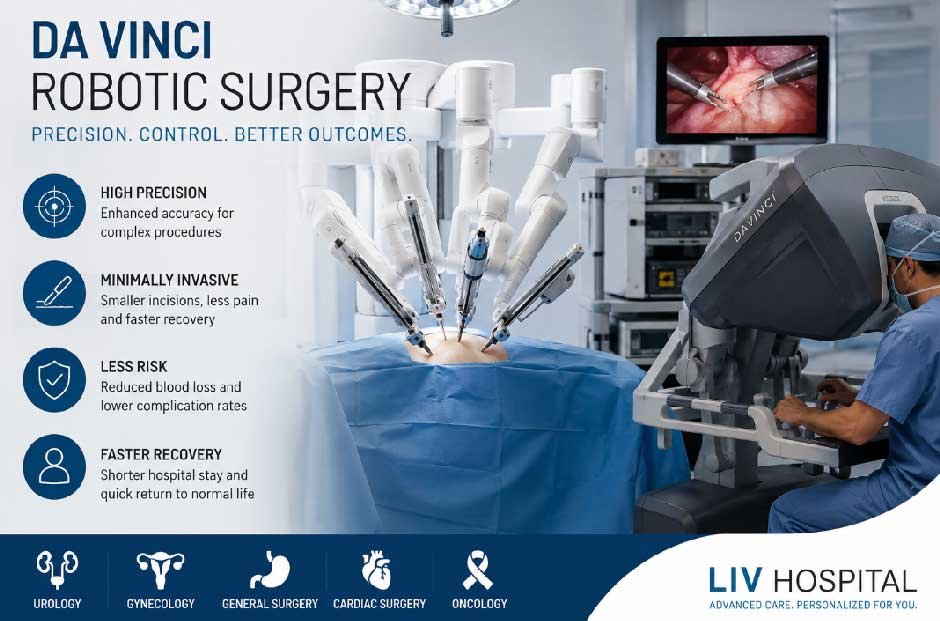
Modern medicine continues to evolve with advanced technologies that improve patient care, reduce recovery time, and increase surgical precision. One of the most revolutionary innovations in recent years is Da Vinci Robotic Surgery. This cutting-edge surgical system has transformed the way complex procedures are performed across multiple medical specialties.
Today, hospitals around the world are adopting robotic-assisted surgery to provide safer and more effective treatments. Among the leading healthcare institutions offering this advanced technology is Liv Hospital known for combining innovative medical solutions with highly experienced specialists.
What Is Da Vinci Robotic Surgery?
Da Vinci Robotic Surgery is a minimally invasive surgical technology designed to help surgeons perform delicate and complex procedures with greater accuracy and control. Despite its name, the robot does not operate independently. Instead, the surgeon controls every movement through a sophisticated console equipped with high-definition 3D imaging and robotic arms.
The system translates the surgeon’s hand movements into smaller, more precise motions inside the patient’s body. This allows doctors to access difficult areas through tiny incisions rather than large open cuts.
The robotic platform is commonly used in specialties such as:
- Urology
- Gynecology
- General surgery
- Cardiac surgery
- Thoracic surgery
- Colorectal surgery
- Bariatric surgery
The development of robotic-assisted procedures has significantly improved surgical outcomes for many patients worldwide.
How Does the Da Vinci System Work?
The Da Vinci surgical system consists of three main components:
1. Surgeon Console
The surgeon sits at a console near the patient and controls the robotic instruments using hand and foot controls. The console provides a magnified 3D high-definition view of the surgical area.
2. Patient Cart
This component includes robotic arms equipped with tiny surgical instruments and a camera. These arms mimic the surgeon’s movements with incredible precision.
3. Vision System
The advanced imaging technology offers enhanced visibility during surgery, helping surgeons identify nerves, blood vessels, and tissues more accurately.
Together, these components allow for highly precise procedures while minimizing damage to surrounding tissues.
Benefits of Da Vinci Robotic Surgery
Robotic-assisted surgery offers numerous advantages compared to traditional open surgery and even standard laparoscopic procedures.
Greater Precision
The robotic instruments can rotate and move more freely than the human hand. This allows surgeons to perform highly detailed movements in confined spaces.
Smaller Incisions
Because the procedure is minimally invasive, surgeons only need tiny incisions. Smaller cuts reduce trauma to the body and improve cosmetic results.
Reduced Pain
Patients typically experience less postoperative pain due to smaller incisions and less tissue damage.
Faster Recovery
Most patients recover more quickly and can return to normal activities sooner compared to traditional surgery.
Lower Risk of Complications
Robotic surgery often results in reduced blood loss, lower infection risk, and fewer surgical complications.
Shorter Hospital Stay
Many patients can leave the hospital earlier, which improves comfort and reduces healthcare costs.
These advantages have made robotic-assisted surgery increasingly popular among both surgeons and patients.
Medical Fields Using Robotic Surgery
The Da Vinci system is used in various medical disciplines because of its flexibility and effectiveness.
Urology
Robotic surgery is commonly used for prostate cancer treatment, kidney surgery, and bladder procedures. The precision of the robotic system helps preserve nerves and improve patient outcomes.
Gynecology
Procedures such as hysterectomy, fibroid removal, and endometriosis treatment are frequently performed using robotic assistance.
General Surgery
Gallbladder removal, hernia repair, and colorectal surgeries can be completed more safely and efficiently with robotic support.
Cardiac Surgery
Heart surgeons use robotic technology for minimally invasive heart valve repairs and other delicate procedures.
Oncology
Cancer surgeries benefit greatly from robotic precision, allowing surgeons to remove tumors while preserving healthy tissue.
Why Patients Prefer Minimally Invasive Surgery
Traditional open surgeries often require large incisions, longer hospital stays, and extended recovery periods. In contrast, minimally invasive robotic procedures offer a more comfortable experience for patients.
Many patients prefer robotic surgery because it allows them to:
- Return to work faster
- Experience less scarring
- Reduce physical discomfort
- Lower dependence on pain medication
- Recover with fewer complications
These improvements contribute to better overall patient satisfaction and quality of life.
The Importance of Experienced Surgeons
Although robotic technology is highly advanced, the success of the procedure still depends heavily on the surgeon’s expertise. Proper training and experience are essential for achieving optimal results.
Leading hospitals invest in specialized robotic surgery programs to ensure surgeons are fully qualified to operate the system effectively. Institutions lik Liv Hospital focus on combining advanced medical technologies with experienced surgical teams to provide high-quality patient care.
Da Vinci SP Single Port Technology
One of the newest innovations in robotic-assisted surgery is the Single Port (SP) system. Unlike traditional robotic procedures that require multiple incisions, the SP platform allows surgeons to perform surgery through a single small entry point.
This advanced technique offers additional benefits, including:
- Even less scarring
- Reduced pain
- Faster healing
- Improved cosmetic outcomes
The technology is particularly useful for procedures requiring access to narrow or hard-to-reach areas of the body.
Patients interested in learning more about this advanced system can explore Da Vinci Robotic Surgery for detailed information about the procedure and its advantages.
Is Robotic Surgery Safe?
Yes, robotic-assisted surgery is considered highly safe when performed by trained professionals. The technology has been used successfully in millions of procedures worldwide.
The robotic system includes several safety features, such as:
- Real-time surgeon control
- Motion scaling for enhanced precision
- Tremor filtration
- High-definition visualization
These features help surgeons operate with exceptional accuracy and minimize human error.
However, like all surgical procedures, robotic surgery may still involve certain risks depending on the patient’s condition and the complexity of the operation. Patients should always consult qualified healthcare professionals to determine the most appropriate treatment plan.
The Future of Surgical Innovation
Medical technology continues to advance rapidly, and robotic-assisted surgery is expected to play an even larger role in the future of healthcare. Researchers and healthcare providers are constantly improving robotic systems to make procedures safer, less invasive, and more accessible.
Artificial intelligence, enhanced imaging systems, and improved robotic instruments may further transform surgical care in the coming years. As innovation continues, patients can expect better outcomes, shorter recovery times, and more personalized treatment options.
Conclusion
Da Vinci Robotic Surgery represents a major advancement in modern healthcare. By combining robotic precision with surgeon expertise, this innovative technology offers safer, more effective, and minimally invasive treatment options for patients across many medical specialties.
From reduced pain and faster recovery to smaller incisions and improved surgical accuracy, robotic-assisted procedures are redefining the patient experience. Hospitals like continue to lead the way by offering advanced robotic surgical solutions that prioritize patient safety and medical excellence.
As healthcare technology evolves, robotic-assisted surgery is expected to become an even more important part of modern medicine, helping patients achieve better outcomes and improved quality of life.